Garden Path DIY Part 3

The day after Christmas seems a little late to post another update on my garden path, but honestly, it’s the first chance I’ve had. I get buried in my glass work beginning October and don’t allow much time for anything else except my grandkids’ sports activities. 

At the end of my last post I was getting ready to add salvaged barrel rings in my garden. I was pretty sure the barrel rings would each take a whole bag of 60 lb. concrete mix. Knowing I wouldn’t be able to stir up that much concrete by myself, even if I mixed it in three small batches, I asked my husband if he’d help me stir and this is the answer I got …

I should have asked a lot sooner, lol.  His help was still needed and appreciated because I couldn’t lift the heavy bags to pour them in. He also kept the mixer going and handed me buckets of mixed concrete as I needed it so I wouldn’t have to keep getting up and down off the ground.

A barrel ring isn’t very high so we stacked two together for added height and attached them together with scraps of steel and self tapping screws. The protruding screw ends on the outside of the rim were cut off.

Circles were dug in the garden to accommodate half the depth of the joined rings.  The ground was tamped down well before sprinkling in a thin layer of sand, then tamped again.

Earlier I had gathered a bunch of rocks I thought would work well. They couldn’t be higher than the ring and most had at least one flat side. To be more prepared, spare rings were laid next to the ones to be poured and filled with an arrangement of rocks. I laid out more than enough rocks so I had quick options while filling the rings.

The prep work for this project took the most time.  Once everything was in place and the concrete mixed, it went rather quickly, especially with the extra pair of hands.

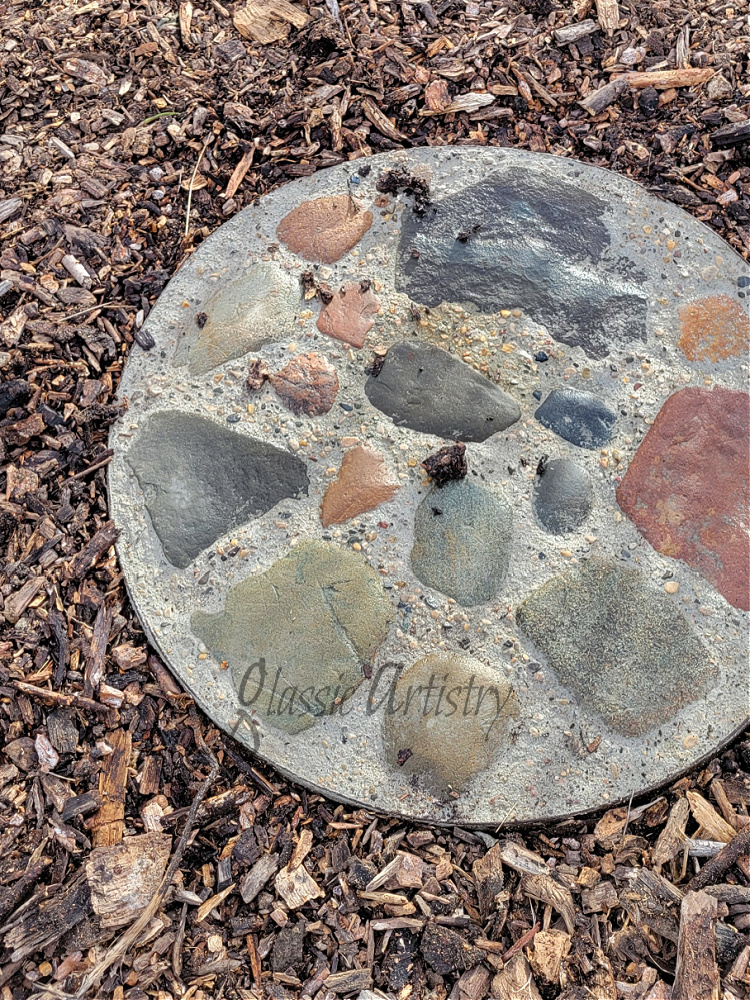
I started with a thin layer of mixed concrete over the sand. Staying a little ways away from the edge of the ring, rocks were added a few at a time, trying to keep level with the top edge of the ring as best I could.  With a large spoon I scooped concrete from a bucket and filled in around the rocks as I went, jiggling the rocks a bit to settle it in, until the ring was filled.  With a gloved hand, I wiped a thin skim layer of concrete over all to fill in any little holes or spaces. 

After the stones dried for about an hour, I wiped them down lightly with a wet rag to smooth the concrete. At this point I could make out the shape and color of the rocks under the concrete.

Being late in the season and with freezing temps expected overnight, the stones were covered with a tarp to hold in the heat.

Early the following morning, I washed the stones lightly again, this time using a rag and a plastic bristled scrub brush before recovering them.  Later in the day they were given a final wash and rinse.  Mulch was pushed back up around them to see how they looked.  I thought they looked great, just what I envisioned.

Even though it’s probably not needed, I decided to keep them covered with a tarp to protect them from ice for their first winter.  I guess it will remain to be seen how they look in the spring. 

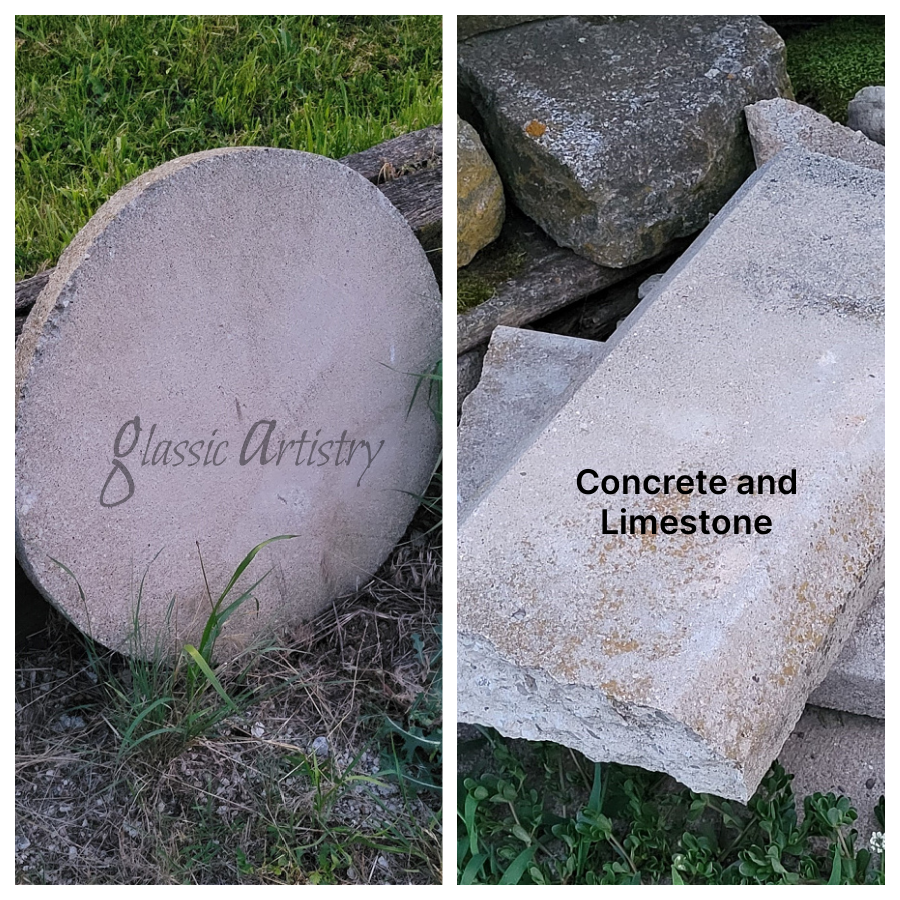
As you can see in one of the pictures above, a large cast iron ring and concrete circle have made it to the garden too. They’re not buried in or necessarily where they will stay.  I just had the opportunity to get them moved to the garden and I took it. 

I have a few months now to think over my next steps. I have a feeling the new concrete mixer may help me step up my game a little. 

For now, I hope you all had a wonderful Christmas and wish you much love and happiness in the New Year!

Garden Path DIY Part 2

Back with an update on the progress of my garden stones.  I had hoped to be back sooner but the weather has been hit and miss the last two weeks and it’s affecting what I can get done.

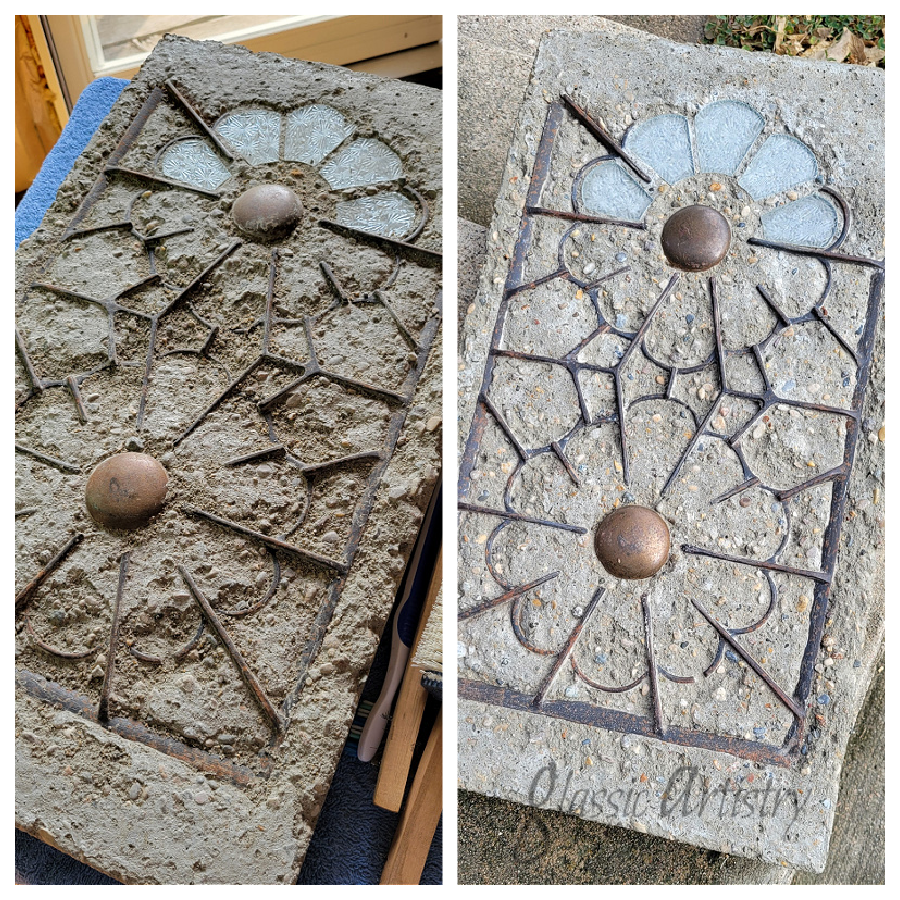
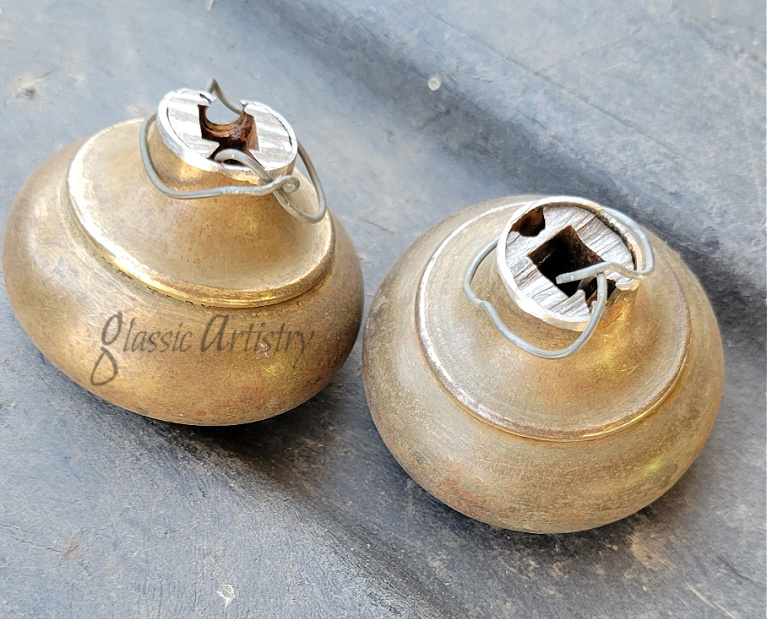
I really wanted to do something with the broken burner grid shown at the end of my previous post and couldn’t wait to see how it would turn out.  To resemble flower centers, the ends of two brass door knobs were cut off so they wouldn’t hit the chicken wire when they were pushed into the concrete. Because of their smooth tapered shape, wires were twisted in and around them to help secure them in the concrete.  Cut and shaped glass petals were pushed gently in place as well. The glass pieces were still loose after an hour or so. I left them in place with the intention of removing them once the concrete was set and then gluing them in, but the next day they were stuck solid. I pushed the grid in a little too far again.  As it dried, the concrete rose up quite a bit in some areas.  After some scraping and rubbing with steel wool it didn’t look so bad and I’m happy with it.  I’d like to make a couple smaller companion pieces for this one, I’m thinking on it.

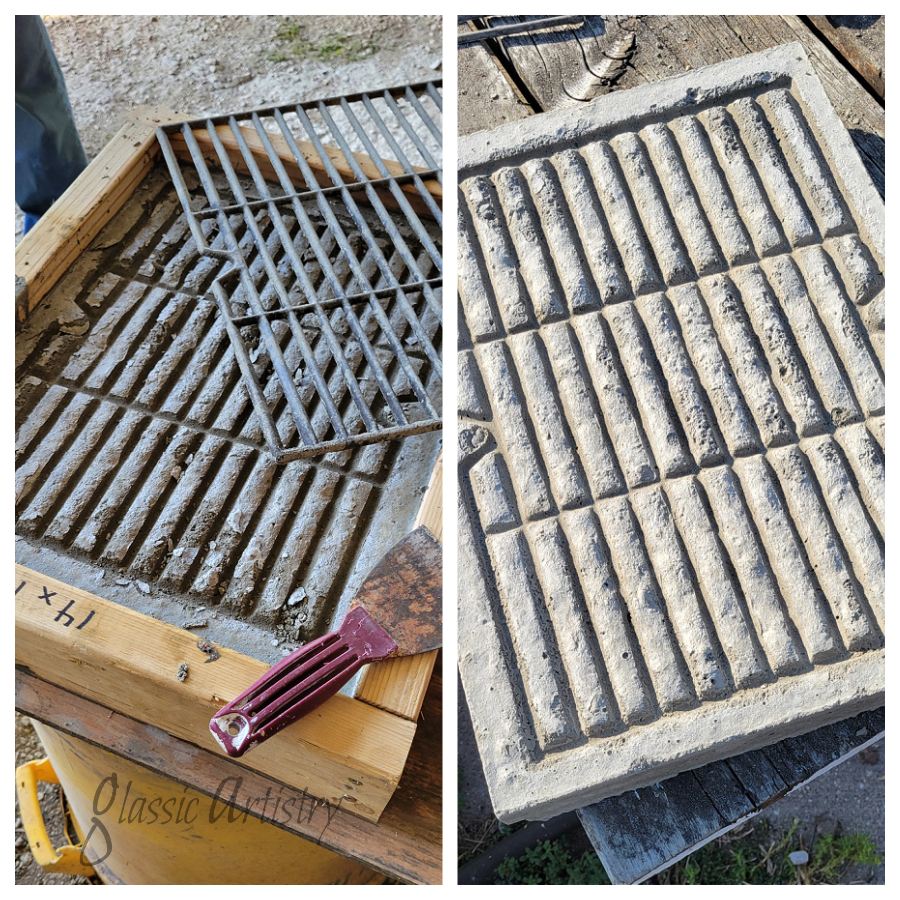
I’m making more stones with the grid pattern. Again, the iron grids were coated with diesel fuel first so they could be removed.  My helpful husband showed me how to give one snug grid a few gentle taps with a hammer and screwdriver to remove it easily.

I left a large grid embedded in one stone. Two bolts were cut off and pushed in on the sides too just for the heck of it.

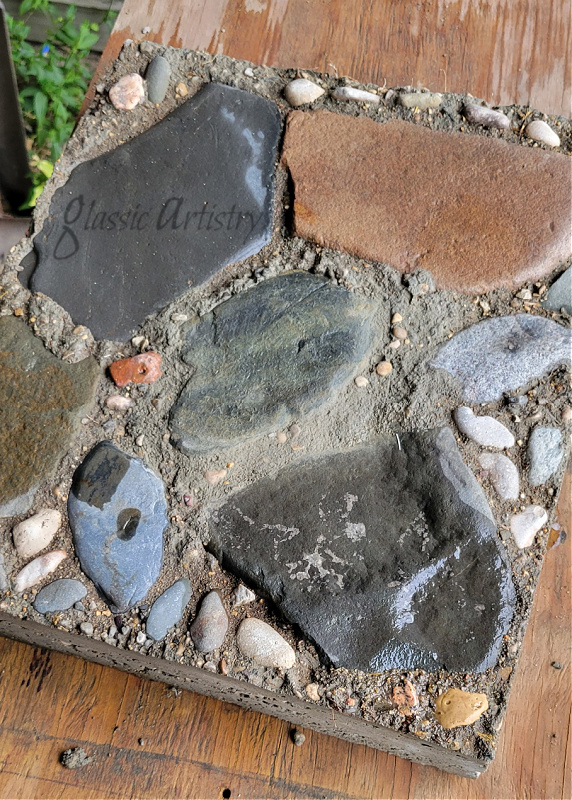
I’ve come to the conclusion that pouring four stones in an afternoon is my limit, especially if I’m making the larger ones. I start getting tired. That was the case with my first rock stone.  I wouldn’t have done it if the wooden form hadn’t been pre-prepped and the wire reinforcement already cut. 

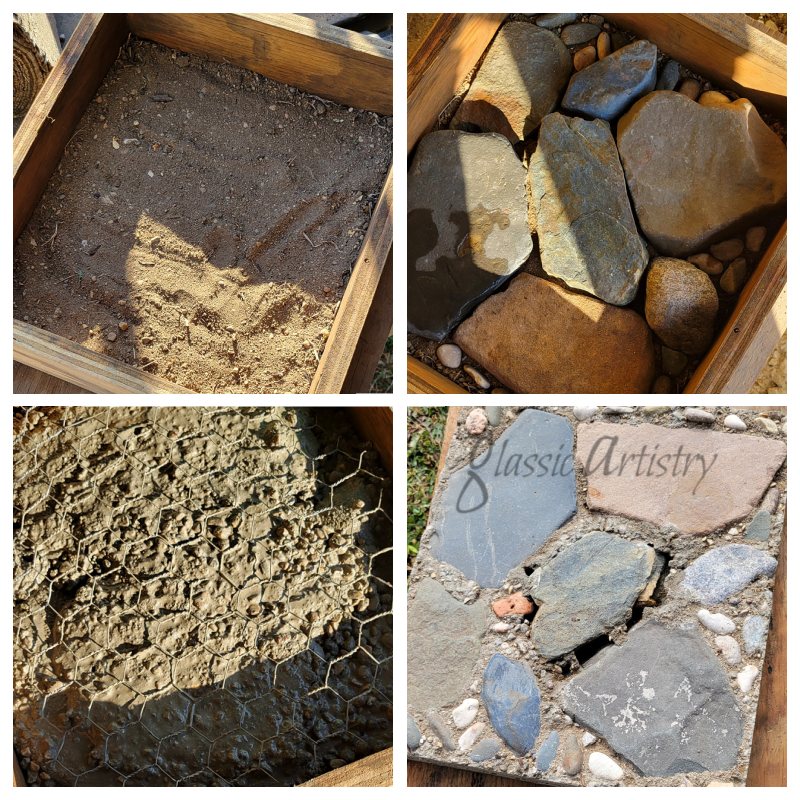
I hurriedly grabbed a scoop of dirty sand from the garden along with any flat rocks I could see and a handful of smaller rocks.  I gave all the rocks a quick dunk in a bucket of water to get the dust off.  The flat rocks were laid face down over a thin layer of sand. The smaller rocks were laid and pushed into the bare spots. 

I should have gone slower, but I did try to fill the cracks around the rocks first as I added a thin layer of concrete.  A piece of chicken wire was added and then covered with concrete to fill the form. 

When it was unboxed and brushed clean you could see I didn’t get concrete in all the cracks, but I don’t think that’s terrible. I’ll get back to that problem a little later.

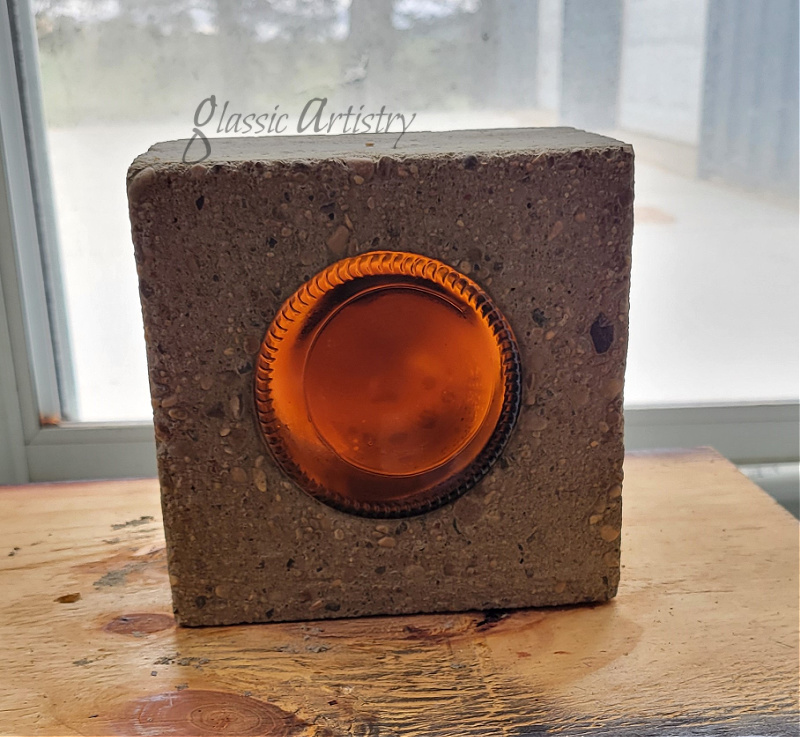
I’ve always wanted to make a bottle cube so I’m sharing this last one before I go.  I love this one.  It’s also small enough that I can make them and others like them in my basement over the winter to be ready next spring.

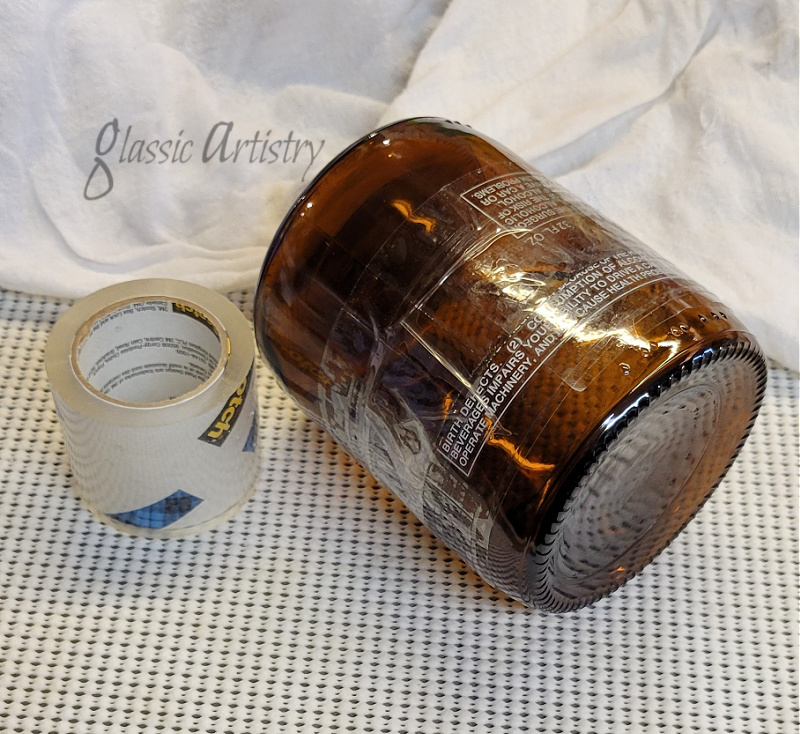
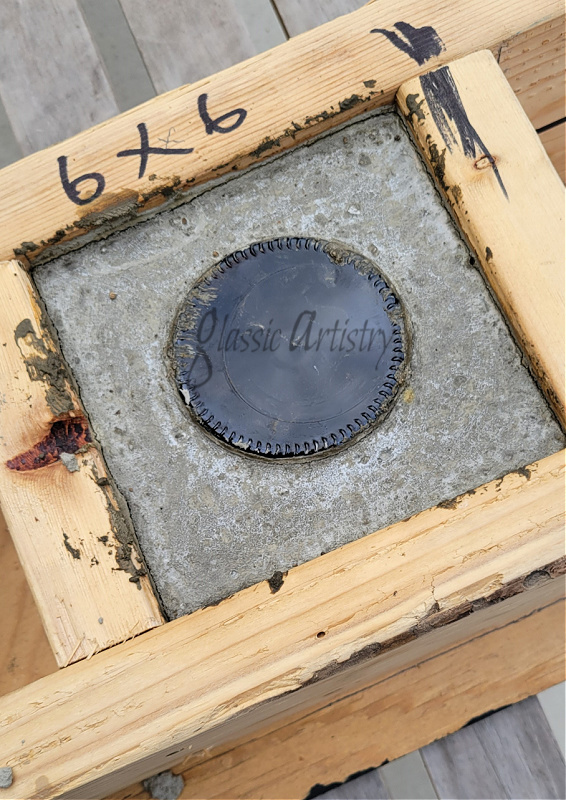
The inside of the wooden form was 6” x 6” x 5” deep. A glass saw was used to cut the bottoms from two beer bottles.  A bottle cutter or wet saw would work too. The cut edges were lined up and taped together with clear label tape creating a cylinder shape. The cylinder measured 4 ½”H x 3 ½” W.   Needing only a small amount of concrete for this one, I was able to mix it up in an ice cream bucket. The flat top and bottom surfaces of the bottles were wiped lightly with diesel fuel before centering and standing the cylinder in the prepped form.  The cylinder was held down firmly while spooning in the concrete, concentrating on getting it in the corners and filled in around the bottom of the cylinder. Continuing to hold the glass firmly, the form was shaken gently to settle the concrete. I don’t know if it made a difference or not, but I sat a small rockon the cylinder, no wider than the glass, until the concrete was dry.

After setting close to 24 hrs, it was removed from the form to finish drying. Any excess concrete was cleaned off.

Unfortunately, it’s cold here today with no sun.  I had to get a picture of it in the house in front of an open door. I’ll get a better picture ourside when I can. There’s no plan on how cubes like these will be used in the garden yet, but I have the winter to think about it. They’re definitely going somewhere!

There was a tiny bit of concrete left over from the cube so I decided to use it to fill the cracks in the rock stone I had made. I used a nail to kind of poke it down into the crack then topped it off.  I gently brushed most of the excess off it after it dried a bit.  Looks like it might have worked, time will tell.

Looking at the extended weather forecast, I may have a few good days in the second week of November that will be warm enough to get some of my salvaged circles placed in the garden before the temperatures start dropping below freezing every night.

That’s all for now, I’ll return. Stay well friends!

Garden Path DIY Part 1

I hope followers haven’t been thinking I was getting lazy, I’ve not posted in a while.  It’s been so dang hot all summer that it’s not been fun to work on many outdoor projects, and the little things I have been getting done were boring. But, the weather has cooled now and I’m raring to get going on the paths for my garden.  

No plan, just going to visualize it as I go. I’m adamant about making most of the path stones myself; that’s going to be the funniest part. Preferring an aged, rougher look, I went to the salvage pile to see if there was anything I could work with.  I found several interesting things to try and incorporate; we’ll see where things go.

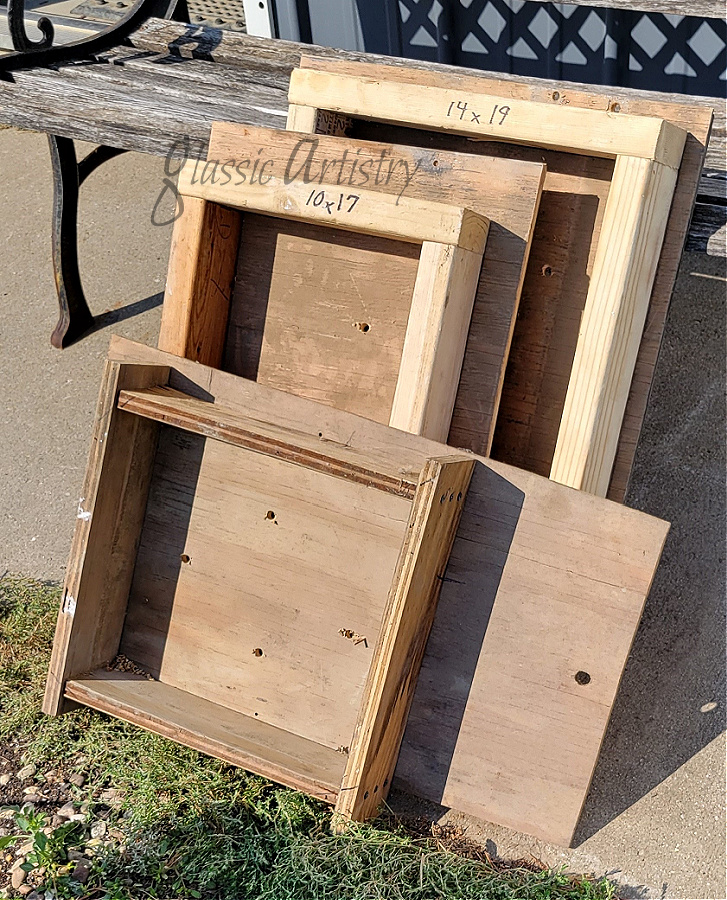
I was anxious to get started so my husband built a couple new boxes for me while I went after some 60 lb bags of General Purpose Concrete Mix as was used in a previous garden stone project https://glassictouch.com/category/for-the-garden/.  

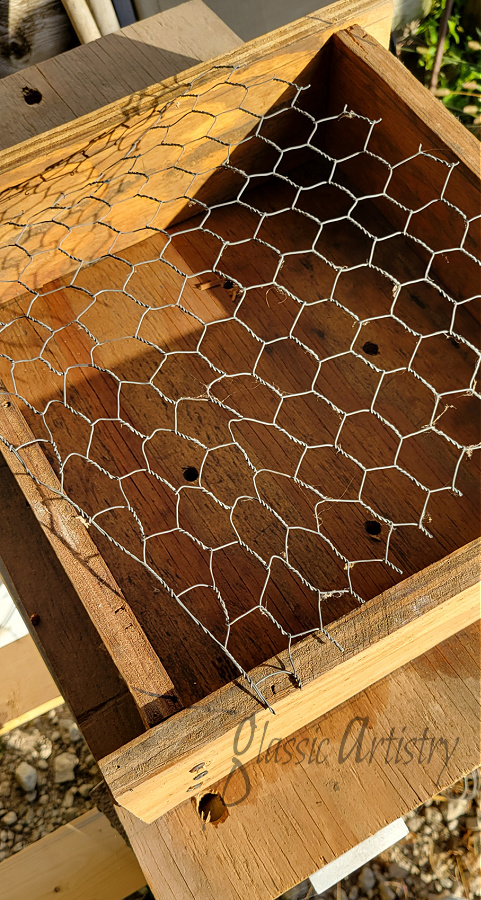
Adding a chicken wire reinforcement will be an added step with all of the new stones that are made.

The inside of the wooden forms were brushed with diesel fuel as a release agent. I poured about half of the concrete in a form, laid the wire in, then finished filling.

I chose the cast iron grids to experiment with first. They were given a quick swipe or two with a wire brush. I wanted to see if I could easily duplicate the grid pattern and/or embed the grid in the concrete.

I used a half a bag of concrete to embed a small grid in a 10” x 17” form opening. I think I might have pushed it in too far.  It didn’t help that I got impatient and tried to unbox it too soon.  It’s rougher than I wanted, but it’s fine. It is going to live outside in a garden after all, and I’ll try another one.

Both sides of a larger iron grid were coated with diesel fuel before pushing it into a 14” x 19” concrete filled form. Three quarters of a bag of concrete was used on this one.  I had a heck of a time getting the concrete mixed thoroughly in a 5 gal bucket. A pair of stronger hands and arms would have been very helpful; I’ll have to remember that when making this larger stone. The grid came right out though and I’m very pleased with the way it looks.

A handful of hibiscus leaves were laid in the bottom of the last form.  It’s probably best to press and flatten the leaves for a little bit before doing this, but, it was a last minute thought and getting late in the day. I’ll surely be doing more of this kind of thing.

That’s all for now.  I’m going to need a lot more concrete to keep going and a new form built for the next one I want to try.  I’m really looking forward to that one!

Feel free to comment and share. Have a great weekend, I’ll be back soon.