Vintage Style Toilet Paper Storage

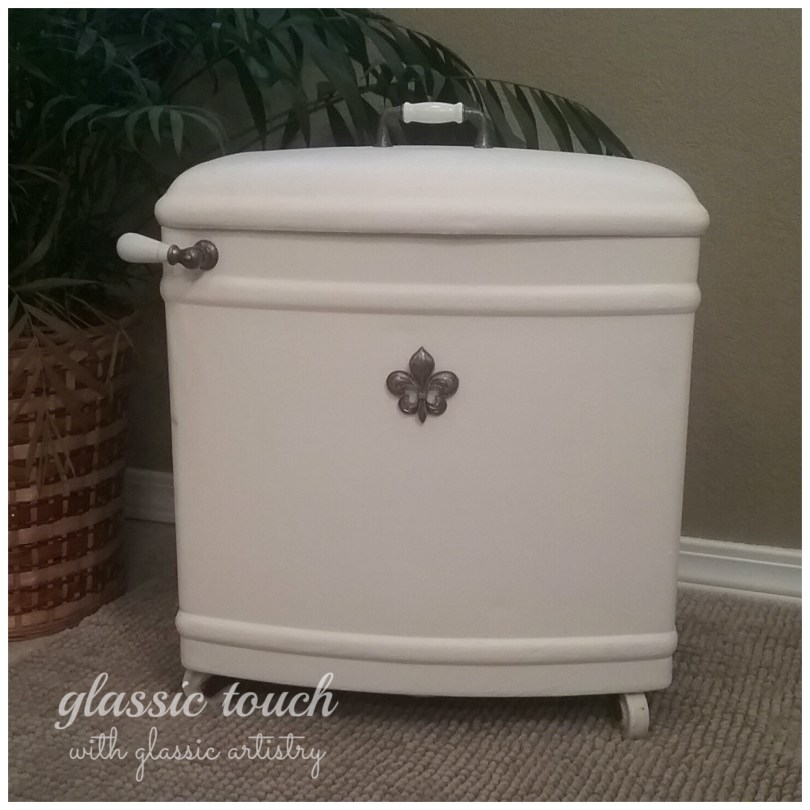
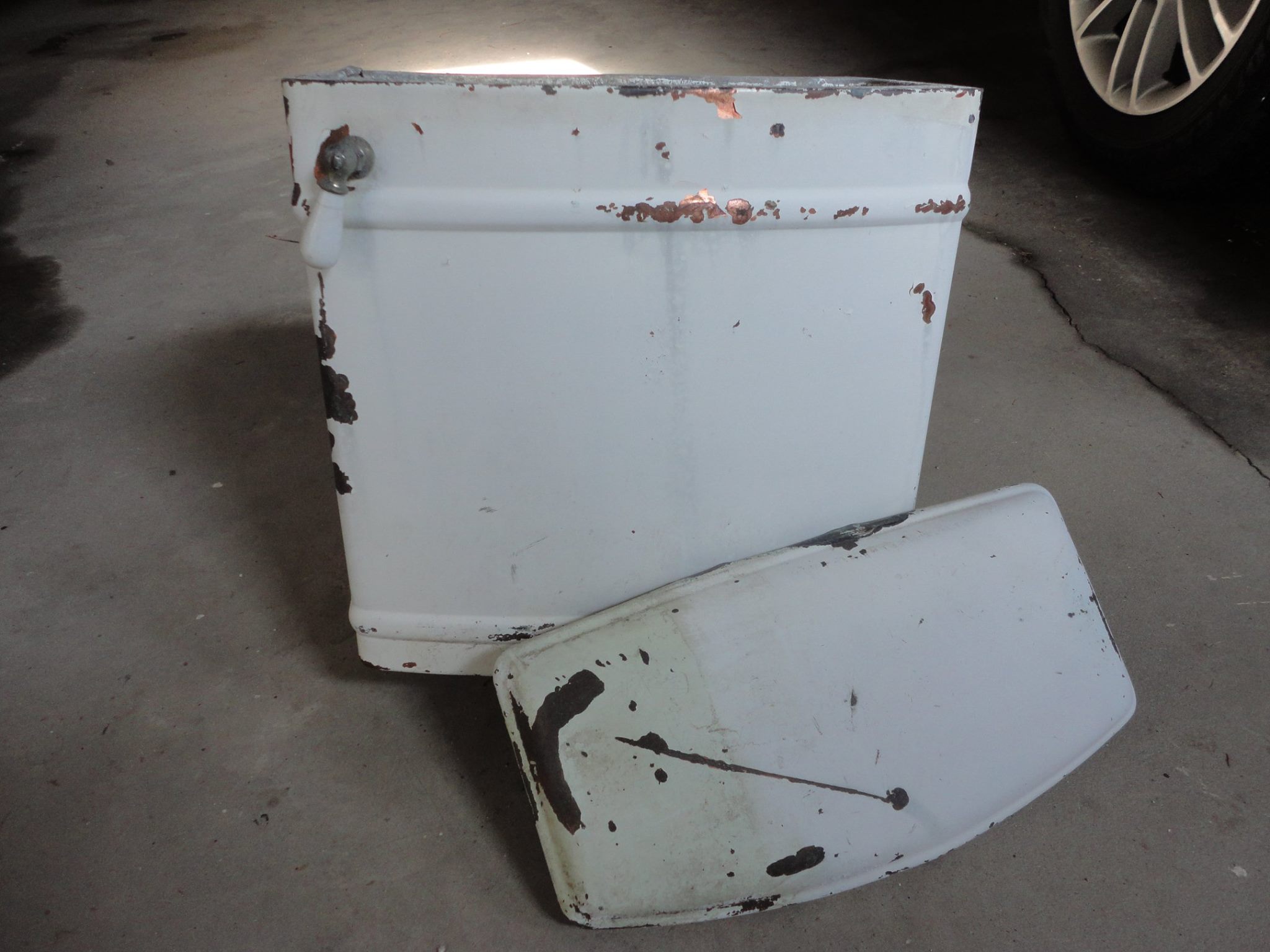
I finally thought of a useful purpose for the curious little copper piece I picked up at @gypsyalleyus last year. Some of you may remember seeing it on my Facebook page. I definitely remember the dumbfounded look on my husband’s face when I unloaded it from the back of my car. Once again, I didn’t have a clue as to what I was going to do with it either, but, recently, as I was looking for a cute way to store spare rolls of TP in the bathroom, the answer seemed obvious.
12604771_1068090996546224_4132676436179310669_o

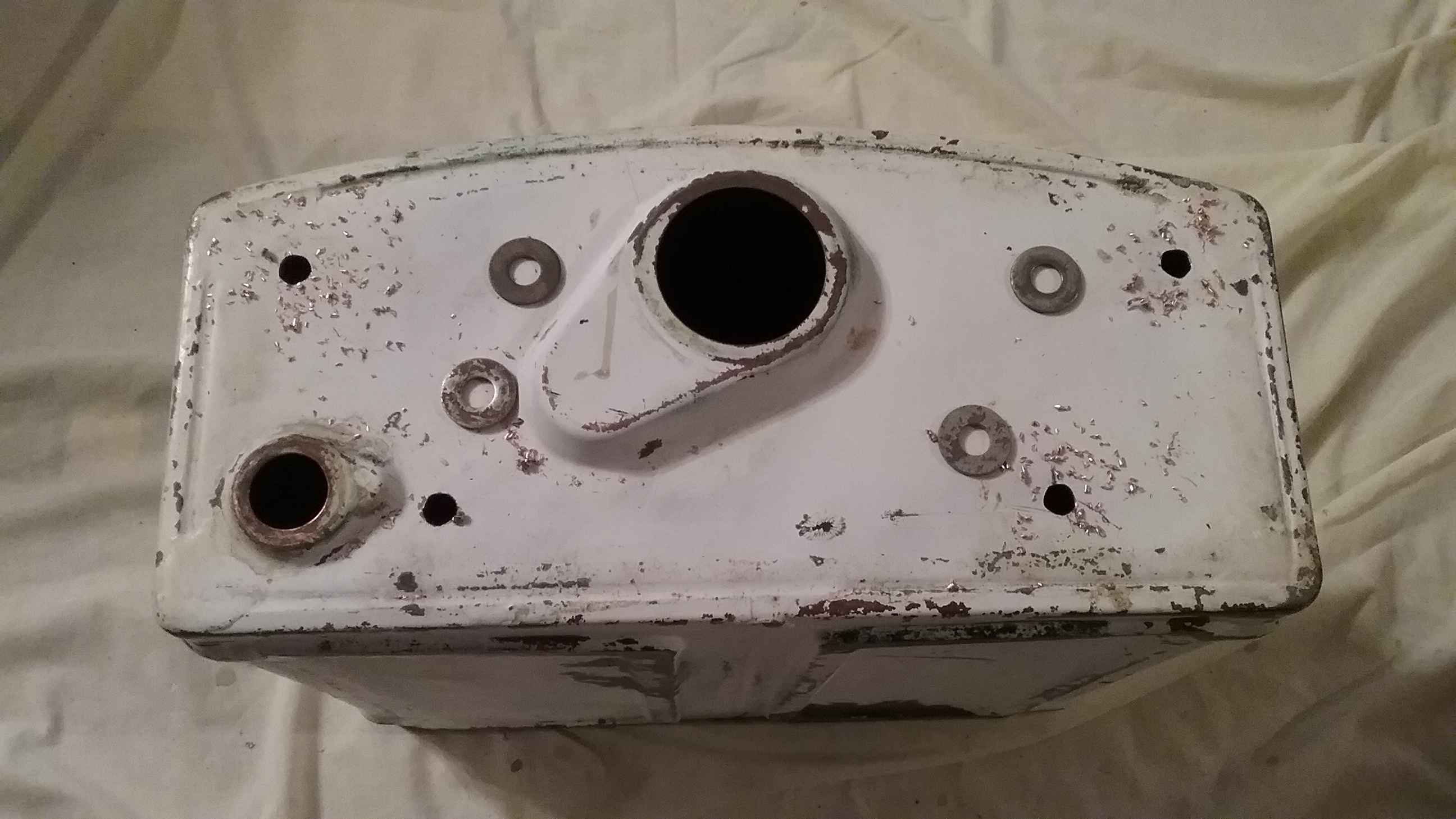
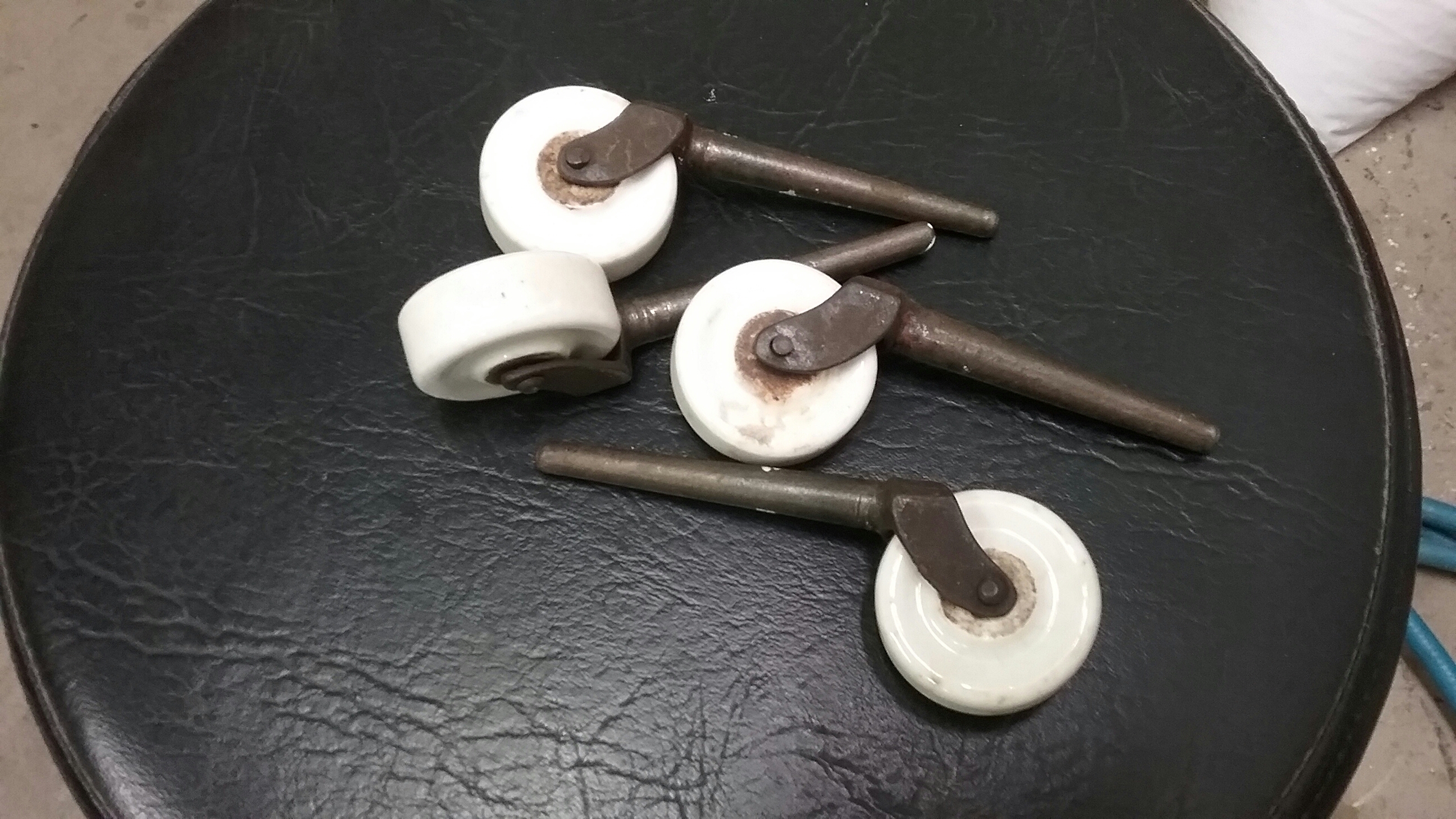
Before I could get started, all the plumbing was removed from the inside of the tank and it was given a disinfecting scrub. I had to find a set of four 1 1/2″ dia. vintage porcelain casters, eight large flat washers, and four cotter pins. I tried looking around locally for the casters, then got impatient and ordered some off of Ebay. A toothbrush and some Comet cream cleanser cleaned them right up.
20170216_105459

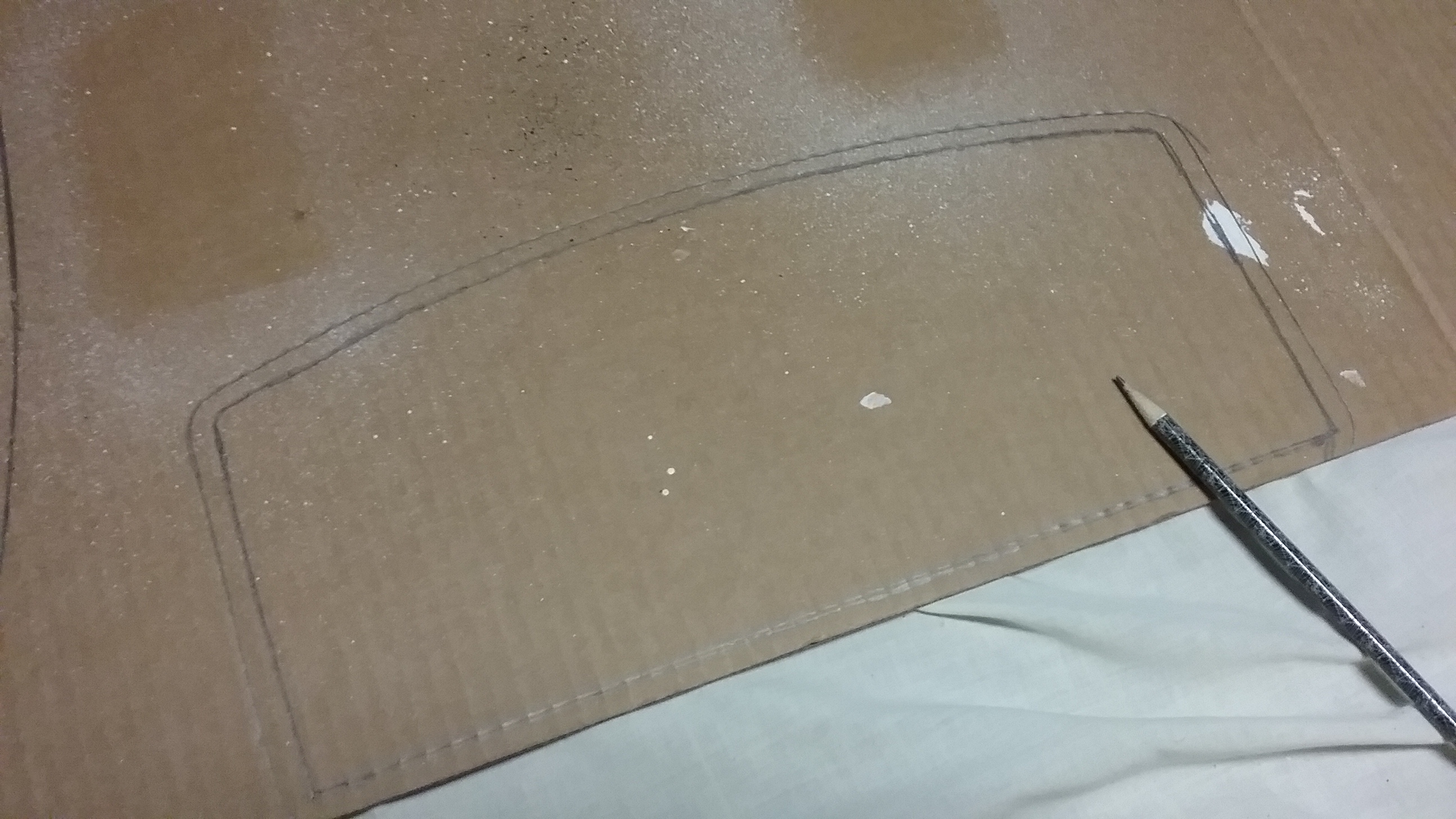
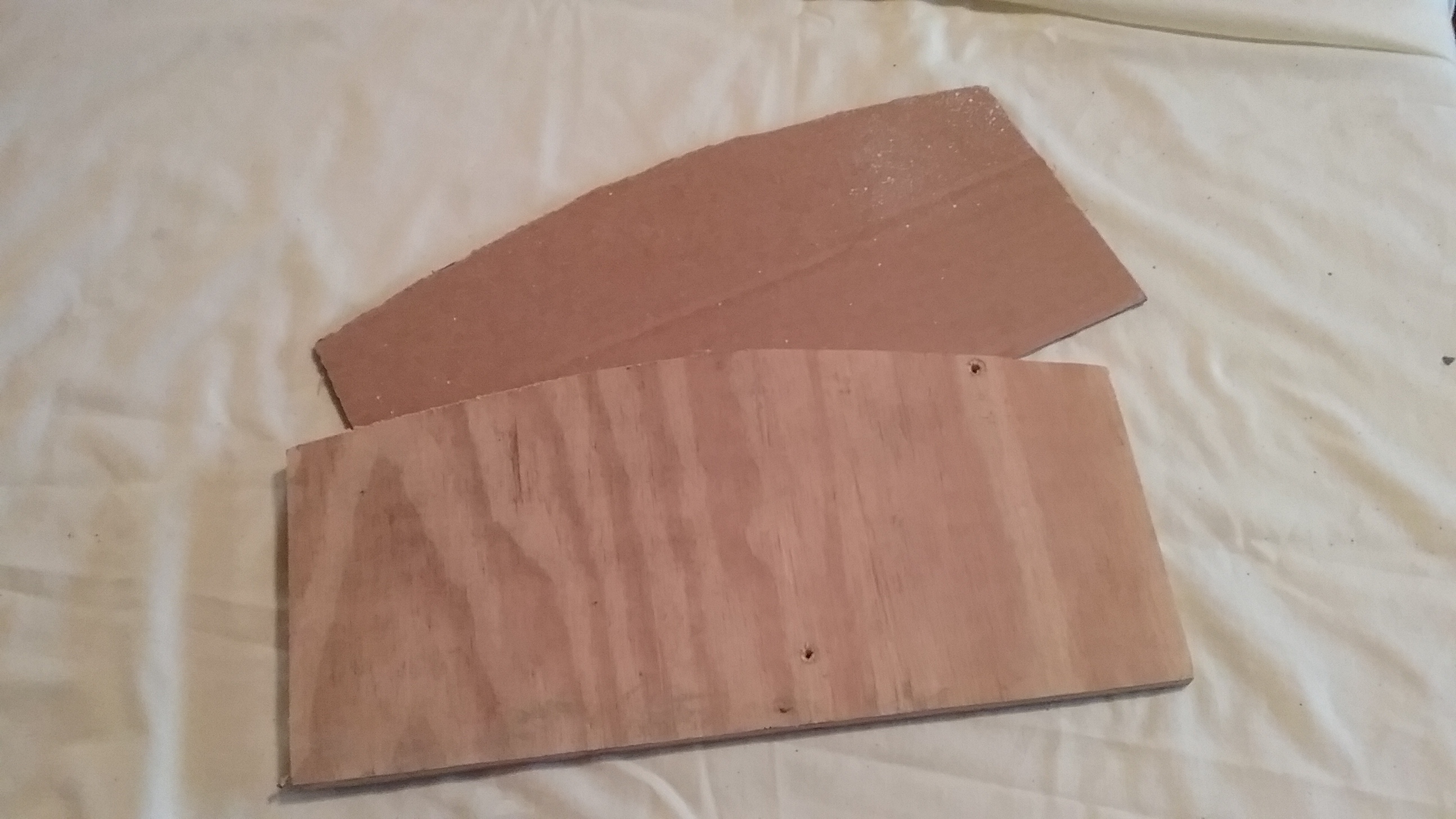
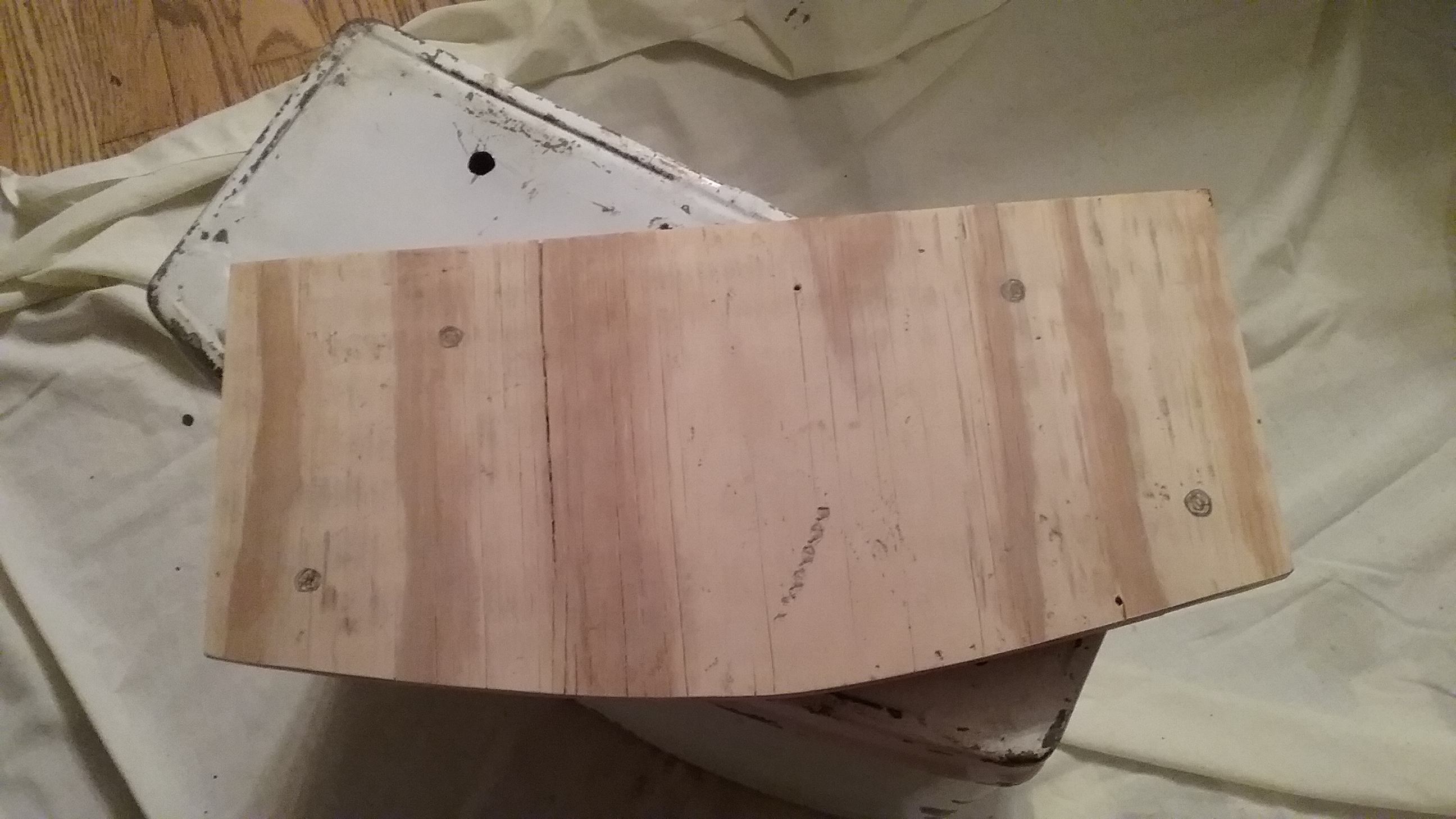
A piece of 1/2″ plywood had to fit in the bottom of the tank to help hold the wheels firmly. There was a lip on the edge of the tank opening, so, after tracing the top edge of the tank on cardboard, I reduced the template by 1/2″ all the way around, before transferring it to the wood. Cut and sanded the rough edges.20170106_150135  20170113_084338  20170113_085429

I used four of the large washers to determine and mark the placement of the casters.  For ease of drilling through the copper, a pilot hole was drilled first, then a 7/16″ hole to accommodate the size of the caster stem.

20170114_170546  20170114_171131  20170114_171442

Hold the plywood firmly in the bottom of the tank to mark through the holes.  Drill 7/16″ holes in the wood and replace in the tank.

Put one washer on each caster stem and insert them through the holes on the bottom of the tank, up through the wood. Turn tank upright so its resting on the casters. Put another washer on each caster stem. Use a white paint pen to reach inside the tank and mark the caster stems at the top of the washer. These marks will be used to drill holes for the cotter pins.
20170114_172213  20170114_174311  20170114_174523

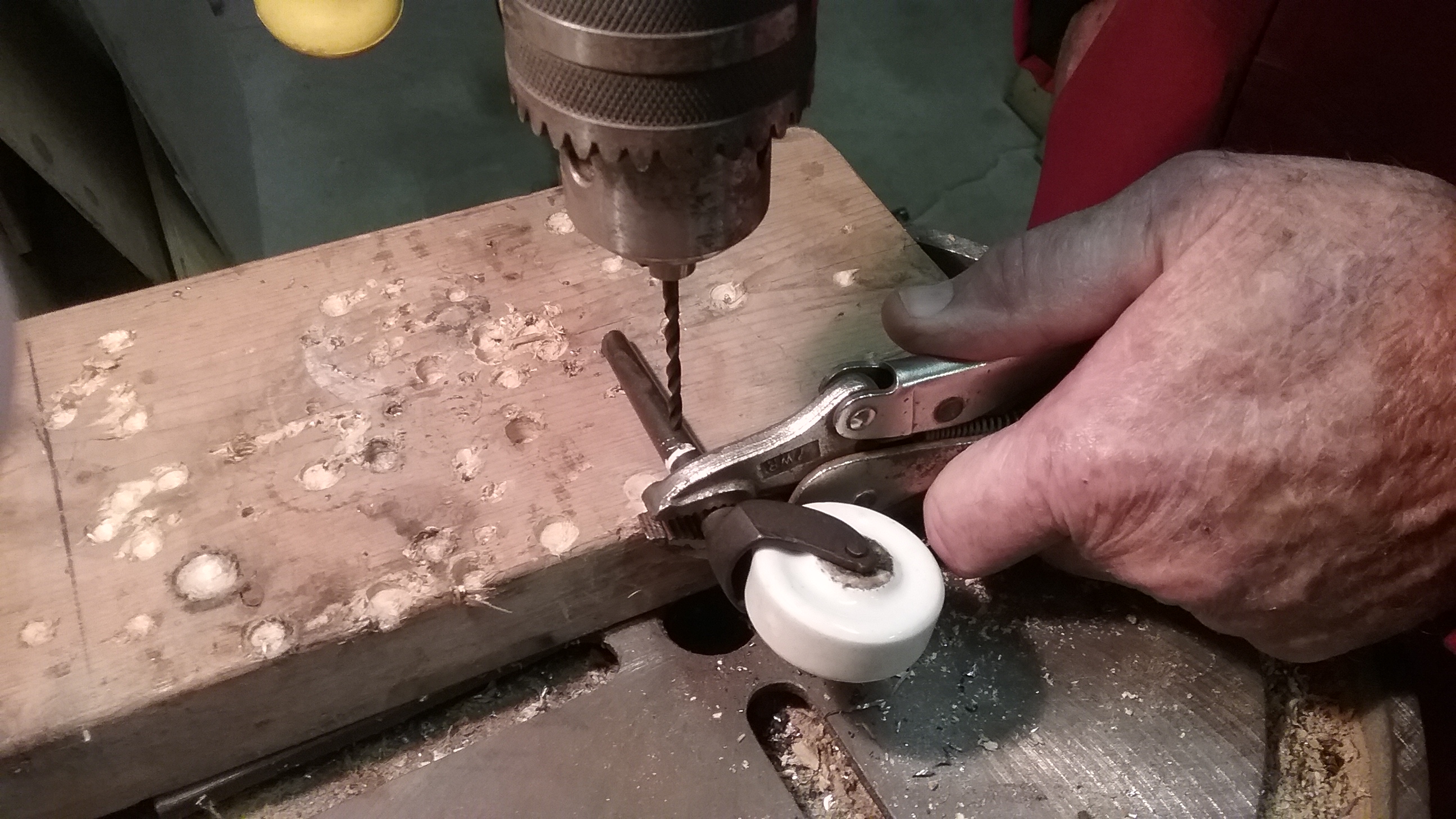
Center punch the caster stems on the white marking. At the drill press, hold the caster firmly with vise grips and drill an 1/8″ hole, on the center punch, through the stem.

20170114_180003  20170114_180846

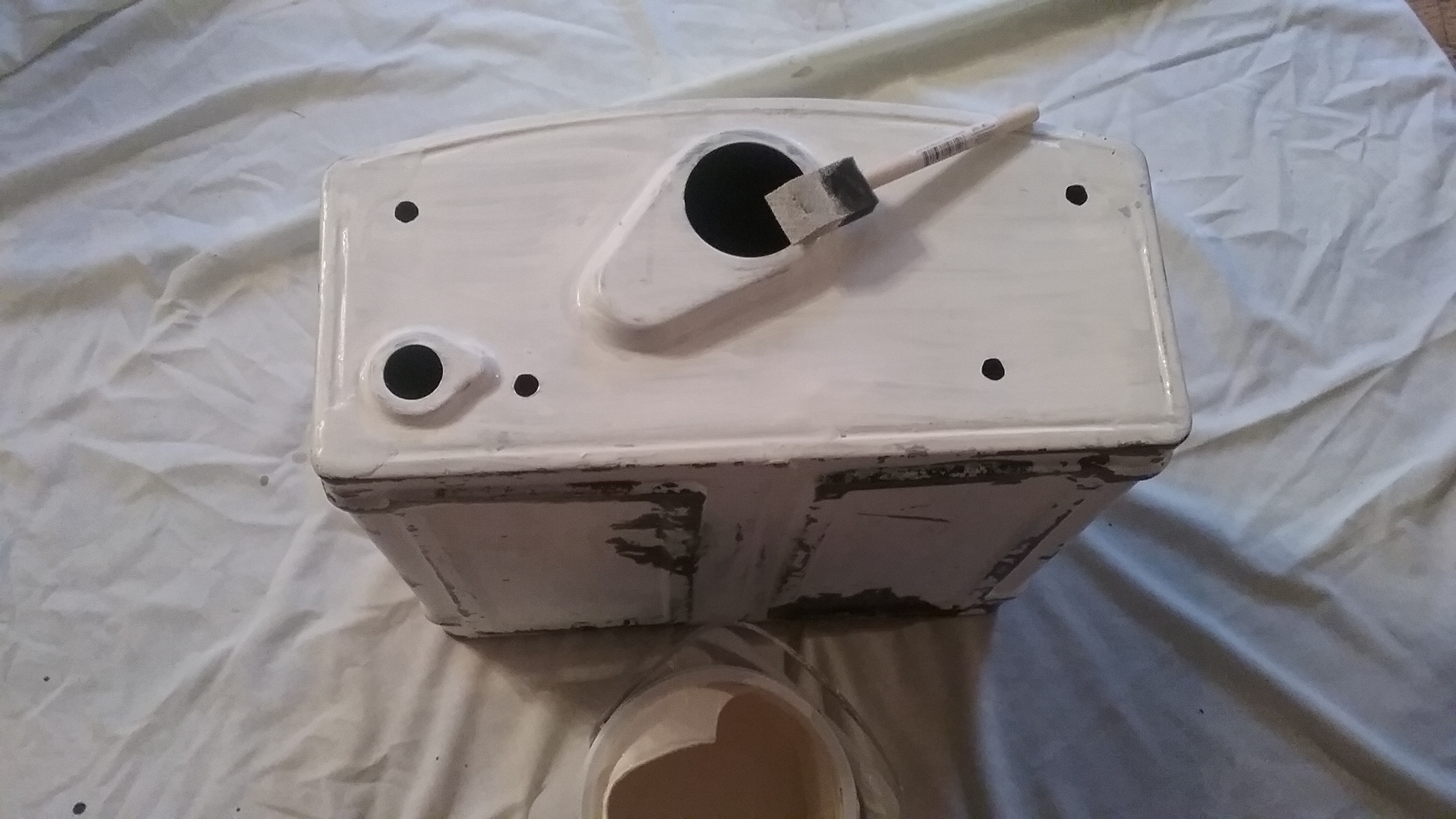
Paint the plywood black. Paint the bottom of the tank. Let dry.

20170119_191534  20170119_163714

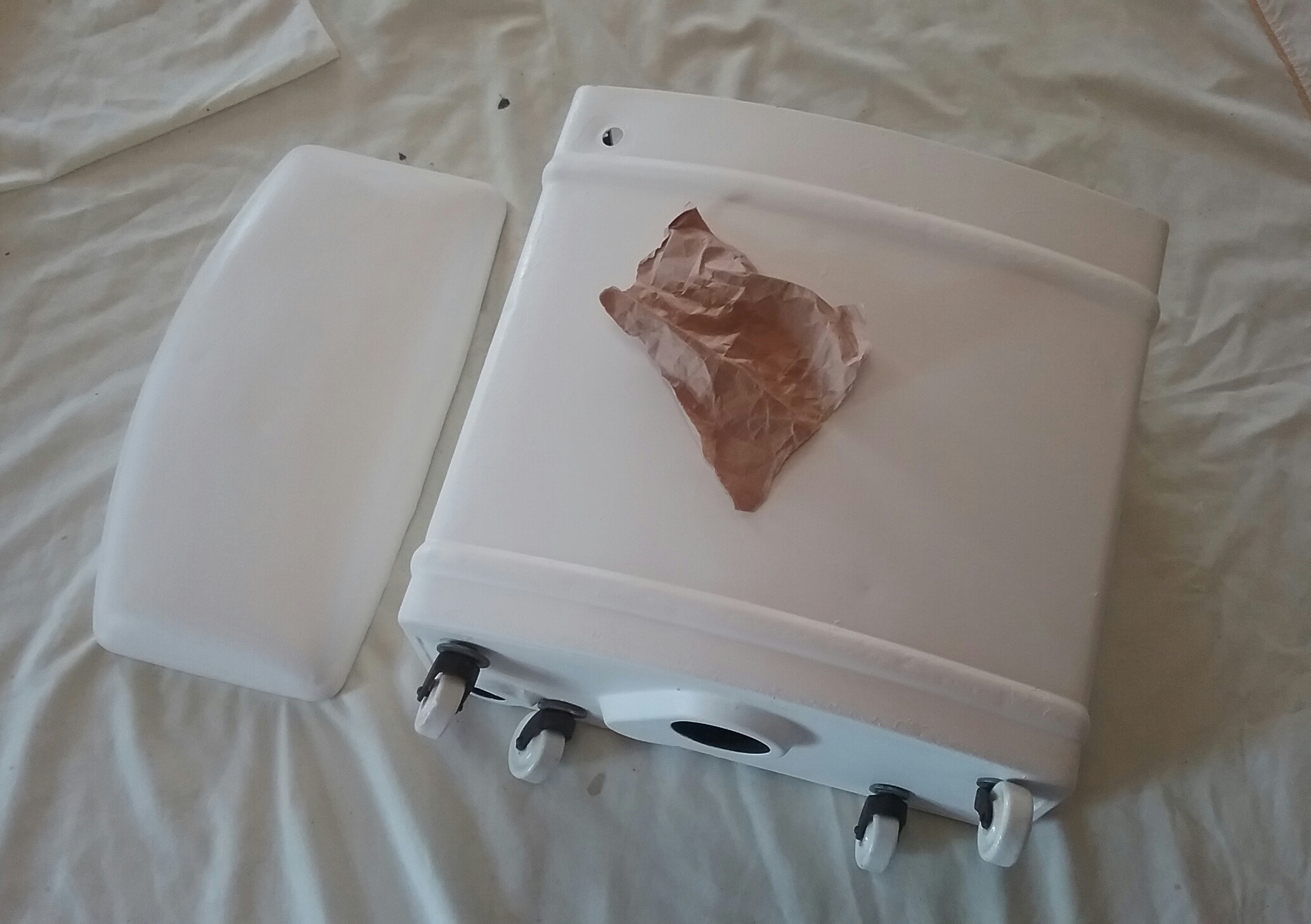
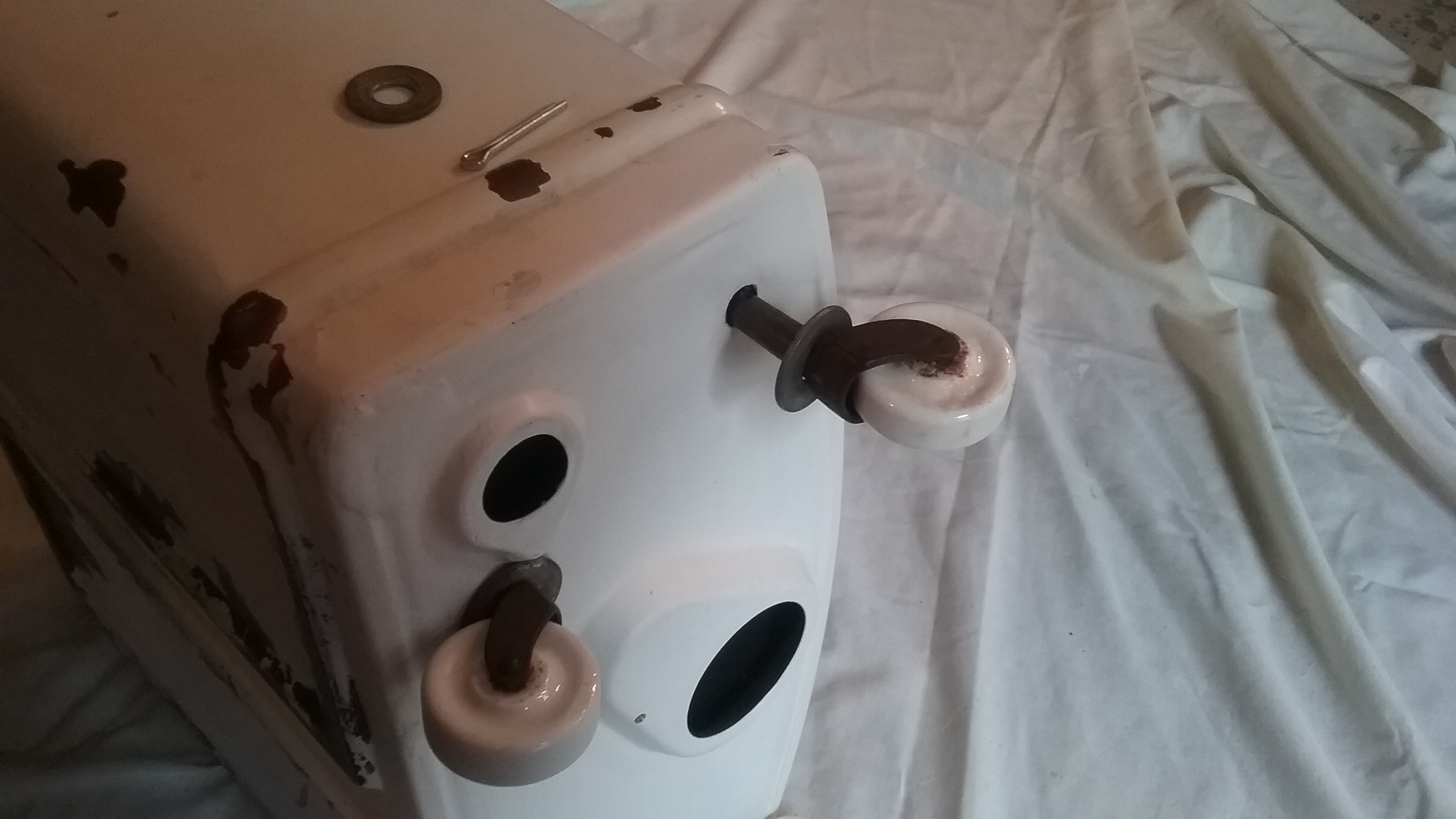
Put the plywood back in bottom of the tank and insert the casters again. Push the cotter pins through the drilled holes of the caster stem.
20170120_133710  20170120_134412

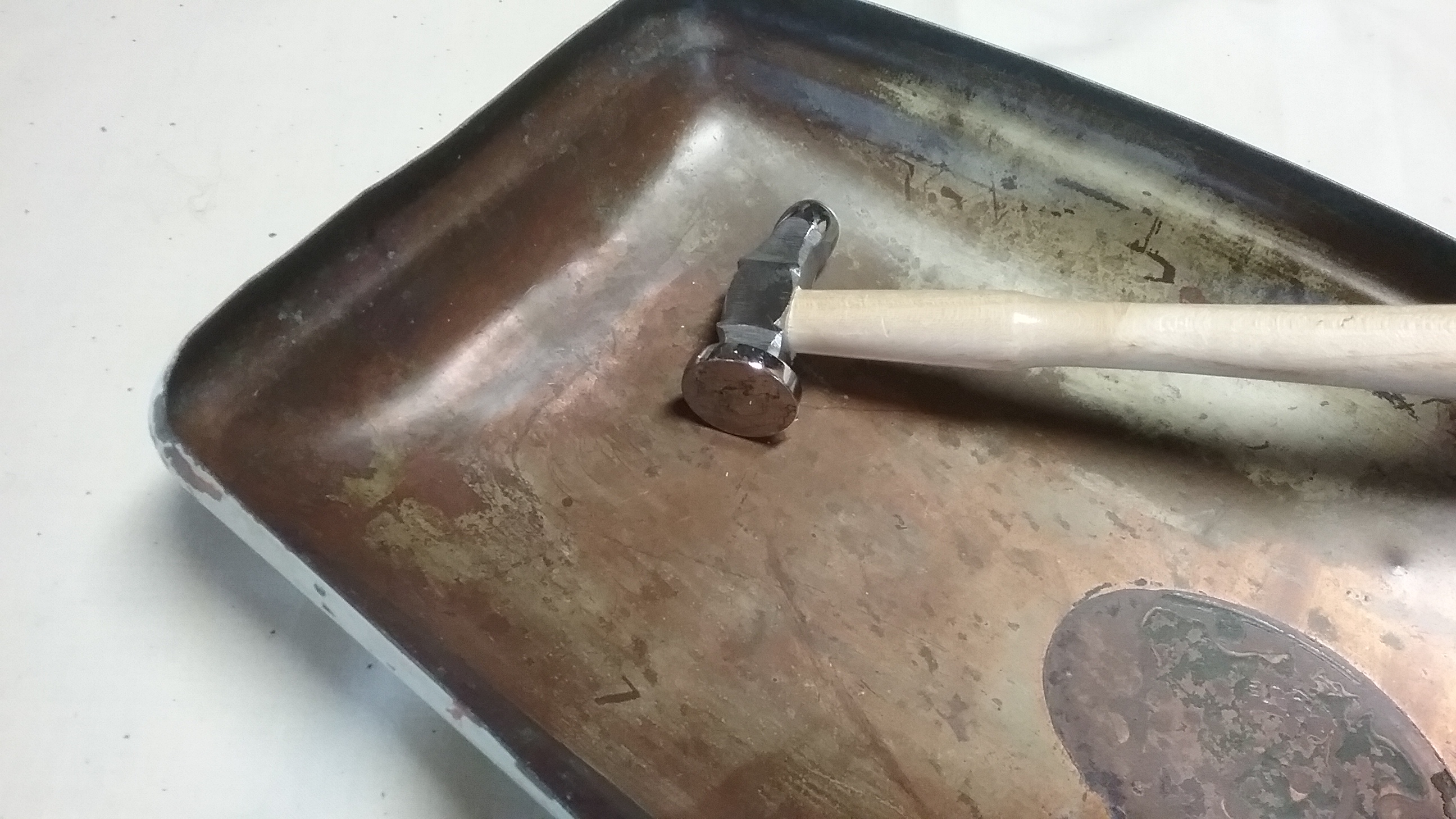
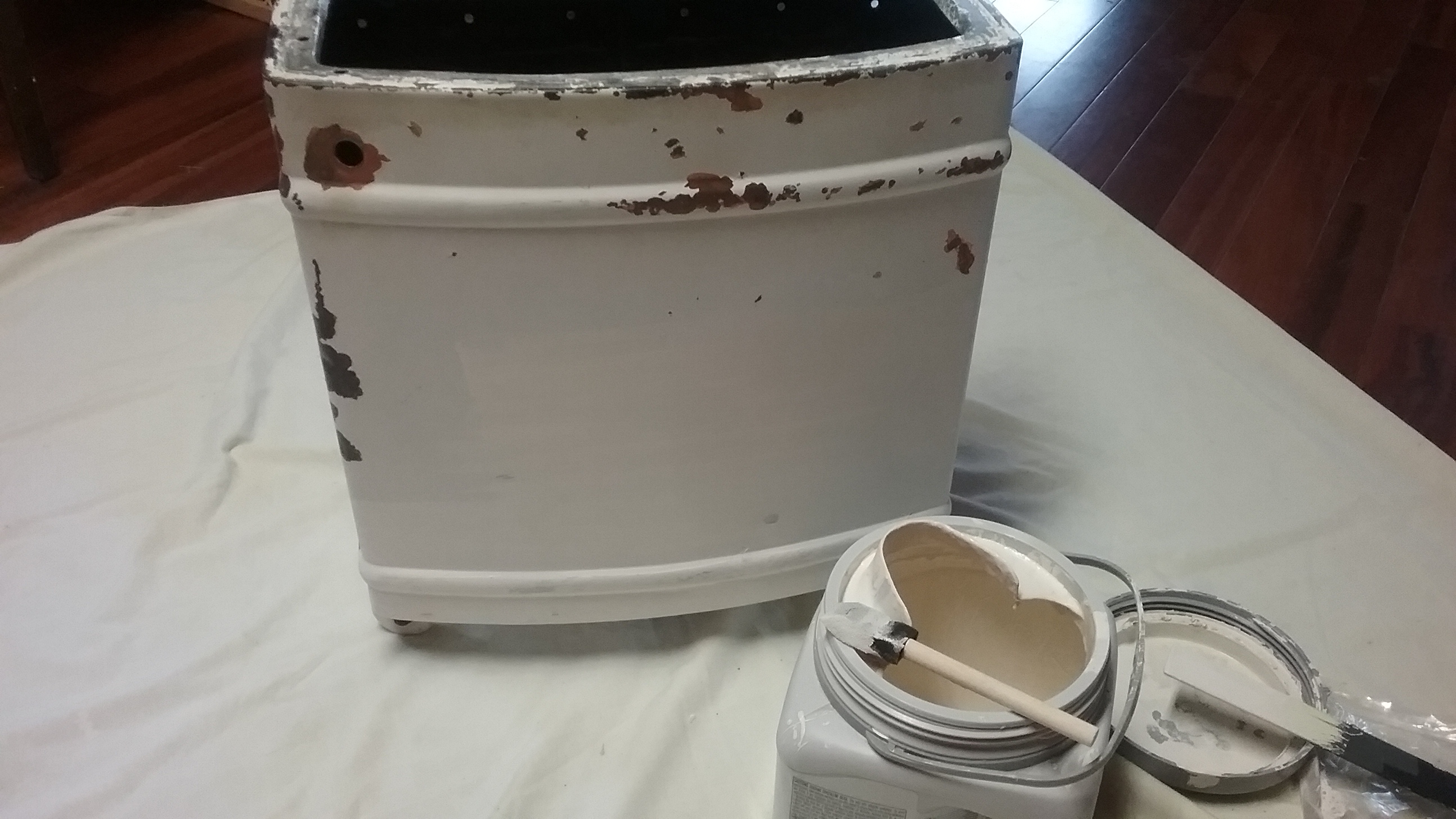
Paint the tank and lid. I beat a small dent out of the lid before painting. Lightly sand dried paint with a piece of wrinkled brown paper to smooth the finish.
20170123_125118  20170123_131654  20170216_143733

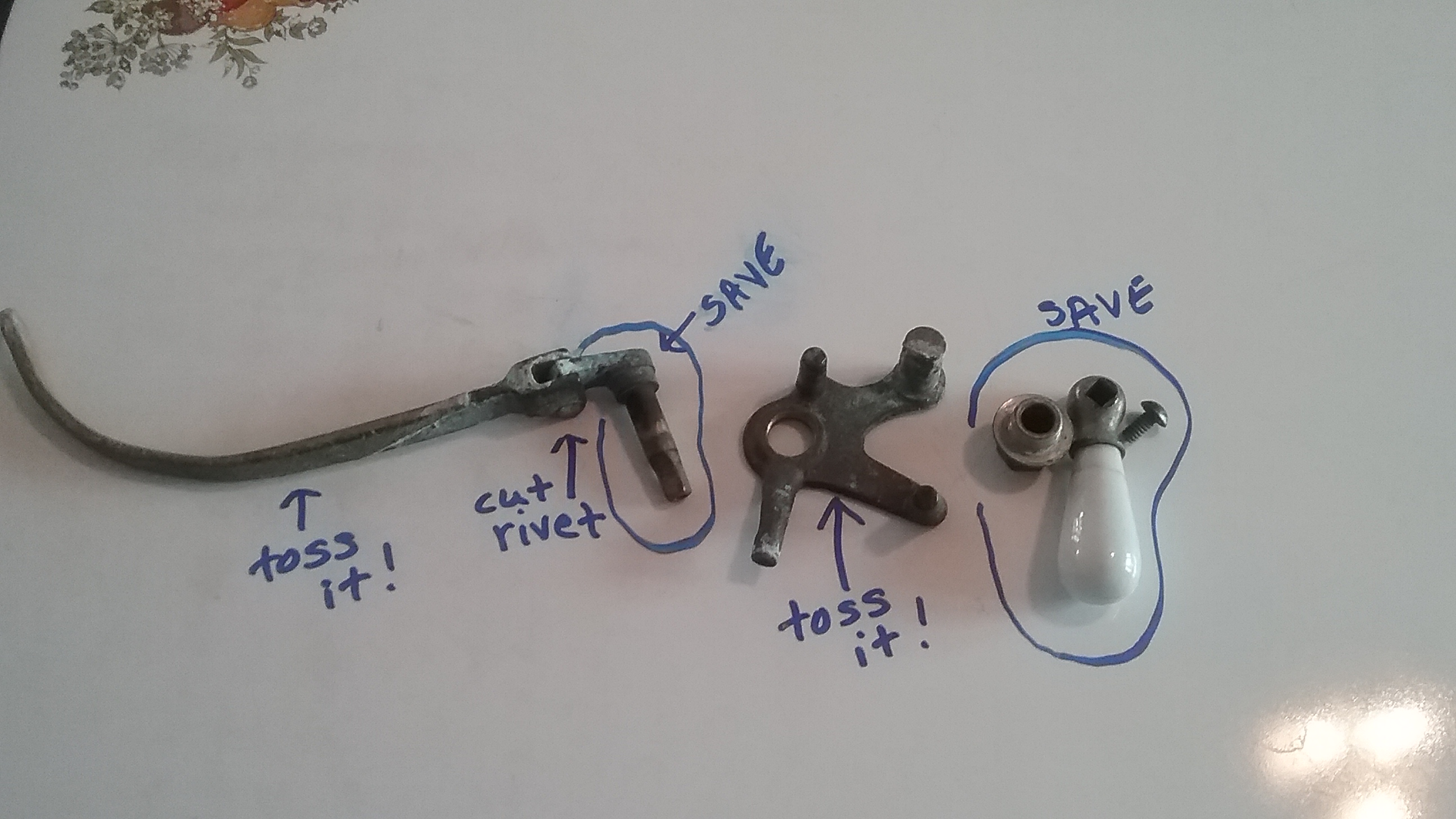
The porcelain handle was taken apart.

20170126_101515  20170126_102620

My husband helped me figure out a way to twist the handle back on firmly by customizing a 3/8″ coupling fitting.

20170128_090631  20170128_091432

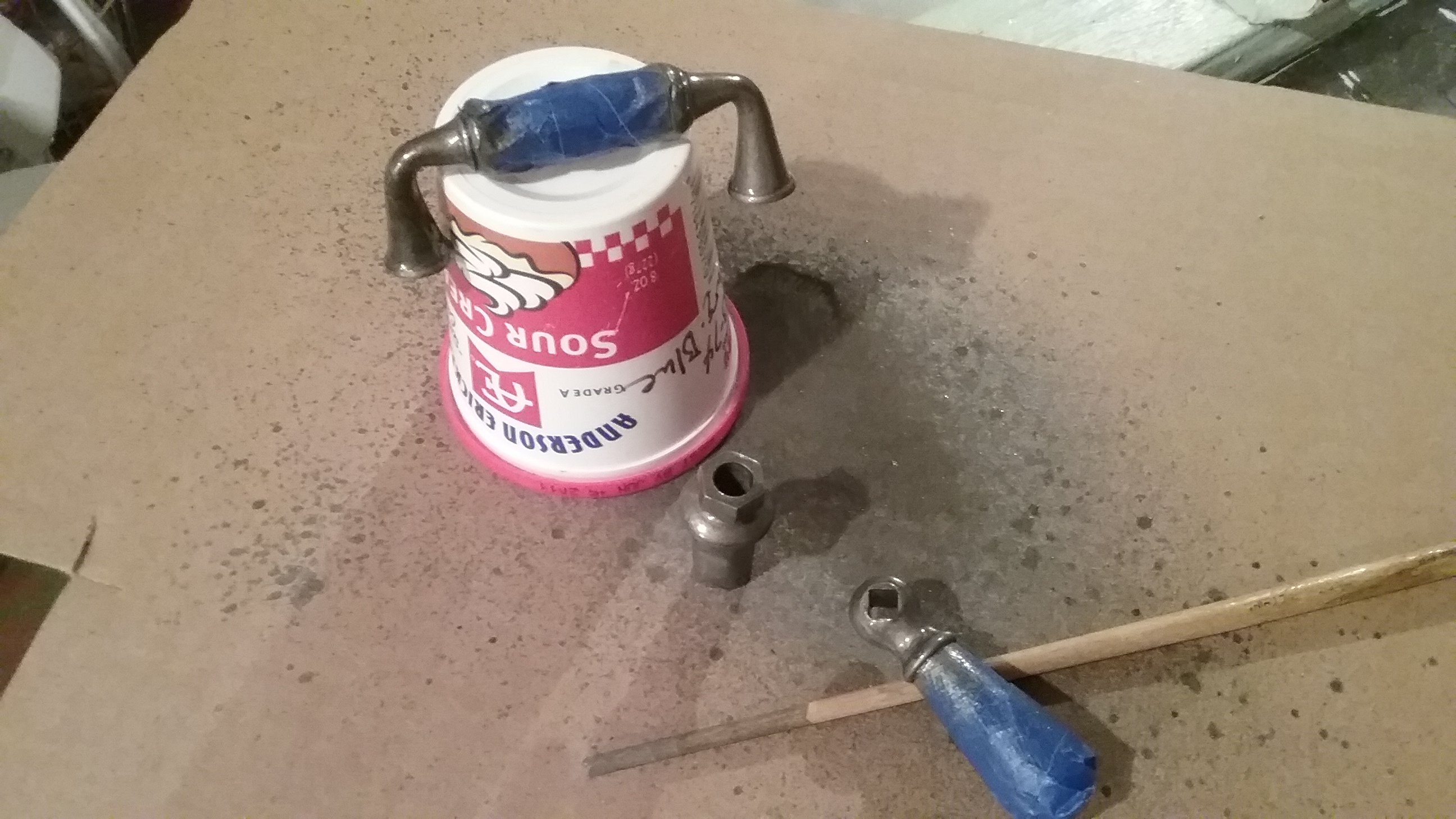
I found the perfect lid handle at the Habitat store for 50 cents. After taping off the porcelain parts, I sprayed the handles, and the handle pieces that would show, with a hammered metal paint. I used a q-tip with a little fingernail polish remover and a ceramic tool to clean up some paint bleeds before attaching the handles.

20170119_164820  20170126_182455

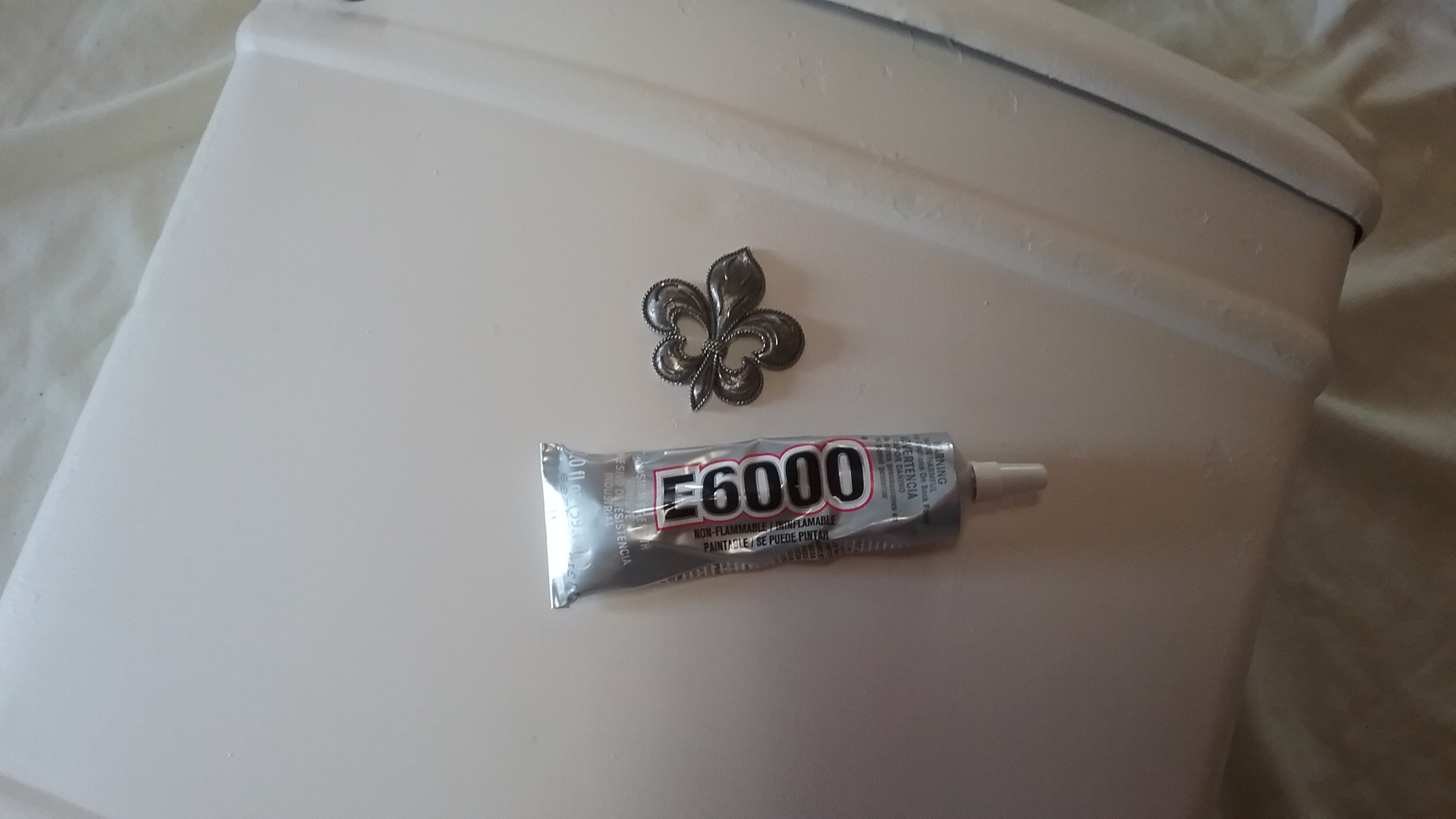
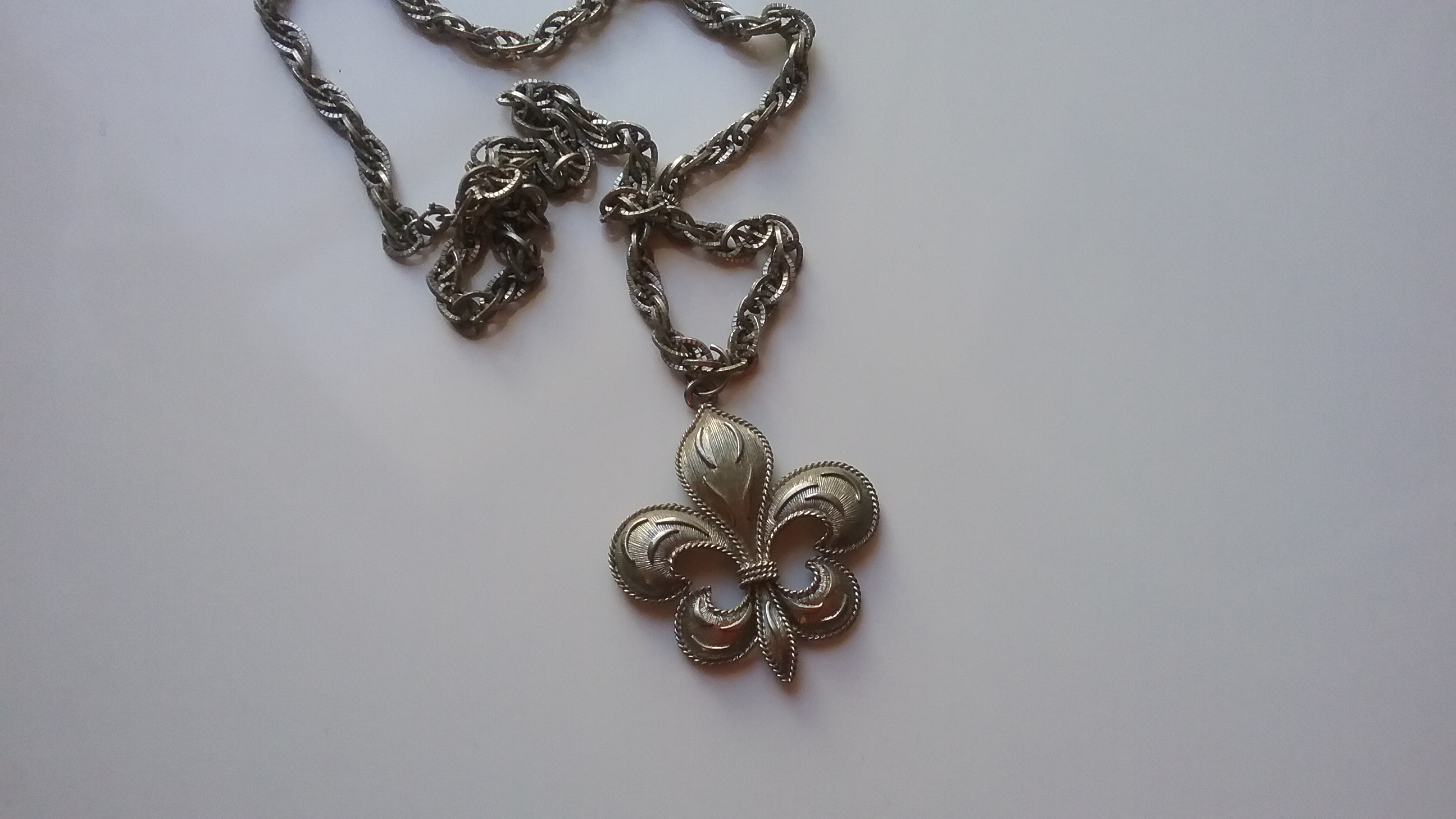
I’ve been saving an old necklace from my high school years because I liked the fleur-de-lis (never thought I’d be using it for something like this). The link at the top of the fleur-de-lis was pretty weak and bent right off without leaving any sharp edges. I sprayed it to match the handles and let it dry.

For good adhesion, I scrapped off a small bit of paint where I wanted to place the fleur-de-lis, then glued it on with a small dab of E6000.
20170205_113836  20170205_115514  20170206_093753  20170216_130715
This is a fun piece, I love it!  It’s sure to add a bit of vintage charm to my bathroom.

← Back

Thank you for your response. ✨


My Cornucopia

I know, I’m really cutting it close with this post, only being 3 days out from Thanksgiving. It wasn’t really something I had planned, it just kind of happened.

I was snooping around at my sister’s garage sale, last month, and found a wicker cornucopia in the “free” box. It made me smile as I remembered how excited my grandson, Kyle, was when he learned about them in preschool a couple years ago. He really got a kick out of saying the word and used it as many times as he could in conversations. We all got the biggest chuckle out it. Anyway, I grabbed it, with him in mind.
I was thinking I’d just fill it with some tiny gourds and a little fall sprig, but just couldn’t get enthused about it. Then, as I walked past it on Friday (2 days ago), I thought about how my daughter loves to decorate for all the holidays. I decided to make it a gift. I’d snazz it up for her and fill it with treats for the kids. Now it had my attention ..

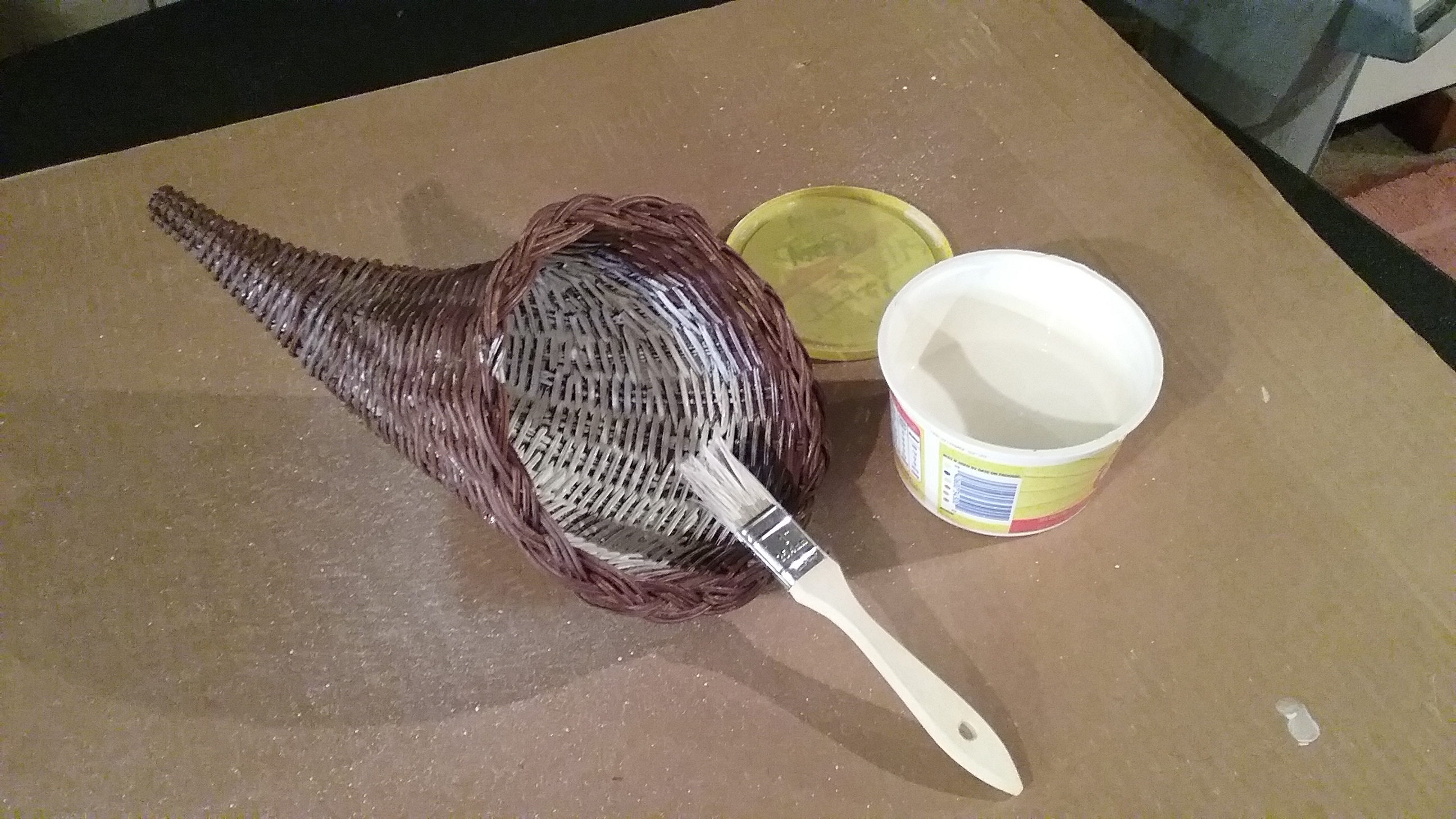
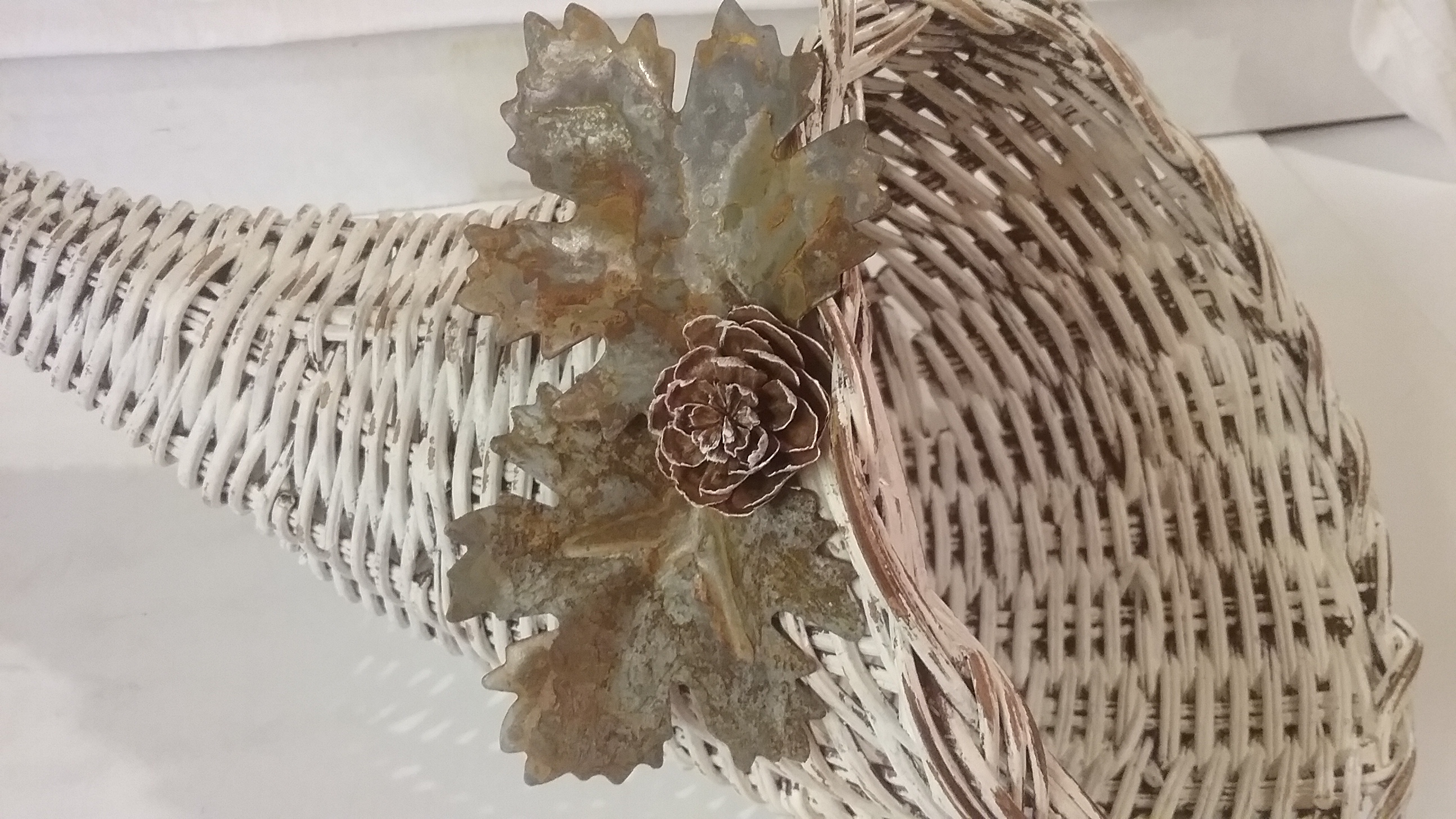
Not worrying about getting into all the nooks and crannies, it got a quick white paint job. After it was dry, I sanded it lightly with some coarse sandpaper to remove a little paint for a worn look. Not wanting to use a floral sprig, I opted for metal leaves that have been around here for ages. Looks like they originally came from Walmart, but I don’t know if that’s where I got them. The leaves were too shiny, so I rusted them. I love the way they turned out. I sprayed them with a clear sealer to protect their new patina.

20161119_110453  20161120_132743

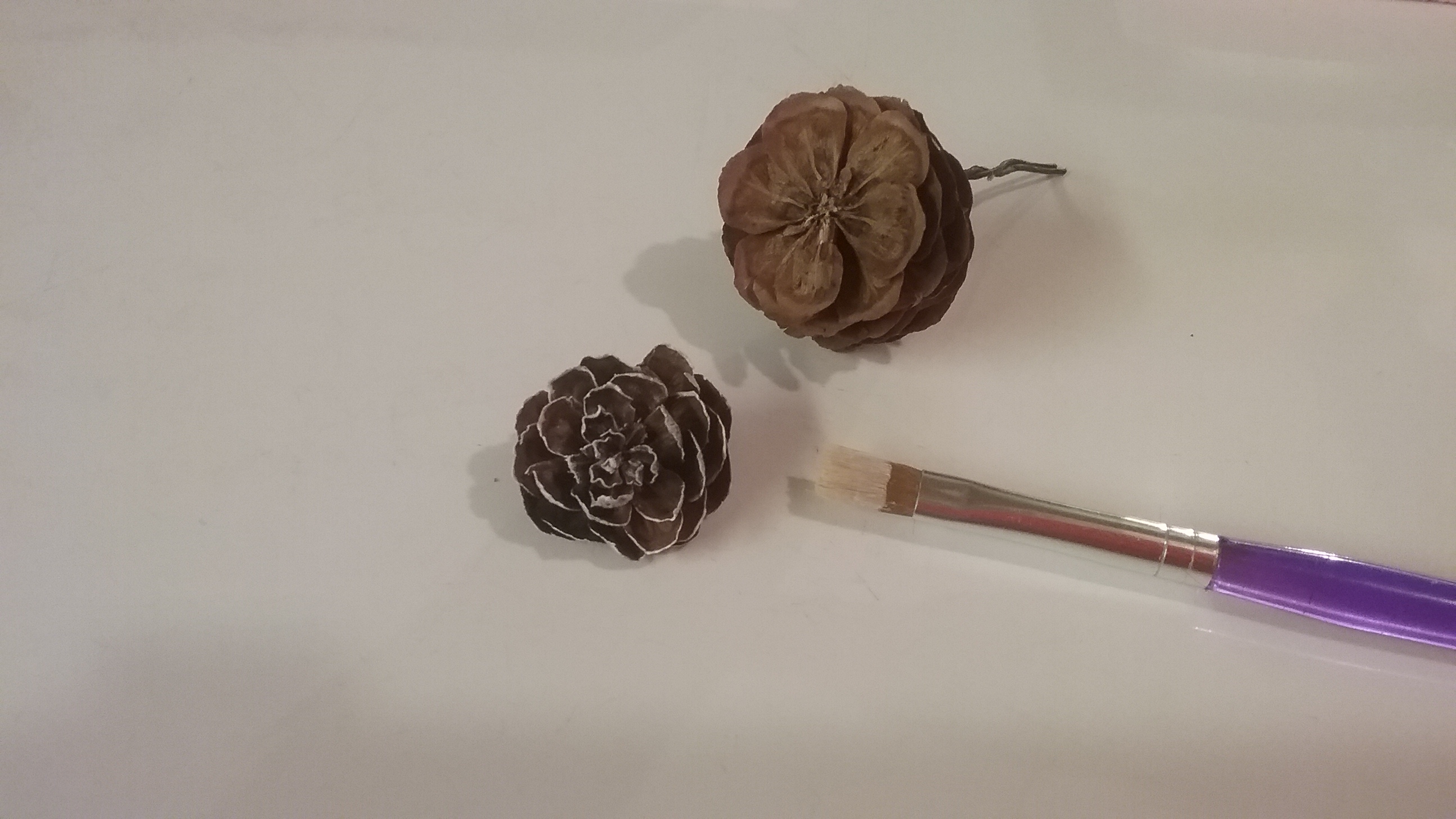
I clipped off the top of a pine cone to make a small pine cone flower, then highlighted the edges by dry brushing it with a little white paint.

20161120_144855

To keep it simple I only used 2 leaves.  I trimmed back their wire stems, and wired them right to the wicker. A touch of hot glue holds the pine cone flower in place.

20161120_145123  20161120_150043

Yep, I think my daughter will be pleased with this, and I’m sure my two favorite little people are going to love the filling!

Happy Thanksgiving All!

← Back

Thank you for your response. ✨


Salt Shaker Decorative Plant Stake

Okay, I couldn’t help myself, just one more. I don’t want to run a good thing into the ground, but this one is just so quick and easy I had to do it! I promise to move on after this …. really!

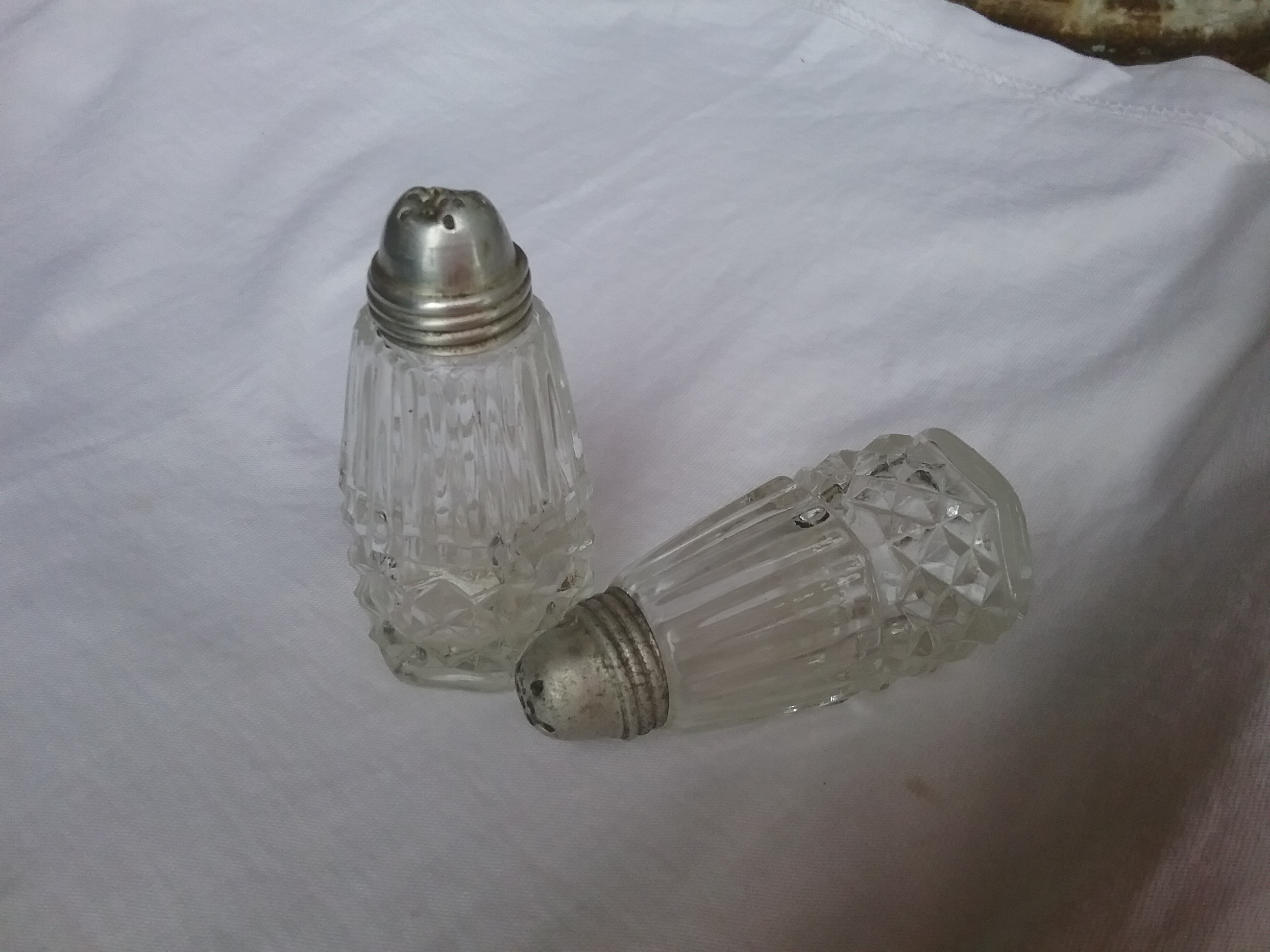
As I was cleaning up some of my latest messes, I came across this small pair of shakers. I picked them up at a garage sale somewhere along the way, thinking at the time that they would be cute on a small plant stake. So, since I had them in my hand, well, you know …..

20160719_160344

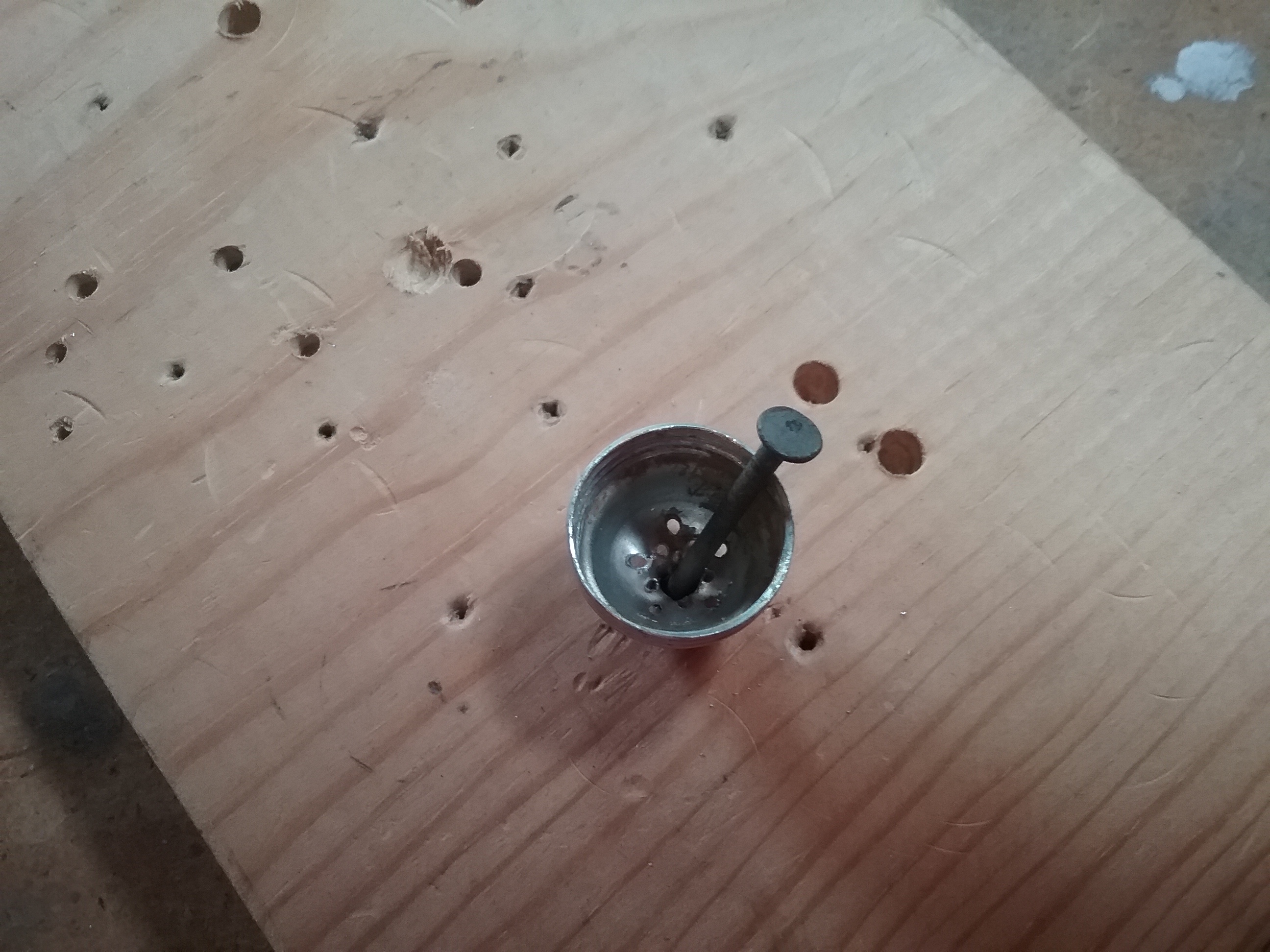
Nail a pilot hole in the lid. Drill a 1/4″ hole. Use small pliers to straighten out or bend jagged edges, just until a length of 5/16″ threaded rod will fit through it easily, you don’t want the hole any bigger than it has to be. My rod was a scrap piece, 20″ long, so I just left it that way.

20160719_161257  20160719_162116

20160719_162929  20160719_163039

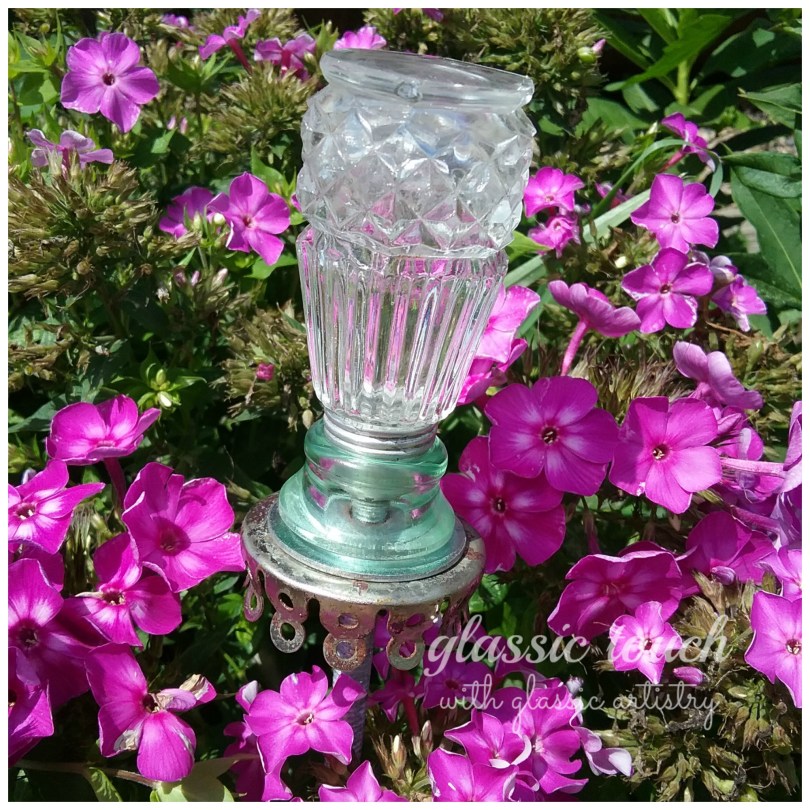
I like to experiment quite a bit, and have a habit of throwing odd little pieces of glass in a kiln to see what they will do. It was in some of my trials that I found a wonderful pale green bottle spout, PERFECT!  I got to thinking about all the bags of pretty round, resin napkin rings I often see at sales, they might work in something like this. Might have to start giving them a second look.
Find two nuts that fit the rod threads, and run one a couple inches down the rod. On the rod, stack and arrange your gathered pieces as we did in my last two posts, until you have something to your liking.

20160719_172605  20160719_183206

20160719_184126

I found an awesome new glue last week. It looked like it would work great on a lot of the projects I do, so I grabbed a tube to try. Otherwise I would have used E6000 or another silicone glue.
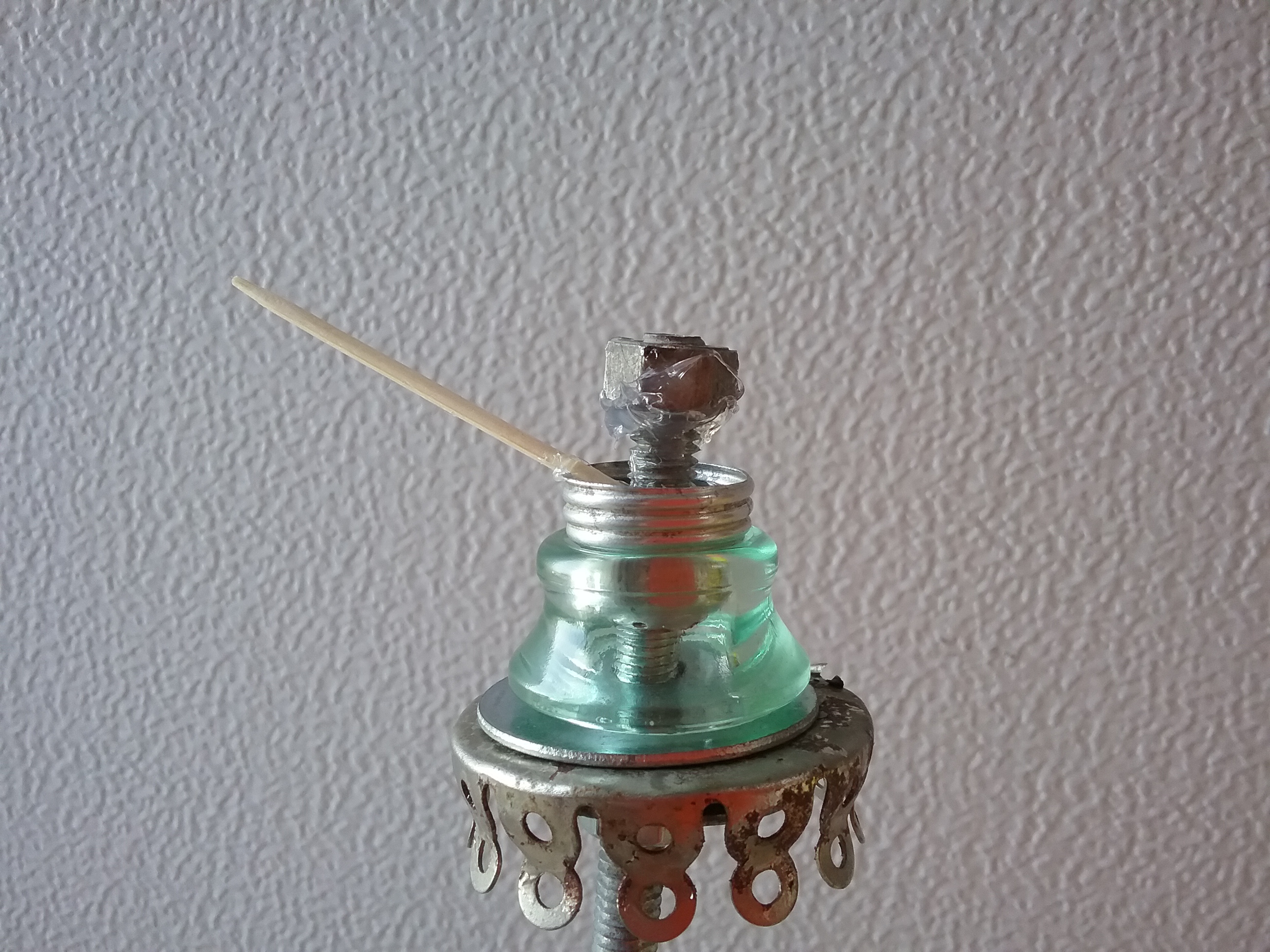
Stack your design loosely on the rod. Stand the rod in a heavy bottomed bottle or a bucket of sand. With a toothpick, apply a liberal amount of glue inside the shaker lid tip and around the nut. Push the shaker lid up firmly over the nut.
Apply more glue to the threads of the lid and screw the glass shaker on solidly. Gently push the rest of the pieces up to the shaker and tighten the nut. Leave to dry overnight. Don’t worry about getting everything lined up perfectly at this point, the important thing is for the glue to dry. After it’s dry, you can loosen the bottom nut a bit to center things up if needed.

20160719_183442 (1)  20160719_184325

20160719_184718  20160719_185219

20160719_185615

There! Enough of the garden stakes, for this year anyway. Thanks for bearing with me as I worked through my obsession.
Just a reminder, glass and metal expand and contract at different temperatures, so please store them indoors during cold winter months. I stand mine in a bucket of sand, in the garage, through the winter so they don’t get iced over.
Now, moving on …..

← Back

Thank you for your response. ✨