Garden Path DIY Part 2

Back with an update on the progress of my garden stones.  I had hoped to be back sooner but the weather has been hit and miss the last two weeks and it’s affecting what I can get done.

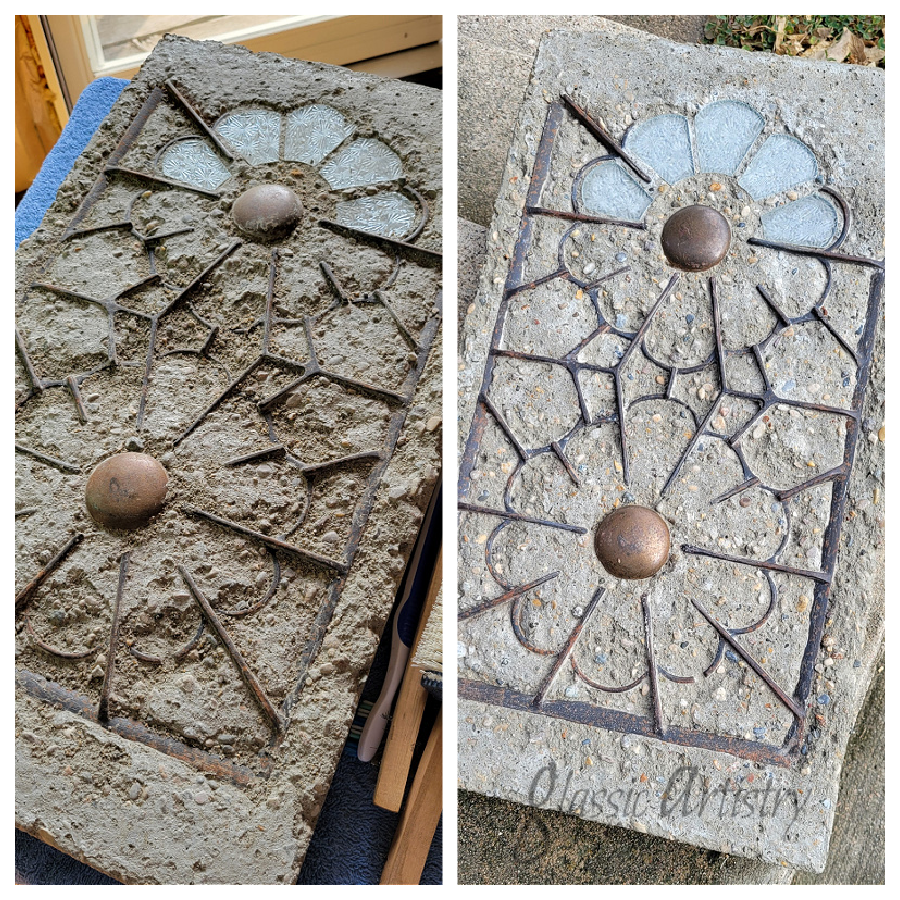
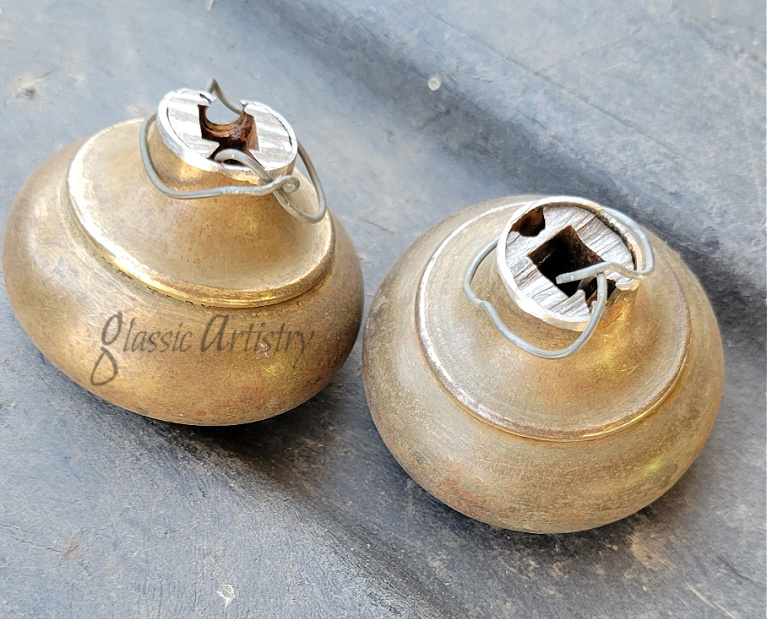
I really wanted to do something with the broken burner grid shown at the end of my previous post and couldn’t wait to see how it would turn out.  To resemble flower centers, the ends of two brass door knobs were cut off so they wouldn’t hit the chicken wire when they were pushed into the concrete. Because of their smooth tapered shape, wires were twisted in and around them to help secure them in the concrete.  Cut and shaped glass petals were pushed gently in place as well. The glass pieces were still loose after an hour or so. I left them in place with the intention of removing them once the concrete was set and then gluing them in, but the next day they were stuck solid. I pushed the grid in a little too far again.  As it dried, the concrete rose up quite a bit in some areas.  After some scraping and rubbing with steel wool it didn’t look so bad and I’m happy with it.  I’d like to make a couple smaller companion pieces for this one, I’m thinking on it.
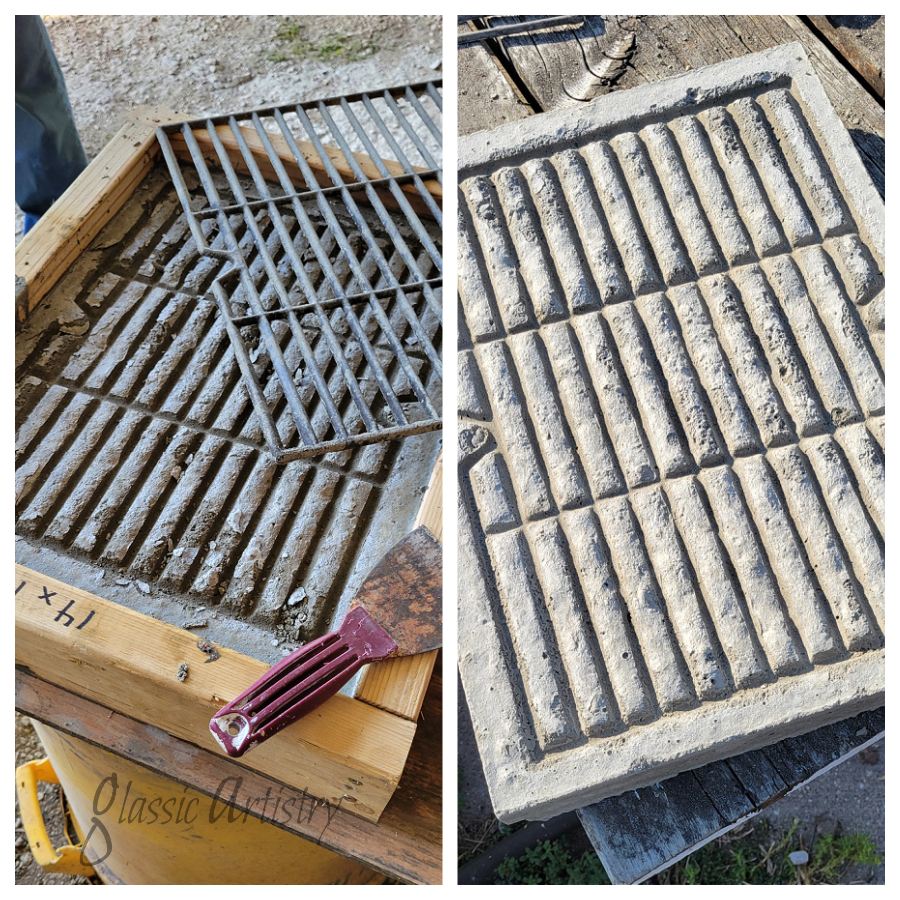
I’m making more stones with the grid pattern. Again, the iron grids were coated with diesel fuel first so they could be removed.  My helpful husband showed me how to give one snug grid a few gentle taps with a hammer and screwdriver to remove it easily.

I left a large grid embedded in one stone. Two bolts were cut off and pushed in on the sides too just for the heck of it.

I’ve come to the conclusion that pouring four stones in an afternoon is my limit, especially if I’m making the larger ones. I start getting tired. That was the case with my first rock stone.  I wouldn’t have done it if the wooden form hadn’t been pre-prepped and the wire reinforcement already cut. 

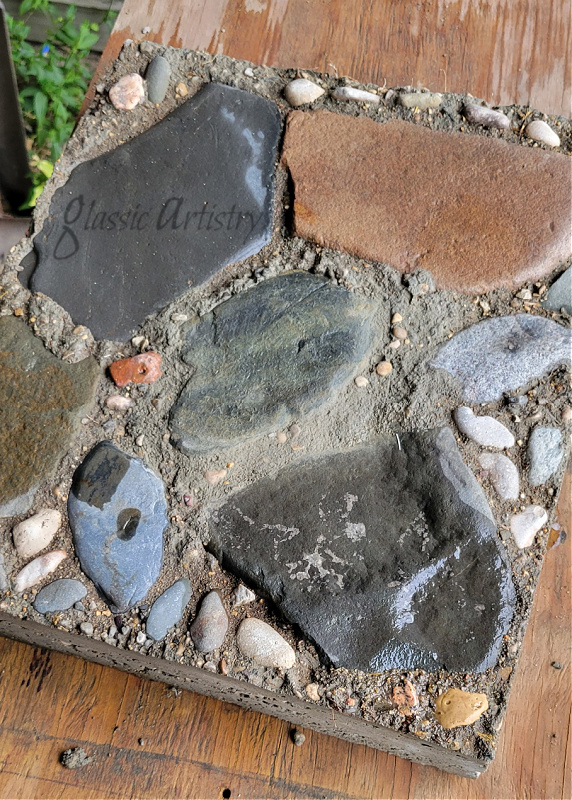
I hurriedly grabbed a scoop of dirty sand from the garden along with any flat rocks I could see and a handful of smaller rocks.  I gave all the rocks a quick dunk in a bucket of water to get the dust off.  The flat rocks were laid face down over a thin layer of sand. The smaller rocks were laid and pushed into the bare spots. 

I should have gone slower, but I did try to fill the cracks around the rocks first as I added a thin layer of concrete.  A piece of chicken wire was added and then covered with concrete to fill the form. 
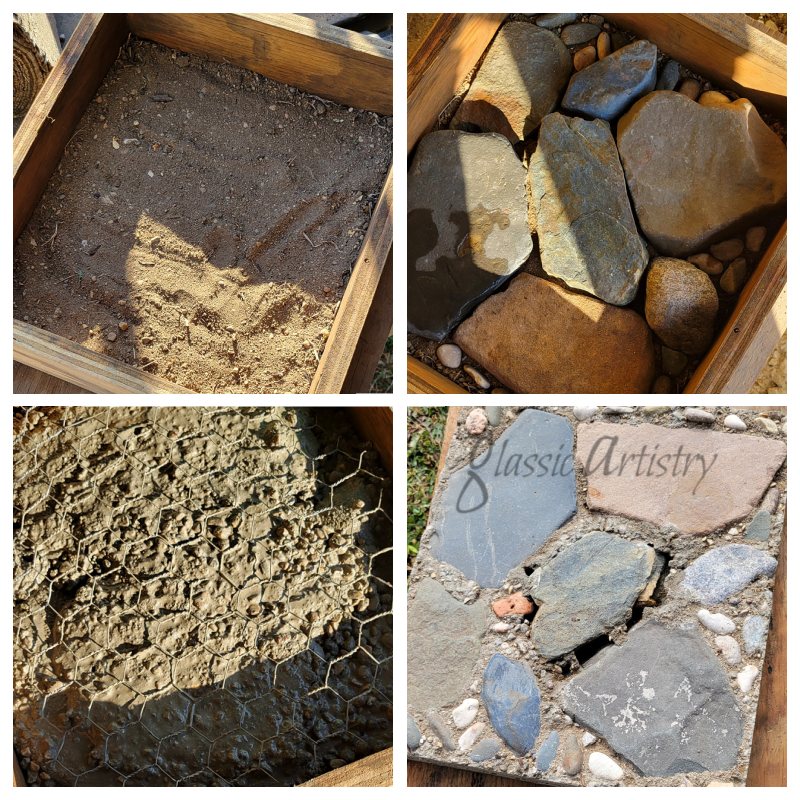
When it was unboxed and brushed clean you could see I didn’t get concrete in all the cracks, but I don’t think that’s terrible. I’ll get back to that problem a little later.

I’ve always wanted to make a bottle cube so I’m sharing this last one before I go.  I love this one.  It’s also small enough that I can make them and others like them in my basement over the winter to be ready next spring.

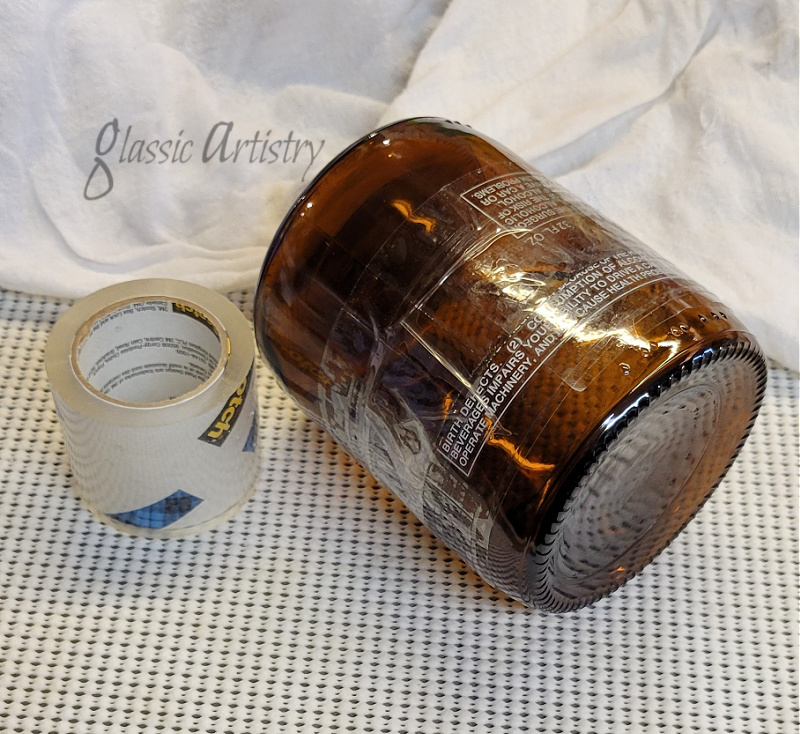
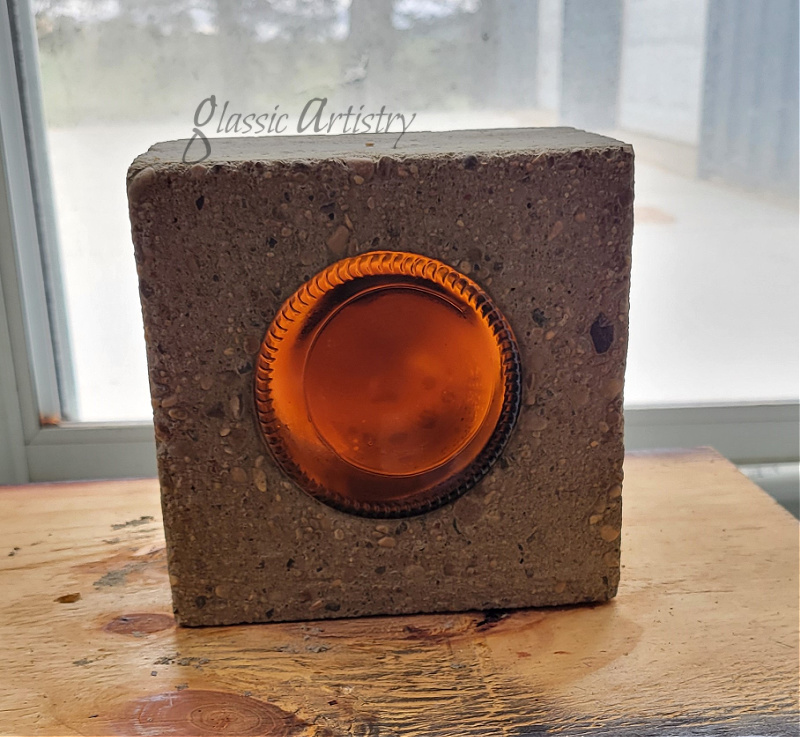
The inside of the wooden form was 6” x 6” x 5” deep. A glass saw was used to cut the bottoms from two beer bottles.  A bottle cutter or wet saw would work too. The cut edges were lined up and taped together with clear label tape creating a cylinder shape. The cylinder measured 4 ½”H x 3 ½” W.   Needing only a small amount of concrete for this one, I was able to mix it up in an ice cream bucket. The flat top and bottom surfaces of the bottles were wiped lightly with diesel fuel before centering and standing the cylinder in the prepped form.  The cylinder was held down firmly while spooning in the concrete, concentrating on getting it in the corners and filled in around the bottom of the cylinder. Continuing to hold the glass firmly, the form was shaken gently to settle the concrete. I don’t know if it made a difference or not, but I sat a small rockon the cylinder, no wider than the glass, until the concrete was dry.
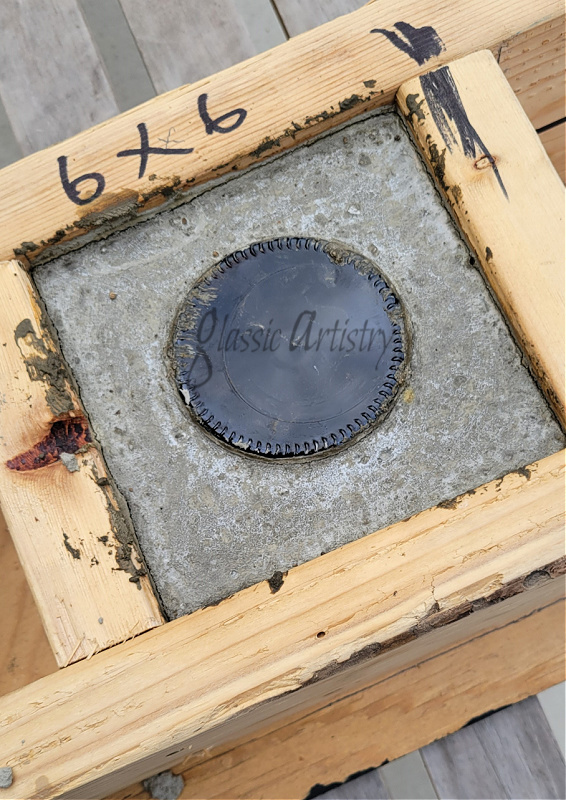
After setting close to 24 hrs, it was removed from the form to finish drying. Any excess concrete was cleaned off.

Unfortunately, it’s cold here today with no sun.  I had to get a picture of it in the house in front of an open door. I’ll get a better picture ourside when I can. There’s no plan on how cubes like these will be used in the garden yet, but I have the winter to think about it. They’re definitely going somewhere!
There was a tiny bit of concrete left over from the cube so I decided to use it to fill the cracks in the rock stone I had made. I used a nail to kind of poke it down into the crack then topped it off.  I gently brushed most of the excess off it after it dried a bit.  Looks like it might have worked, time will tell.
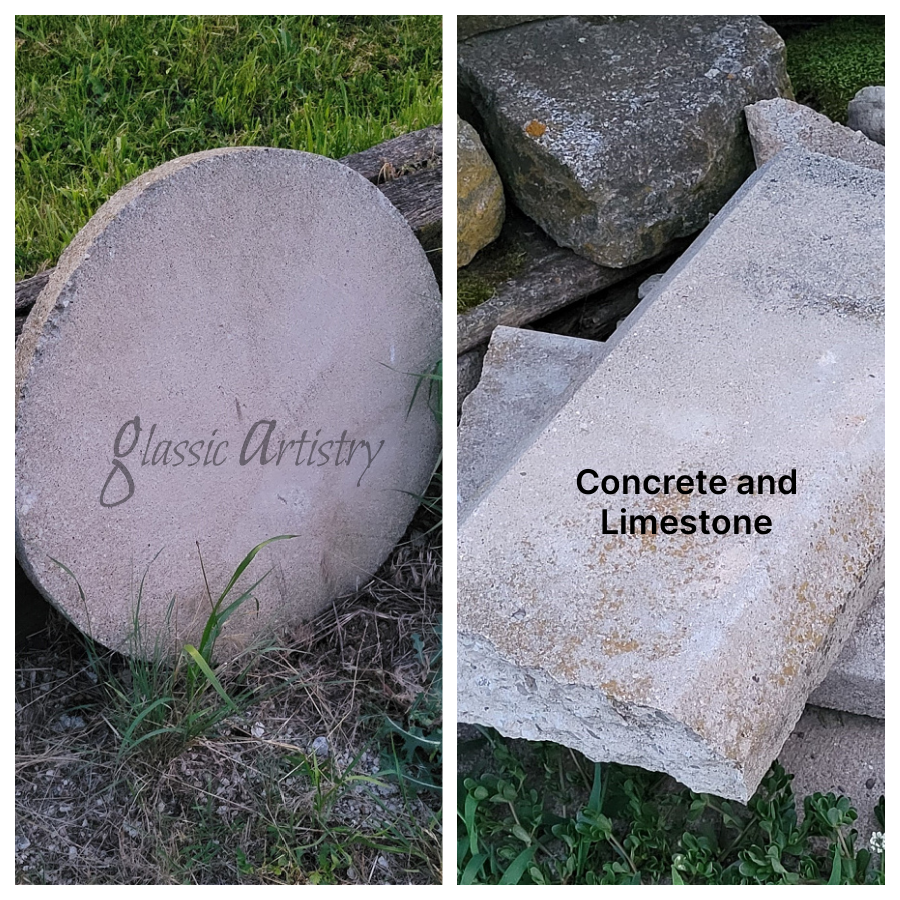
Looking at the extended weather forecast, I may have a few good days in the second week of November that will be warm enough to get some of my salvaged circles placed in the garden before the temperatures start dropping below freezing every night.

That’s all for now, I’ll return. Stay well friends!

Garden Path DIY Part 1

I hope followers haven’t been thinking I was getting lazy, I’ve not posted in a while.  It’s been so dang hot all summer that it’s not been fun to work on many outdoor projects, and the little things I have been getting done were boring. But, the weather has cooled now and I’m raring to get going on the paths for my garden.  

No plan, just going to visualize it as I go. I’m adamant about making most of the path stones myself; that’s going to be the funniest part. Preferring an aged, rougher look, I went to the salvage pile to see if there was anything I could work with.  I found several interesting things to try and incorporate; we’ll see where things go.

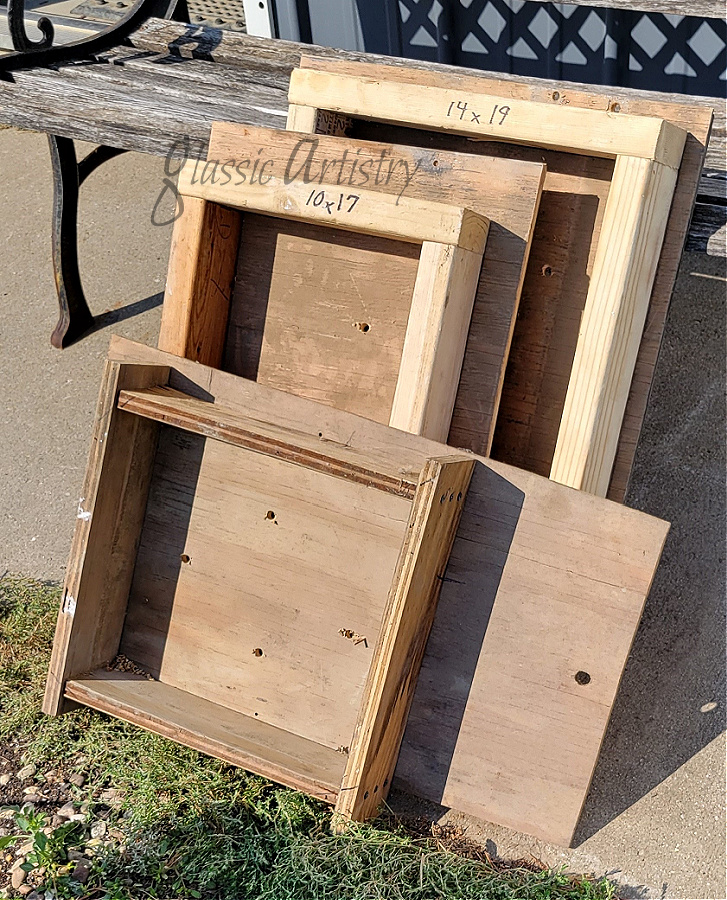
I was anxious to get started so my husband built a couple new boxes for me while I went after some 60 lb bags of General Purpose Concrete Mix as was used in a previous garden stone project https://glassictouch.com/category/for-the-garden/.  

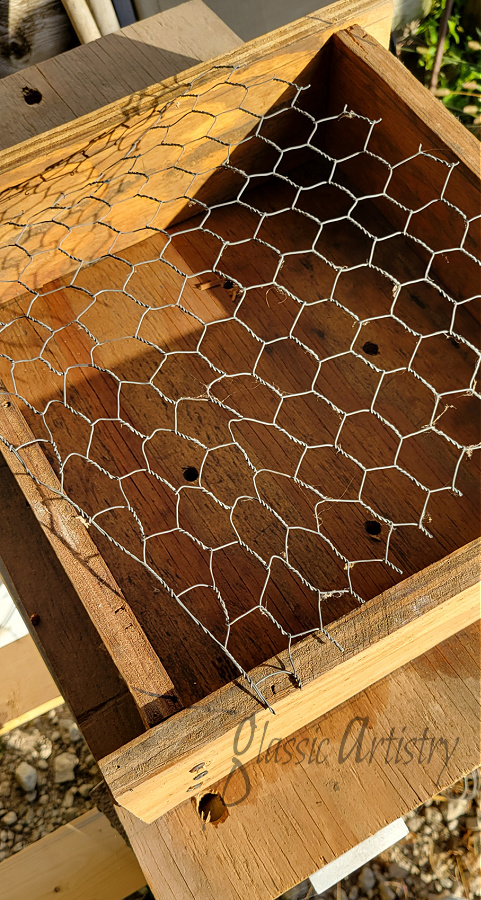
Adding a chicken wire reinforcement will be an added step with all of the new stones that are made.

The inside of the wooden forms were brushed with diesel fuel as a release agent. I poured about half of the concrete in a form, laid the wire in, then finished filling.

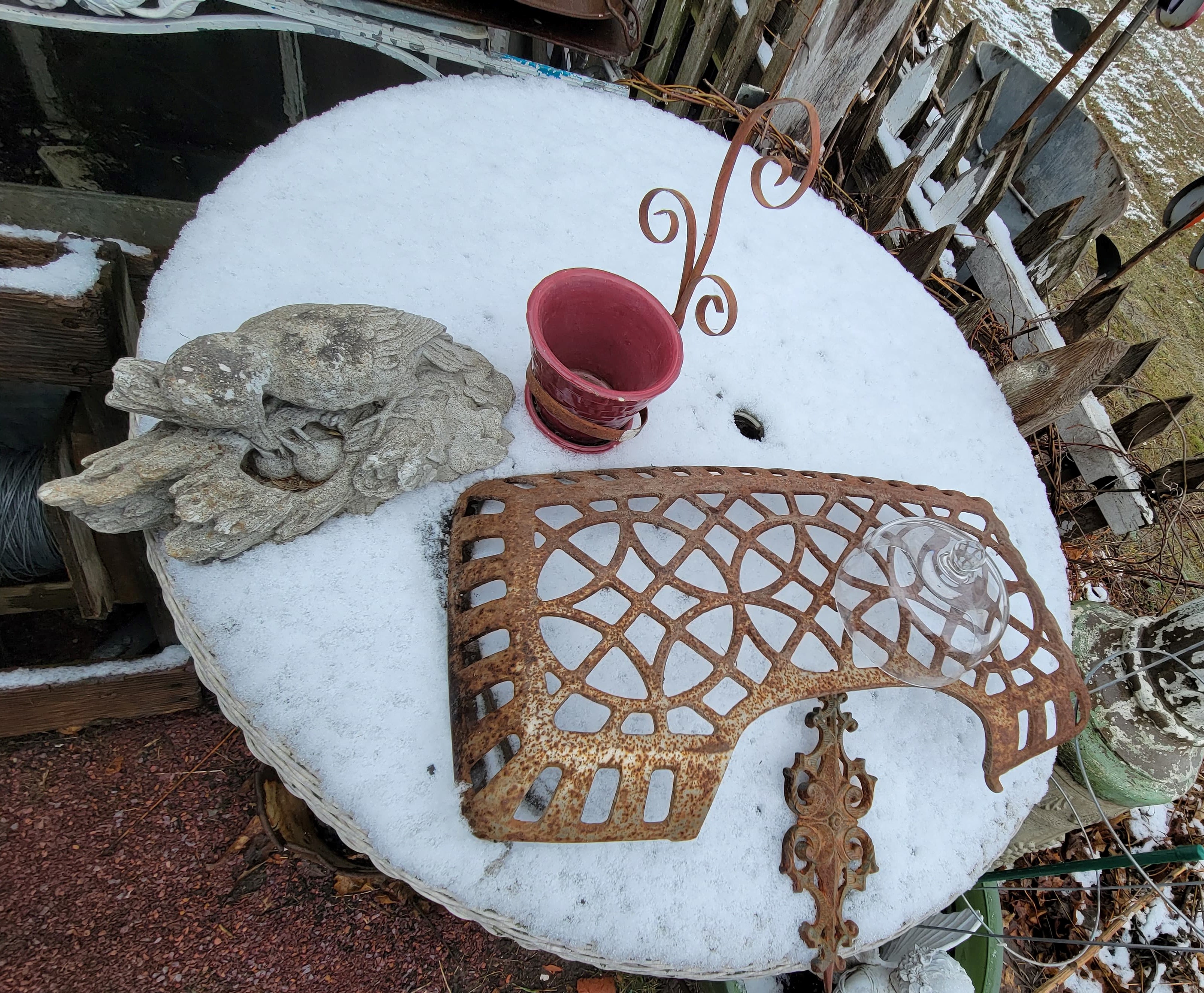
I chose the cast iron grids to experiment with first. They were given a quick swipe or two with a wire brush. I wanted to see if I could easily duplicate the grid pattern and/or embed the grid in the concrete.

I used a half a bag of concrete to embed a small grid in a 10” x 17” form opening. I think I might have pushed it in too far.  It didn’t help that I got impatient and tried to unbox it too soon.  It’s rougher than I wanted, but it’s fine. It is going to live outside in a garden after all, and I’ll try another one.

Both sides of a larger iron grid were coated with diesel fuel before pushing it into a 14” x 19” concrete filled form. Three quarters of a bag of concrete was used on this one.  I had a heck of a time getting the concrete mixed thoroughly in a 5 gal bucket. A pair of stronger hands and arms would have been very helpful; I’ll have to remember that when making this larger stone. The grid came right out though and I’m very pleased with the way it looks.

A handful of hibiscus leaves were laid in the bottom of the last form.  It’s probably best to press and flatten the leaves for a little bit before doing this, but, it was a last minute thought and getting late in the day. I’ll surely be doing more of this kind of thing.

That’s all for now.  I’m going to need a lot more concrete to keep going and a new form built for the next one I want to try.  I’m really looking forward to that one!

Feel free to comment and share. Have a great weekend, I’ll be back soon.

Glass & Resin Concrete Garden Stone DIY

A small amount of extra mixed concrete from my last project, pink glass, and resin, yielded a cute little accent stone for my daughter’s flower garden. It measured 6 ½” x 6 ½” x 1 ½”.

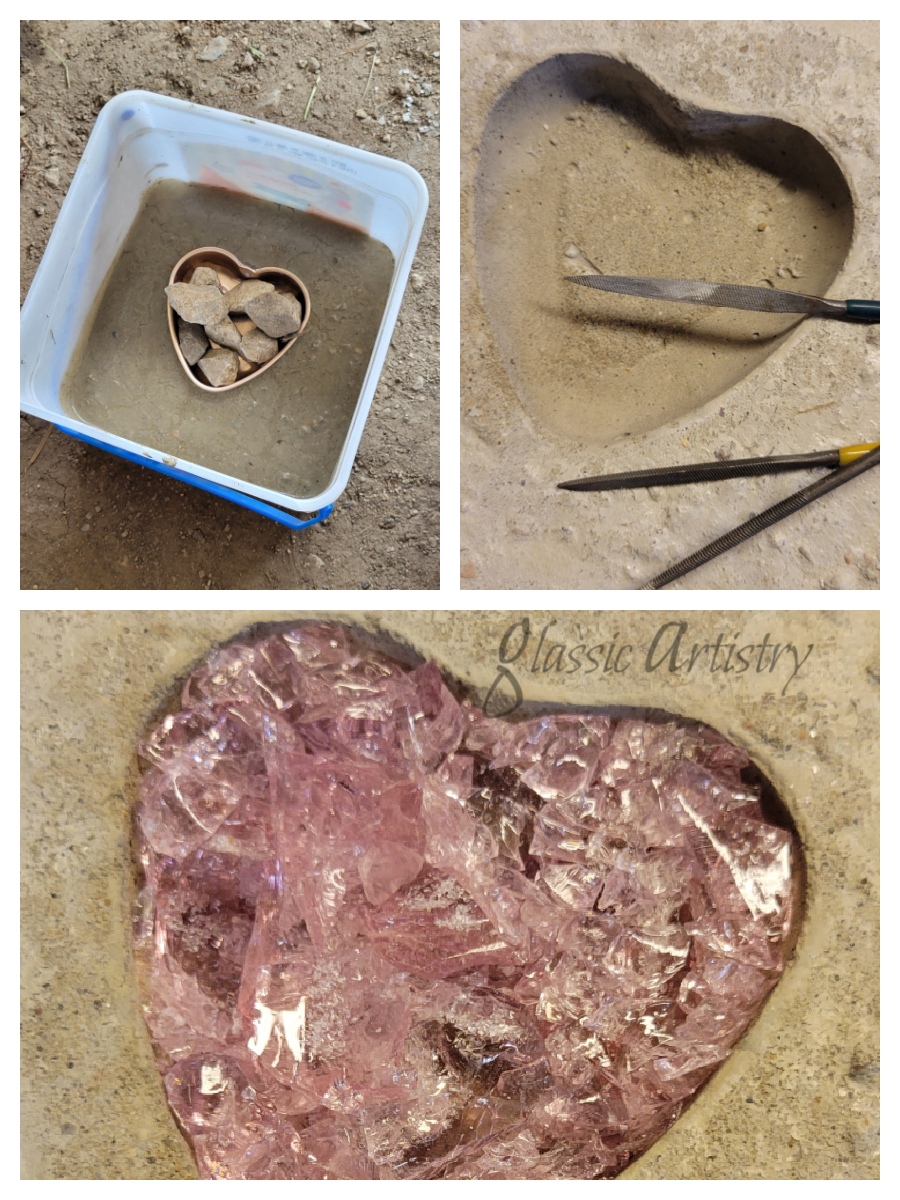
Thinking there might be a little extra concrete, four small holes were drilled in the bottom of a square plastic ice cream bucket.  I was just going to make a square stone if there was extra until I remembered a mini metal heart mold I had. The inside of the bucket and backside of the heart mold were sprayed with cooking spray in preparation. 

There was just enough concrete to pour about 1½” depth into the bucket. A small metal ring had been removed from the heart mold years ago so it was able to be pushed into the wet concrete all the way to the rim and weighed down. I left it to dry for 24 hours before unmolding, then let it dry another 12 hours.  A few rough edges were filed down before filling the heart cavity with pink glass shards.

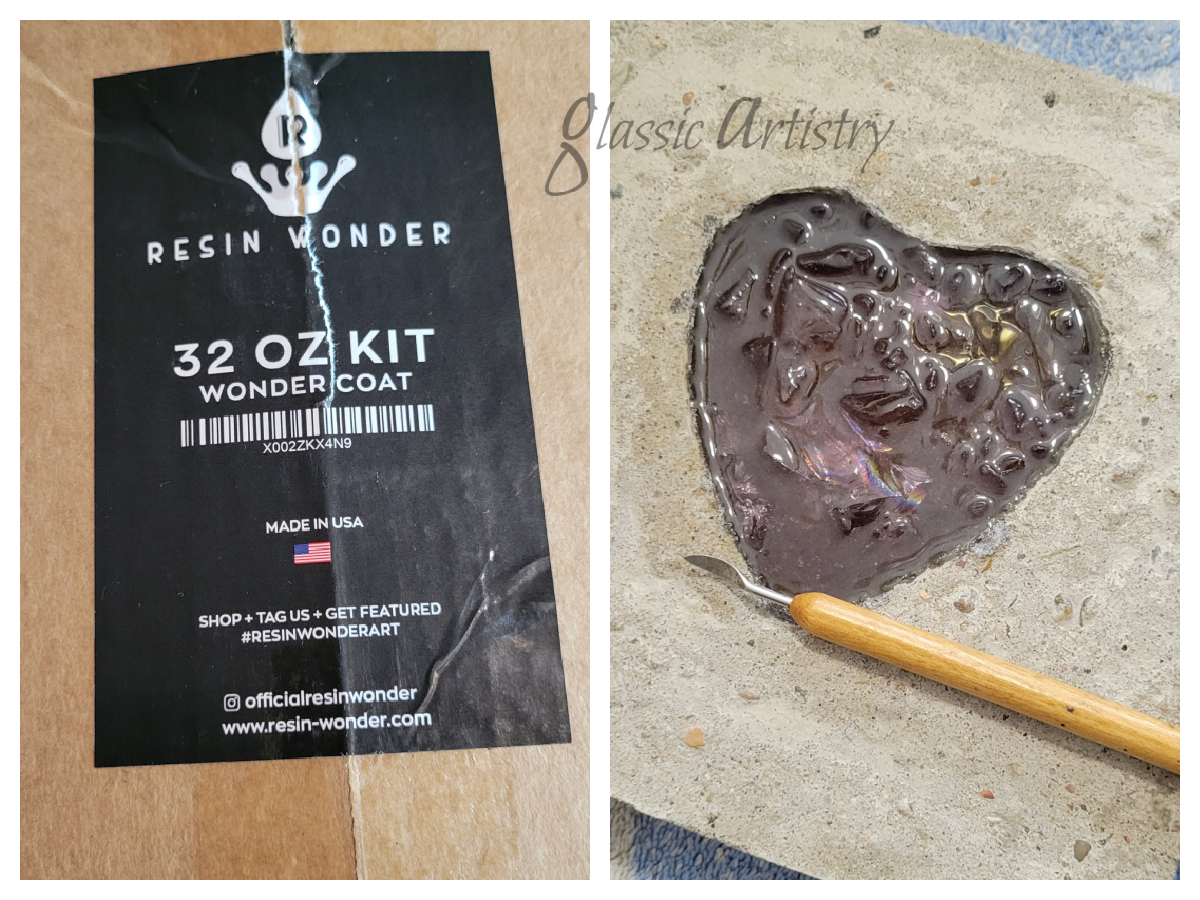
An interior/exterior resin (Amazon) was poured over the glass. This was the first time I’d used resin, but it was so simple and took very little. The resin had to set for 24 hours. The concrete absorbed the resin in a few places around the edge of the heart, but it scraped away easily, before sealing the concrete with grout sealer.

That’s all for now folks, I’m all caught up. I’ll leave you to your weekend. Enjoy!

Stay Well!

Mosaic Heart Concrete Stepping Stone DIY

Now that I’ve started, I think I could really get into this concrete crafting.  Oh, the possibilities, and what fun to create some unique designs.

Concrete/stone pathways have been on my garden “want list” for a long time. My grands and I have been collecting rocks from our fields for years and there are so many cool ideas on Pinterest.  If only there were more hours in a day.

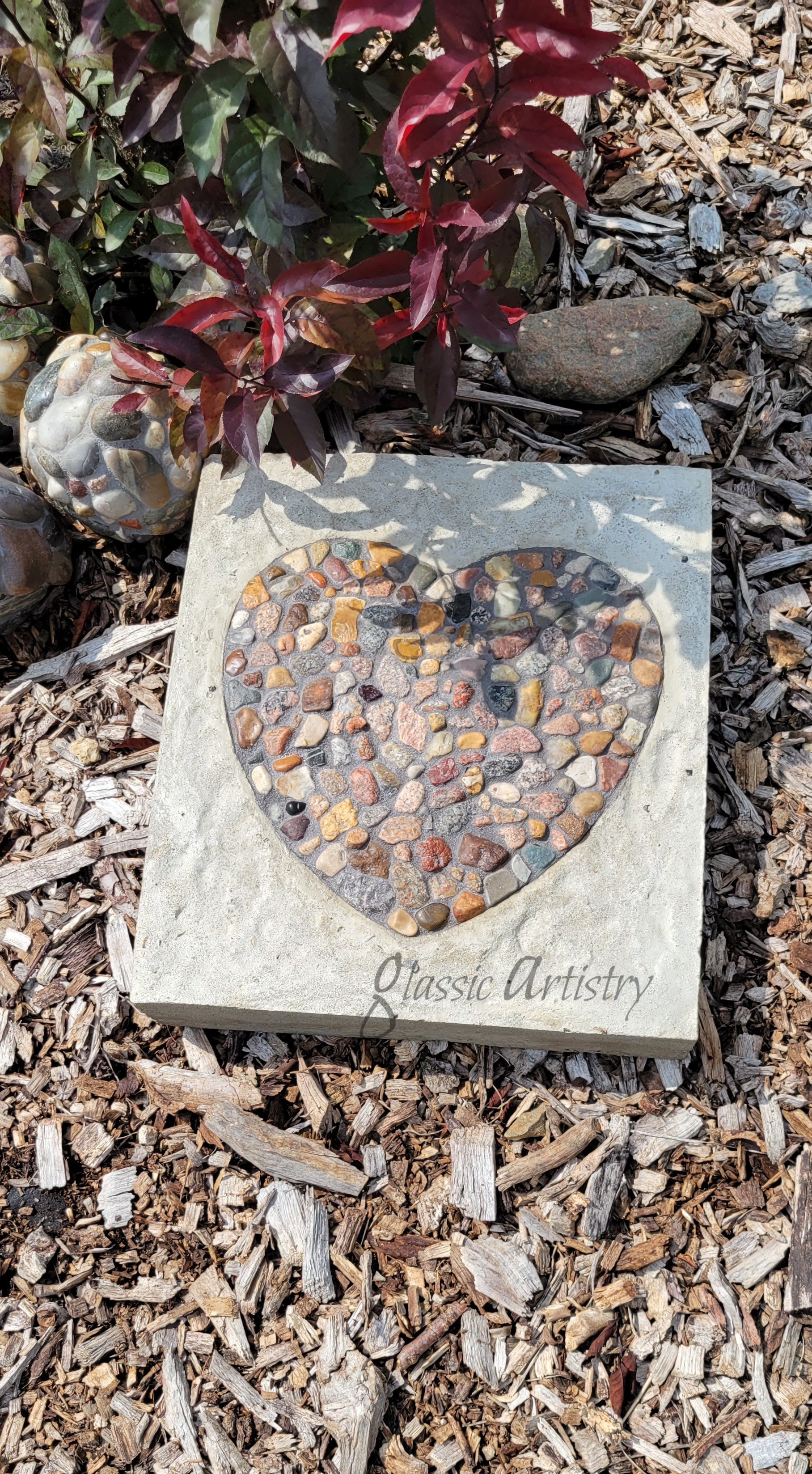
Anyway, with all the supplies here, I decided to use them again and start making a pathway happen!  I have no idea what the rest of the design will be, but it’s a step in the right direction.  

The stone was poured as in my previous post except the concrete was a little thinner and I smoothed the top. https://glassictouch.com/2023/08/11/concrete-heart-garden-stone-diy/

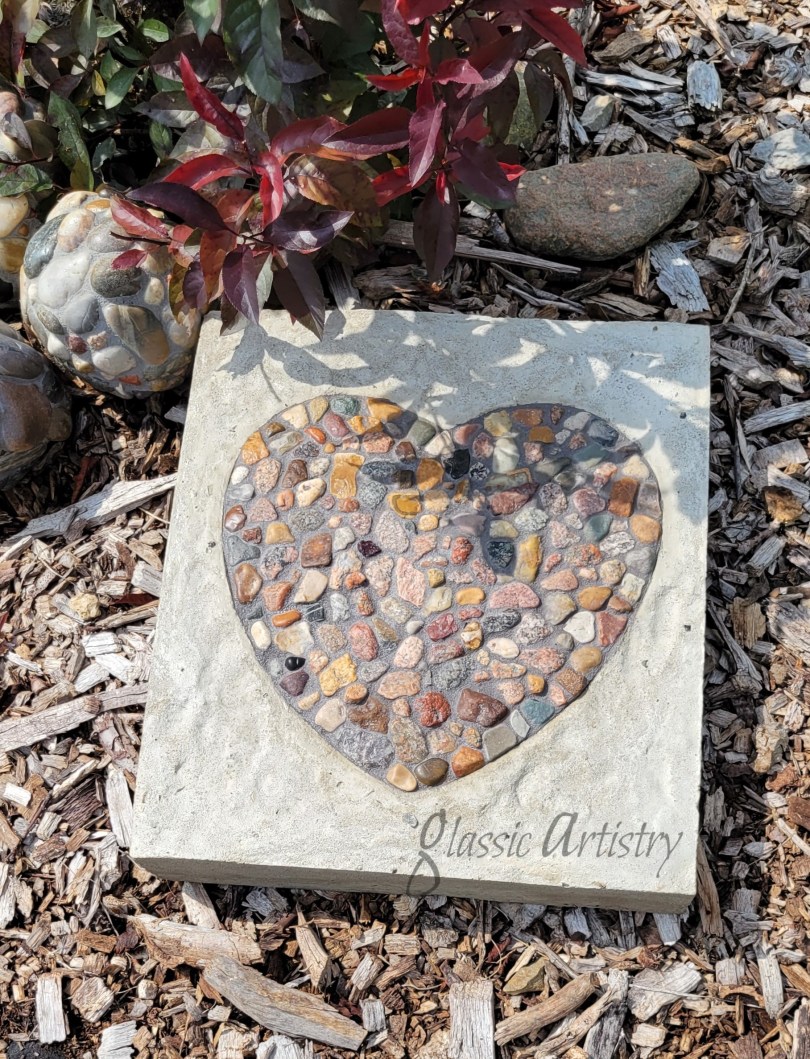
I still have a thing for rocks, so I scooped up a bucket of them and gave them a quick wash and rinse. When they were dry, I started layering and gluing them into the heart shape with E6000, trying to keep them level with the heart edge.  Sometimes tape was used to hold a glued rock in place to dry and then I filled in under it. Let glue dry a couple days.

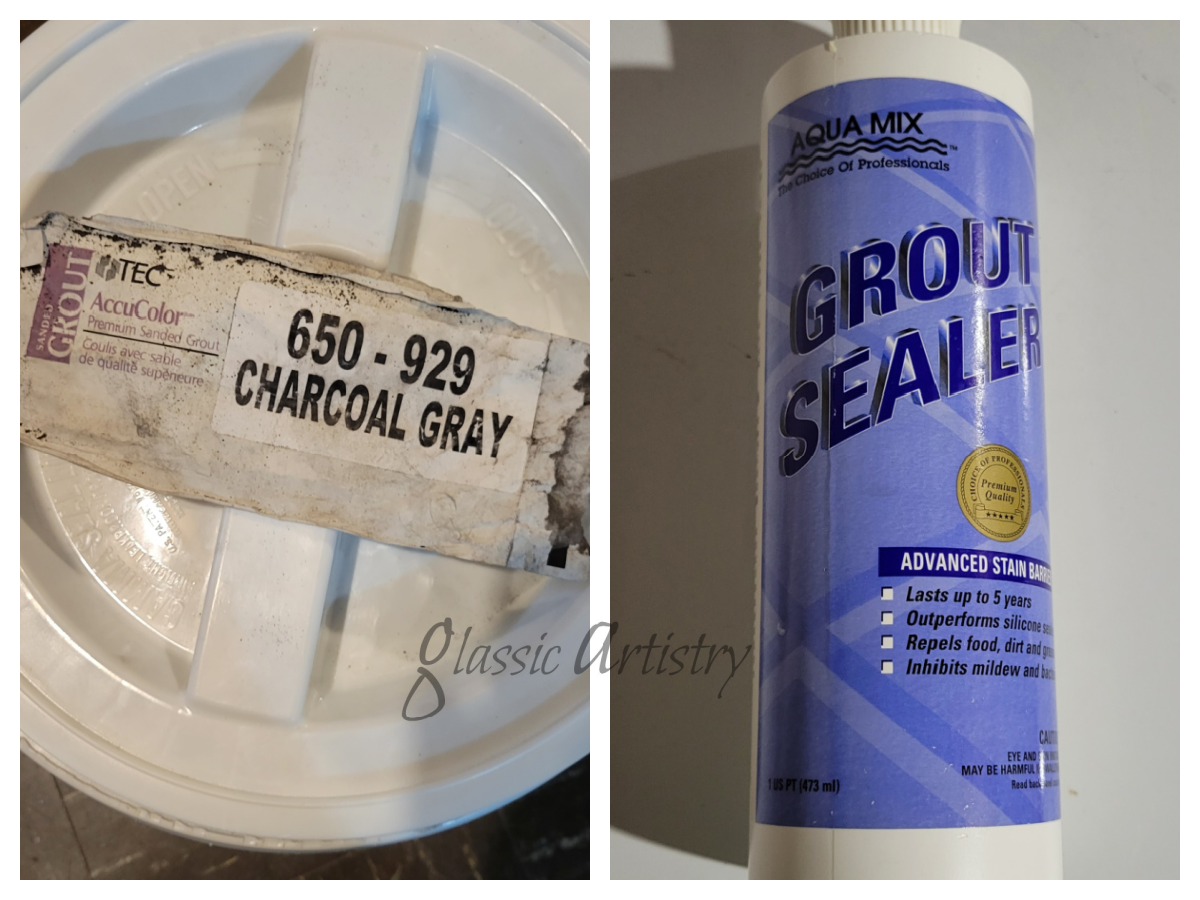
The heart opening was taped off before grouting with an indoor/outdoor sanded grout. After a couple hours, the tape was removed and any unwanted grout was scraped away to make a clean line around the edge of the heart.  The grout was left to cure for 7 days before sealing the entire stone with grout sealer. I waited another week before putting it outside. (I do plan on covering this stone during the winter to protect it from ice.)

I won’t be making anymore of these large hearts for my garden, but plan on using the wooden box form several more times.  My garden is pretty good sized, so a few large shapes will help fill in areas more quickly.  I think I’ve already decided where my new stone will go, but don’t want to lock myself into anything until I figure out what I would like to put around it.  I have several ideas whirring in my mind, so we’ll see. It would be nice if I could get at least a 6’ x 6’ area completed after the weather cools this fall and share my progress with you. Fingers crossed.

As a newcomer to concrete, I forget that there is often a little extra mixed concrete left over after pouring a project. Such was the case here.  I didn’t expect much but was prepared with a prepped ice cream bucket and mini tart pan just in case.  And guess what?  The little stone is coming next, lol.  I don’t mean to overwhelm today, but it’s too hot to work outside, giving me a chance to catch up on my neglected social media until the afternoon sun passes. Hope you don’t mind. 

Thanks for hanging with me.😊

Concrete Heart Garden Stone DIY

Hello Friends!  I’m back to share a lovely piece I made for my garden.
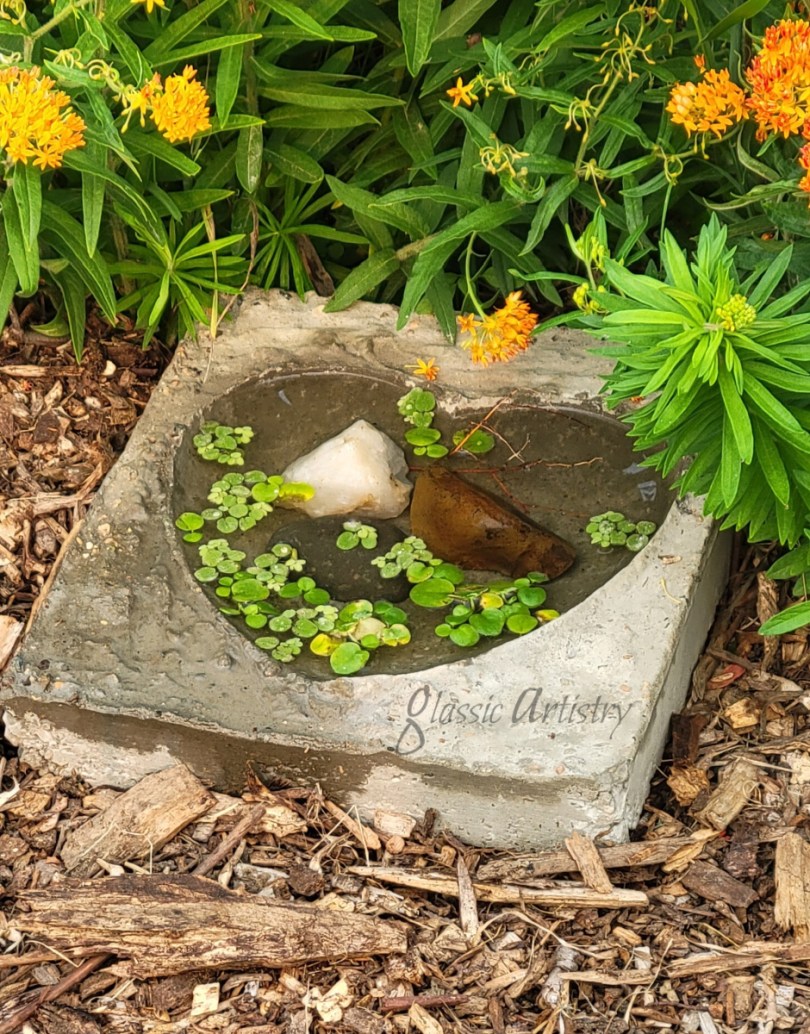
The inspiration came from a picture in a flea market gardening magazine I was reading several years ago.  It was a rain filled, square concrete block with a heart shape embedded in it.  As I recall, it looked aged with its worn corners and heavily pebbled concrete. You could easily imagine it being a pleasant little surprise one might find in their grandma’s garden that had been catching water for years. While I could never duplicate the one in the magazine, I’m pretty pleased with the result I got.

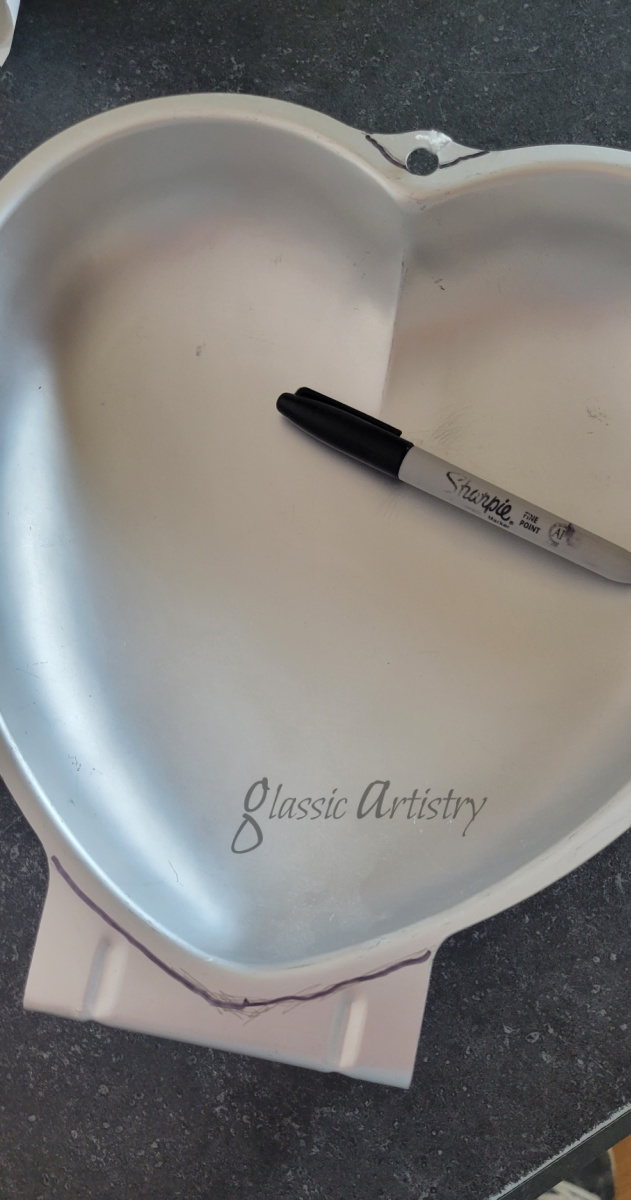
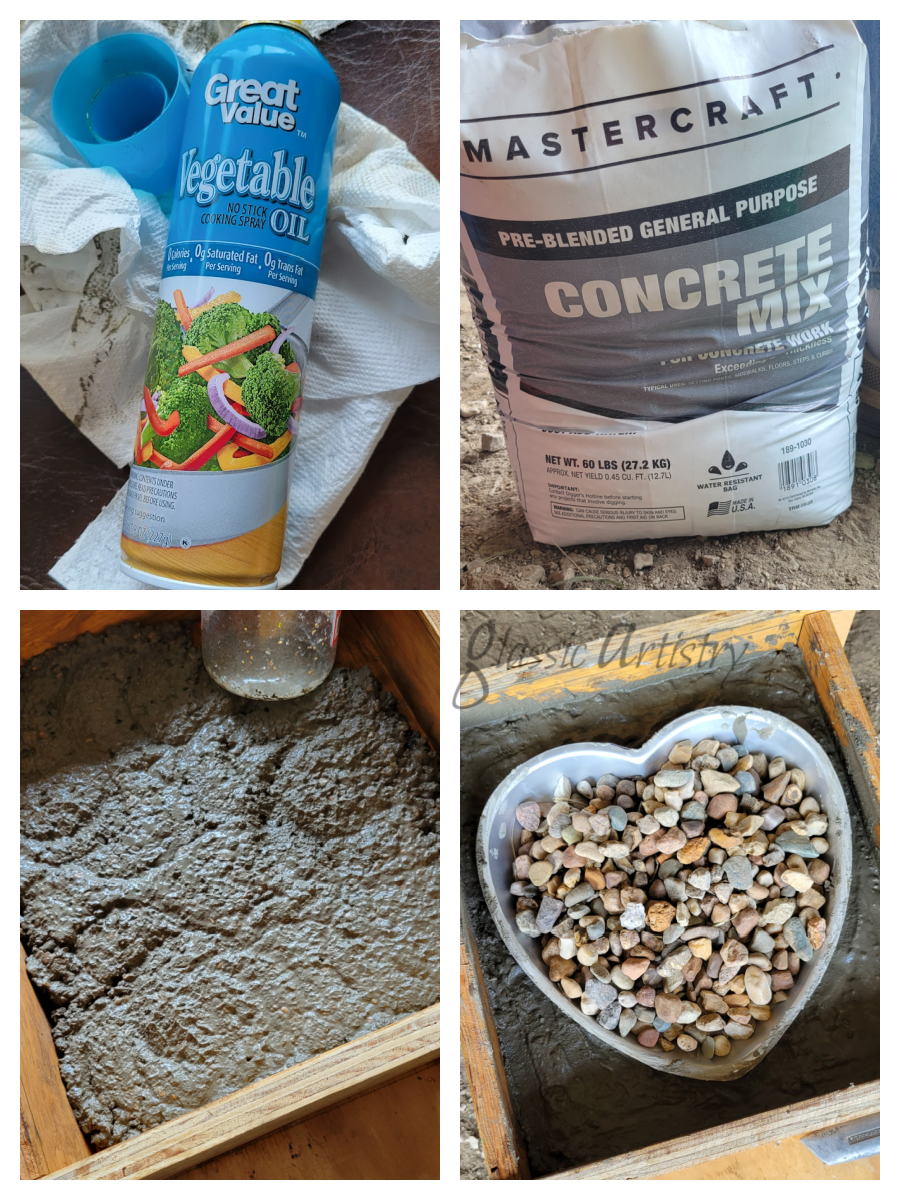
After a long search for an inexpensive heart shape to use for this project, I finally found a puffed heart cake pan at a flea market a couple months ago for six bucks. Then all that was needed was scrap wood and concrete and it was a go.

First, a line was drawn on the cake pan and some of the excess was cut off with tin snips. The sharp metal edges were ground smooth.

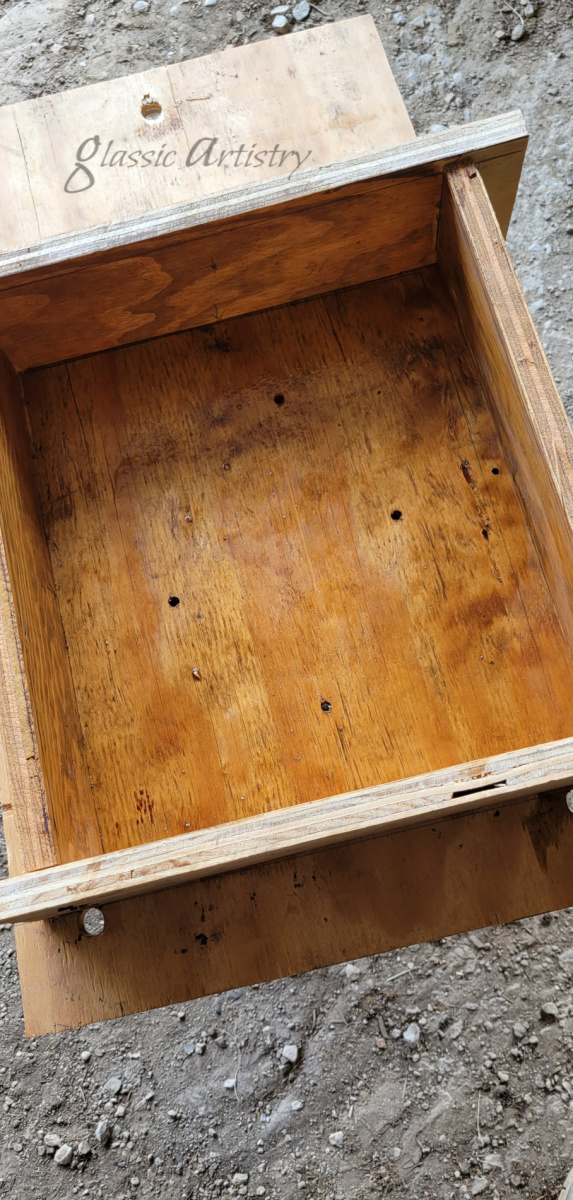
Screw together a wooden box frame mold and attach a bottom as was done in https://glassictouch.com/2015/09/08/a-new-concrete-boot-scraper/ .  The inside dimensions of mine were 12″W 14″L. Drill drain holes in the bottom.  Brush the inside of the box with diesel fuel to prevent the concrete from sticking.

I found it handy to center and lay the box mold over an upright 5 gallon bucket. Concrete was mixed per instructions on the bag.  I left the concrete kind of thick and scooped it in the box. Not wanting a real smooth top, it was leveled out roughly with the bottom of a jar and my fingertips and was approximately 2 ½” thick.  The back of the cake pan was sprayed with cooking spray, pushed down evenly, about half way, into the wet concrete, weighed down with rocks, and left to dry for 24 hours.

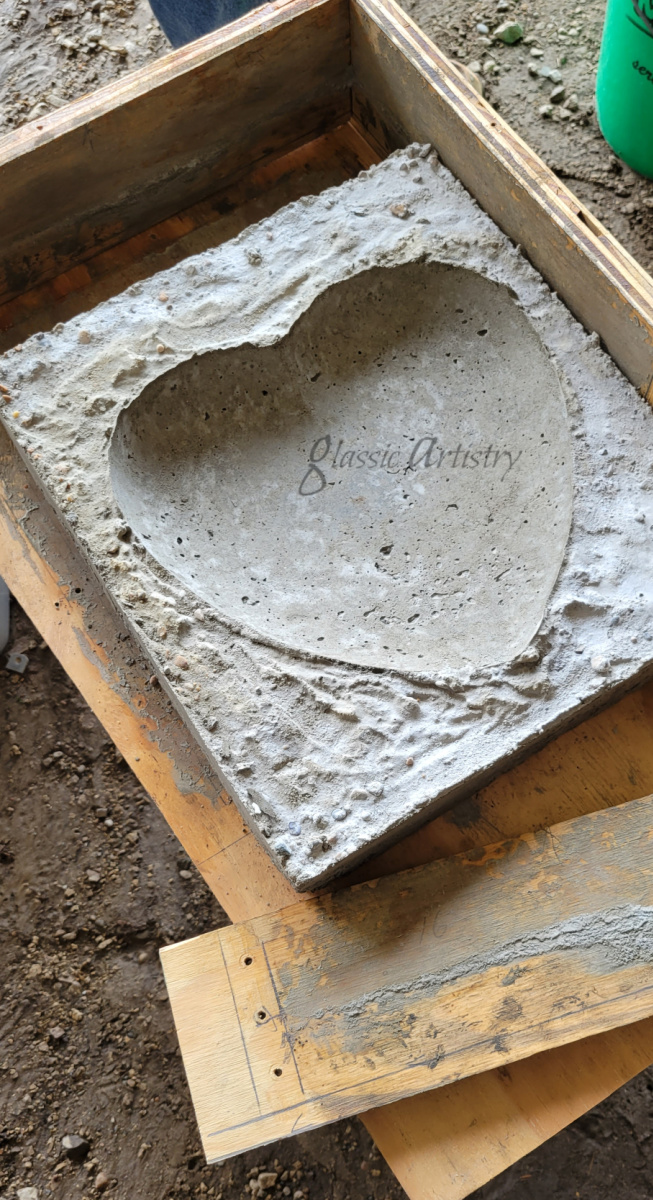
After 24 hours, remove the cake pan, and with an extra pair of hands, unmold by standing the frame on its side and unscrewing the back first.  Lay it down and remove the sides. Let it dry for at least another 24 hours.

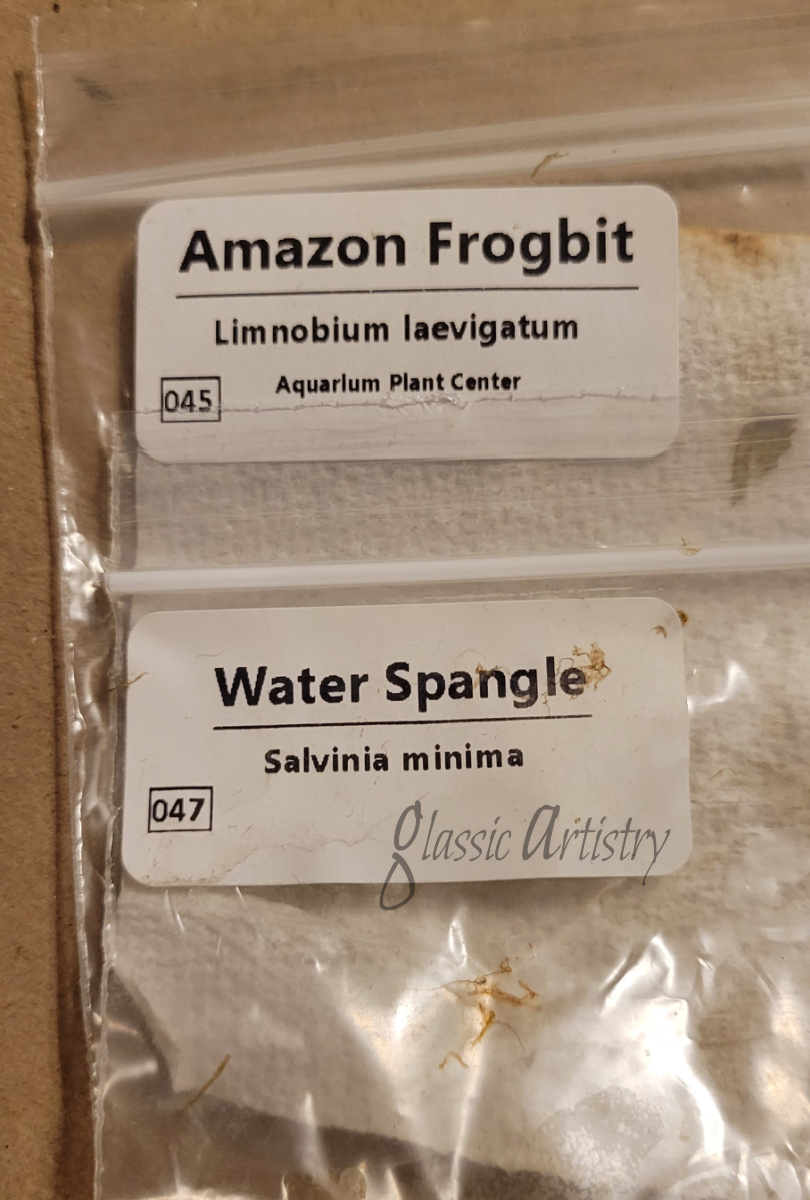
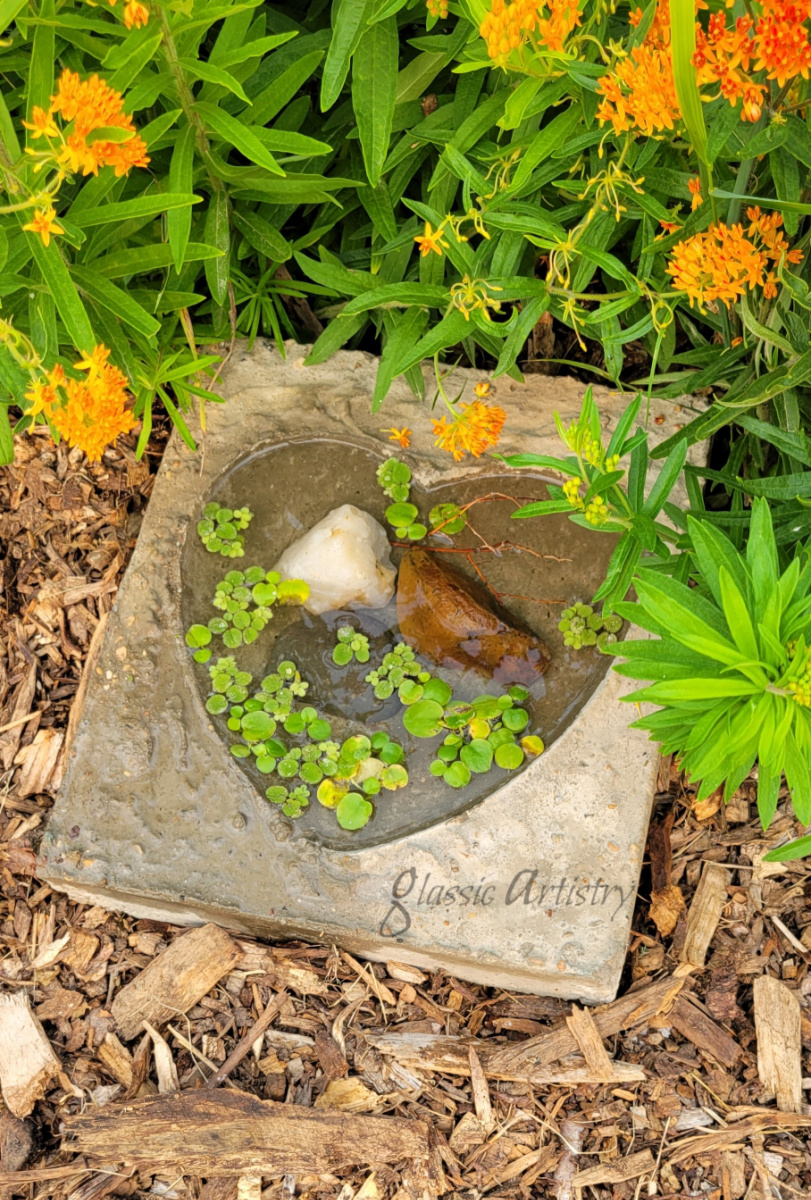
That’s it.  Some water, a few rocks, and sun happy miniature water plants (Amazon) brought it to life. It’s tucked in among the flowers in my garden for the bees and butterflies to enjoy, and hopefully begin its own aging process. 

I hope you found this project fun.  Share if you like.  

I’ve recently used my frame and cake pan again – there’s another project coming!
Enjoy your weekend!

Inventory Sale Review Part 2

I’m back with Part 2 of my sale review. It’s 98% images so it will be quick.

Again, I wanted to use as much of my collected treasures as I could before the sale, so everything pictured was made similarly to projects in previous posts. There’s never any set rules when using salvaged and found materials; you do what you like.

https://glassictouch.com/2016/07/11/crystal-garden-chandelier/  and https://glassictouch.com/2016/08/06/salt-shaker-decorative-plant-stake/

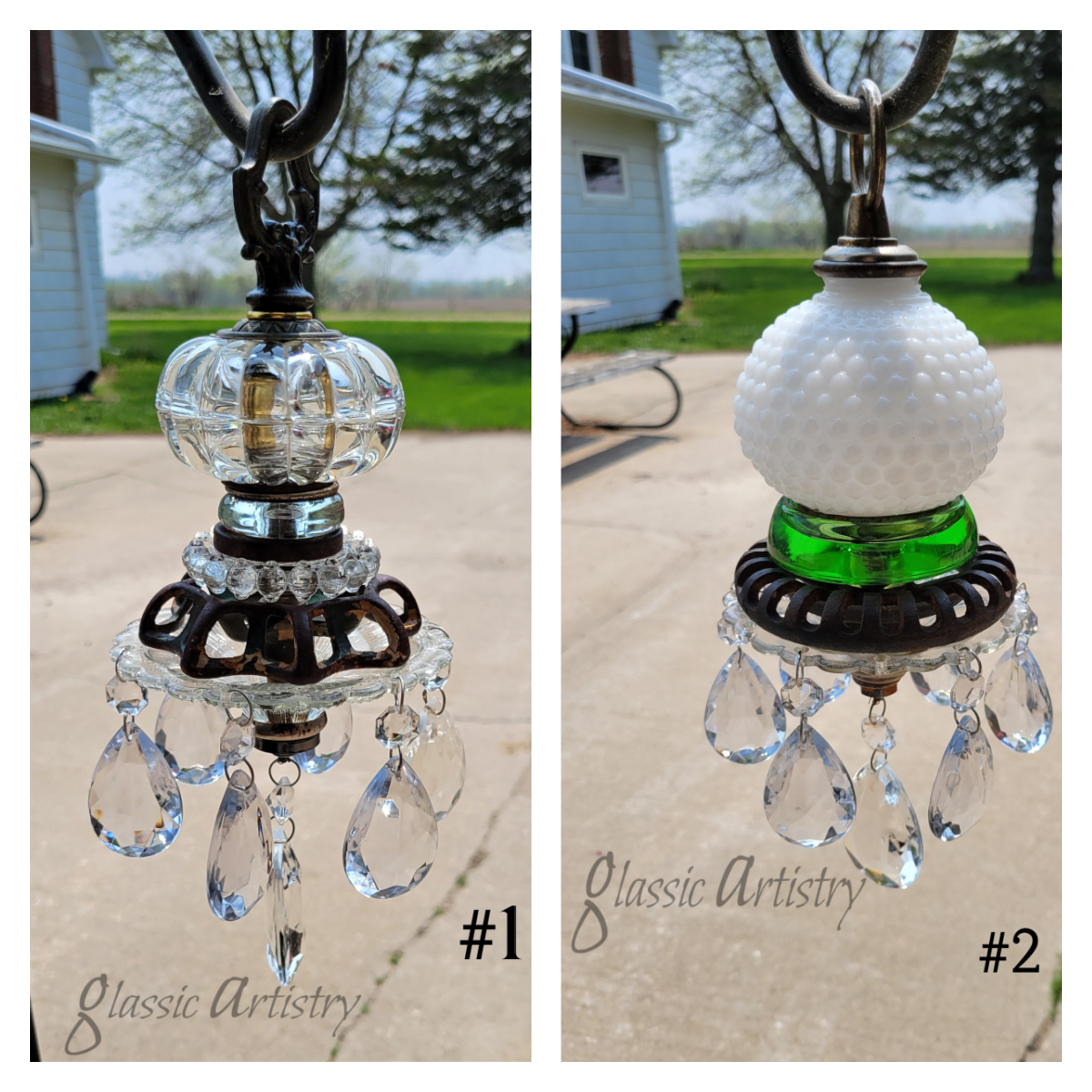
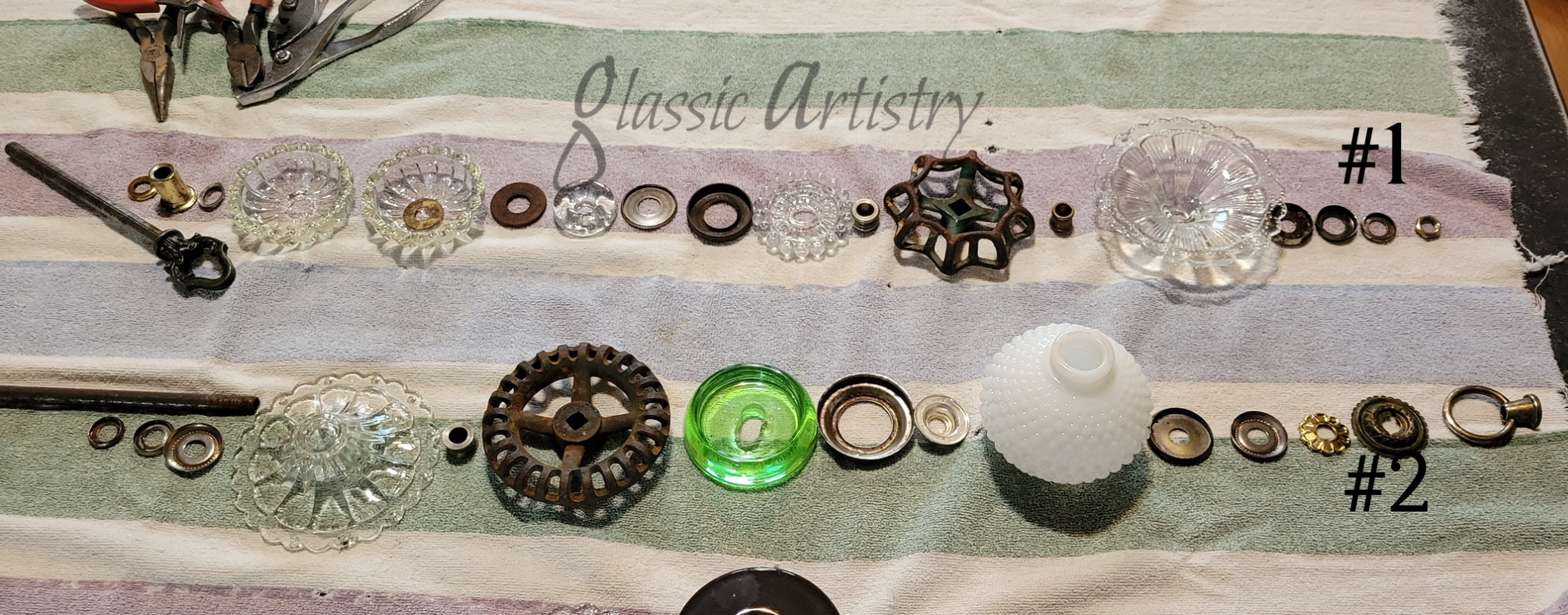
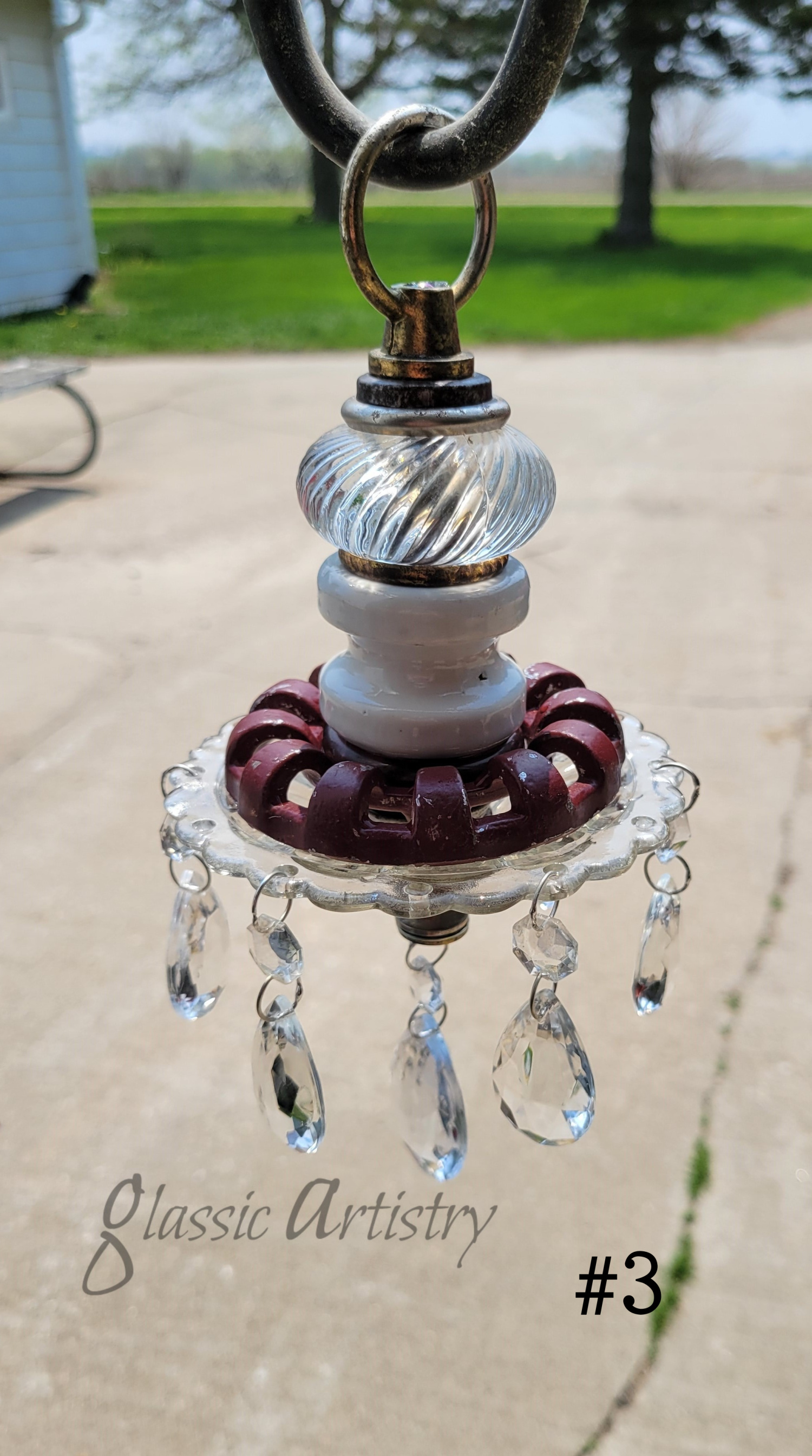
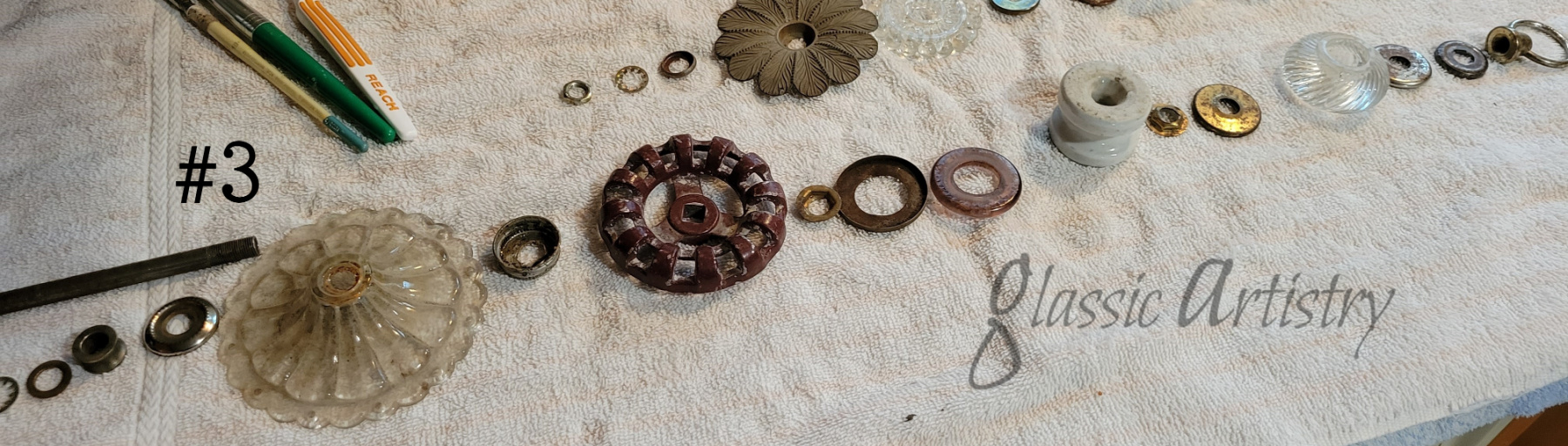
I would have to say that the chandeliers and garden stakes were my favorites. They were just so much fun to make. No two were alike and they always sold well at shows. I like to put one together the way I like it, then take it apart to clean and polish all the pieces; always laying it out in the order it went together. One thing I did change was the attachment of crystals. Instead of wiring them on, I made jump rings and soldered all the connections so they couldn’t come loose.

So here we go. There is layout pictures for the first three chandeliers, but not the two in the feature picture.

And now some garden stakes and a couple of the layouts.

And lastly, though the picture is a little fuzzy, a few ring/jewelry trays were put together with lamp parts.

That’s it, all caught up. My garage is so clean and empty now. I’ll miss playing with all those beautiful lamp pieces, but I’ll survive; time to move on. I would like to devote more time to my glass and garden hobby, and I have wall art and furniture pieces in my radar. But, that’s for future posts. 🙂

Have a great week all!

Junk Jaunt

Spring season fun has begun!  Yesterday, our little group took off on a short road trip to Fairfax, Iowa. There, the owner of Simply Iowa (aka The Mad Hatter) was hosting her spring opening at the “rabbit hole”, a special on site place that does kind of make you feel like Alice entering a magical, peculiar land where unexpected treasures can be found. It is suggested that you wear grubbies, and bring a truck, which is very sound advice.

I’m often asked what type of places I look for and/or go to for gathering unique pieces.  Well, the rabbit hole is a favorite spot, so I thought I’d share it with all of you.  If you’re near, you may want to visit.

A ton of pictures have been narrowed to 13 which will still give you a good idea of what it’s like. There’s stuff on stuff, in front and behind, and high and low. I usually go around at least twice so as not to miss anything that was peeking out at me on the first round.  Enjoy!

What did you think?  Curious place, huh? Simply Iowa is on FB and has a blog if you’d like to follow.

I kept myself in check and only brought 5 small pieces home.

Oops, sorry, make that 6. I spied this as I was walking to the car.

No judgments please, lol.  I usually have a thought in mind when I choose things and they’ll probably be shown in some way later.

I have my first tiered tray finished and will be posting on it in a few days. If you get the chance, please, stop back by and give it a look. Thoughts are always welcome; good ones preferably. 🙂

Have a great week-end!

Repurposed Garden Tote Garden Basket DIY

Look, I’ve found the way back to my blog.  There’s no doubt at all that if I had to rely on this to make a living, I would starve, lol.  

As most know, I store treasures in my garage.  It’s pretty cluttered, and, with no tables, I mostly work on the floor, or move out to the old picnic table when weather permits.

Late last fall one area of my garage got a big improvement when my husband was looking for a place to temporarily store a lift. He had no problem if it was covered and used as a work table.  Wow, what a difference it made and I can stand up to work! 

BEFORE

AFTER

Most of my treasures were collected pre-covid and way before, when I was actively participating in more shows and events.  I’m excited to get out to this summer’s junk jaunts and tag sales to find some larger pieces for my home and discover some new ideas to play around with.  But, first, now that the weather is getting warmer, I need to get back to work on some of those projects in the pictures above; they’ve been waiting for me all winter.

I was in the process of making myself a simple, rustic garden tote last year.  The pieces were gathered and laid out, but I got busy with stained glass work and didn’t follow through.  So, that seems like a great place to start now.

A large capacity bowl, and an easy grip handle was what I wanted and why I chose the pieces I did for this project. 

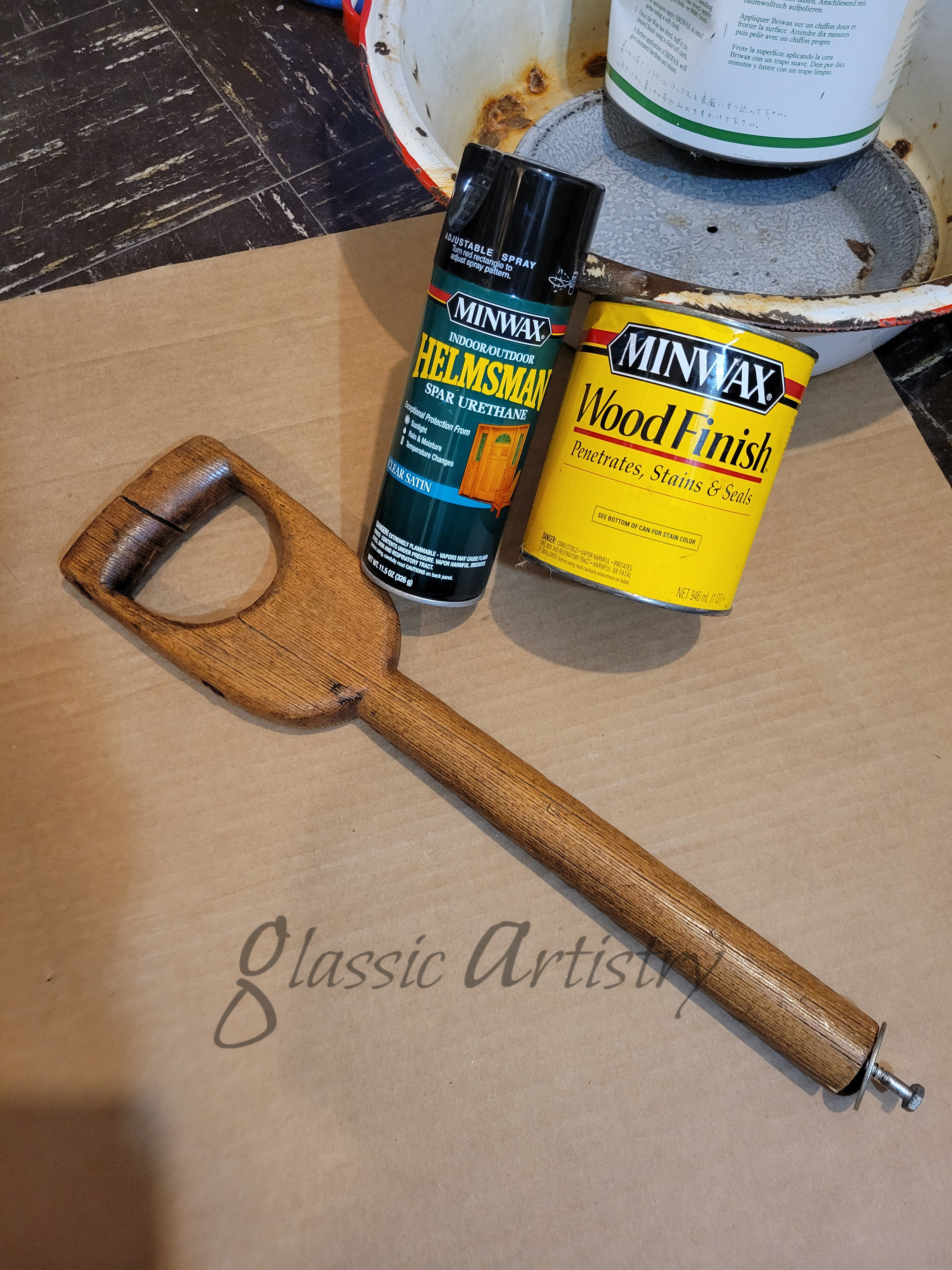
A drill press was used to drill a 5/16” hole in the center of the pans and an 18” length of an old shovel handle. The depth of the hole drilled in the shovel handle is approximately 3”.  A 2 ½”L lag screw and a flat washer was screwed into the shovel handle for safe keeping.

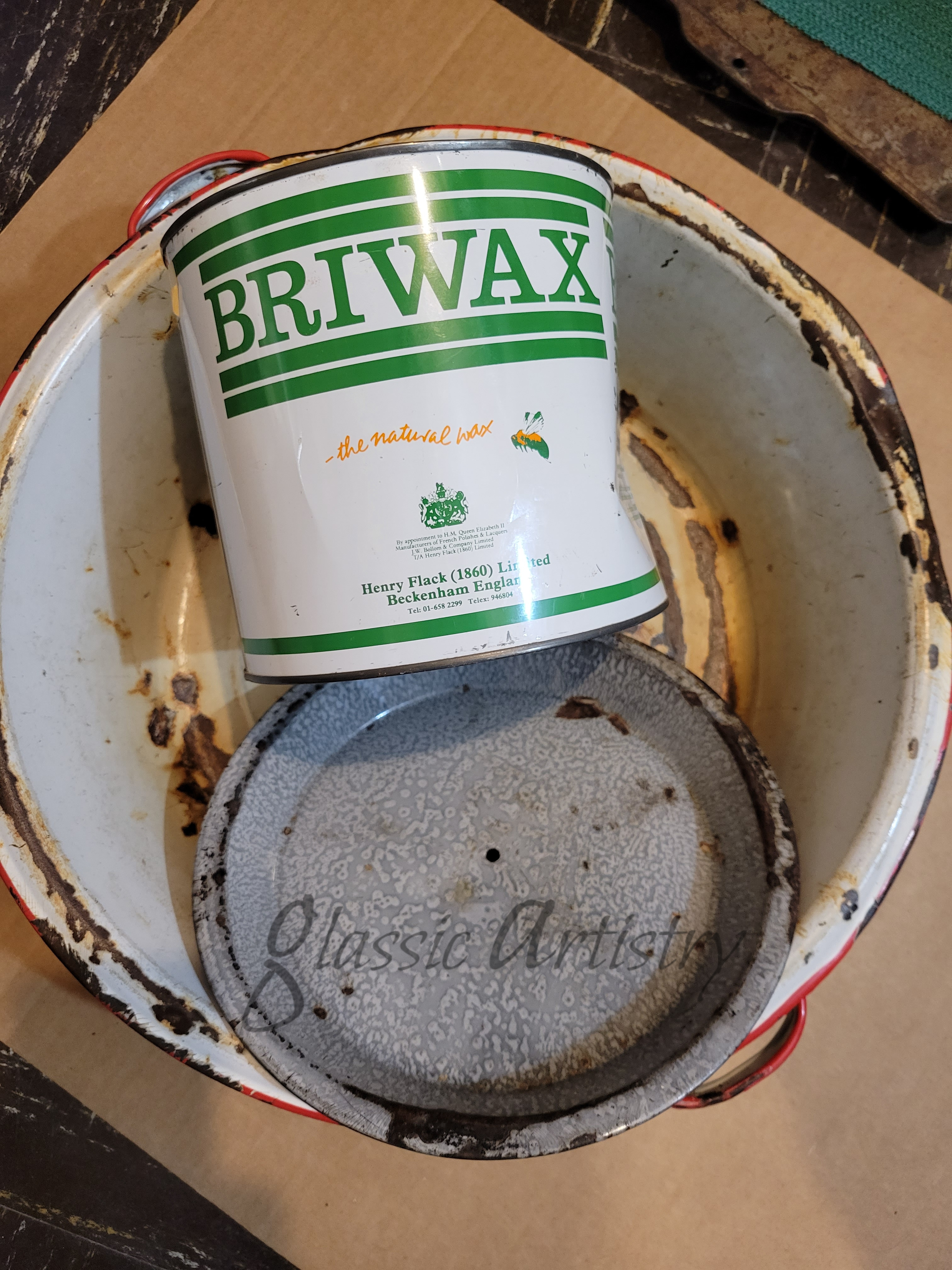
To keep further rusting at bay and for easy cleaning, a coat of Briwax was applied to the cleaned pans and buffed. A car wax or Shield spray could also be used.

The shovel handle was stained and sealed.

For added strength, and to give the shovel handle a more solid seat to rest on, a small area of Briwax coating was sanded off the bottom of the large pan, and a large scrap washer was adhered with JB Weld; weighted down to dry overnight. E6000 could also be used.

Both hands and a crescent wrench was needed to get the shovel handle screwed on securely.  I found the best way to do this was to work from the bottom up. After laying the inverted pie pan on the bottom of the large upturned pan, the lag screw was pushed through the flat washer and the pans.  

A large bead of E6000 was laid on the cut bottom of the shovel handle.

While holding the pans on their side, the shovel handle was lined up with the screw and started. I then held the shovel handle with my left hand, balancing the pans while I tightened the lag screw with my right; went together quickly, and done!  Clean away any excess glue.

The handle looked bare, so it got a scrap of wire wrapped around it, under the grip, just to break it up a little.

We’re a ways off from our gardening season yet, but, I’m ready for it. My new garden tote will be much handier than our big green Tupperware bowl. Hope you don’t mind, I grabbed a few props from the frig for pictures. 🙂

Although I’m planning on using this piece as a garden tote/basket, it could also lend farm house country charm filled with pots of flowers or herbs on a patio; just a thought.

We’ve got another week of nice weather in our forecast and I’ll be moving on to another project. Pondering over the pieces on my new work table, it looks like some tiered trays will be on the agenda next, and soon. I hope you’ve liked what you’ve seen today, please comment, like, and share. Repurposing and upcycling with salvaged materials can help lessen the load on our landfills and have a huge impact on our environment. Thanks for visiting my blog, stay well, stay safe, and have a great day!

Upcycled Chicken Feeder Birdfeeder DIY

Couldn’t resist making one more fun piece for my garden before getting on to things I should probably really be doing. 🙂

I’d like to attract more birds, and thought a small feeder in the garden would help.

An old metal chicken feeder has been hanging in my garage for several years now, so why not put it to use.

Of course, what fun would it be to hang it just the way it was?

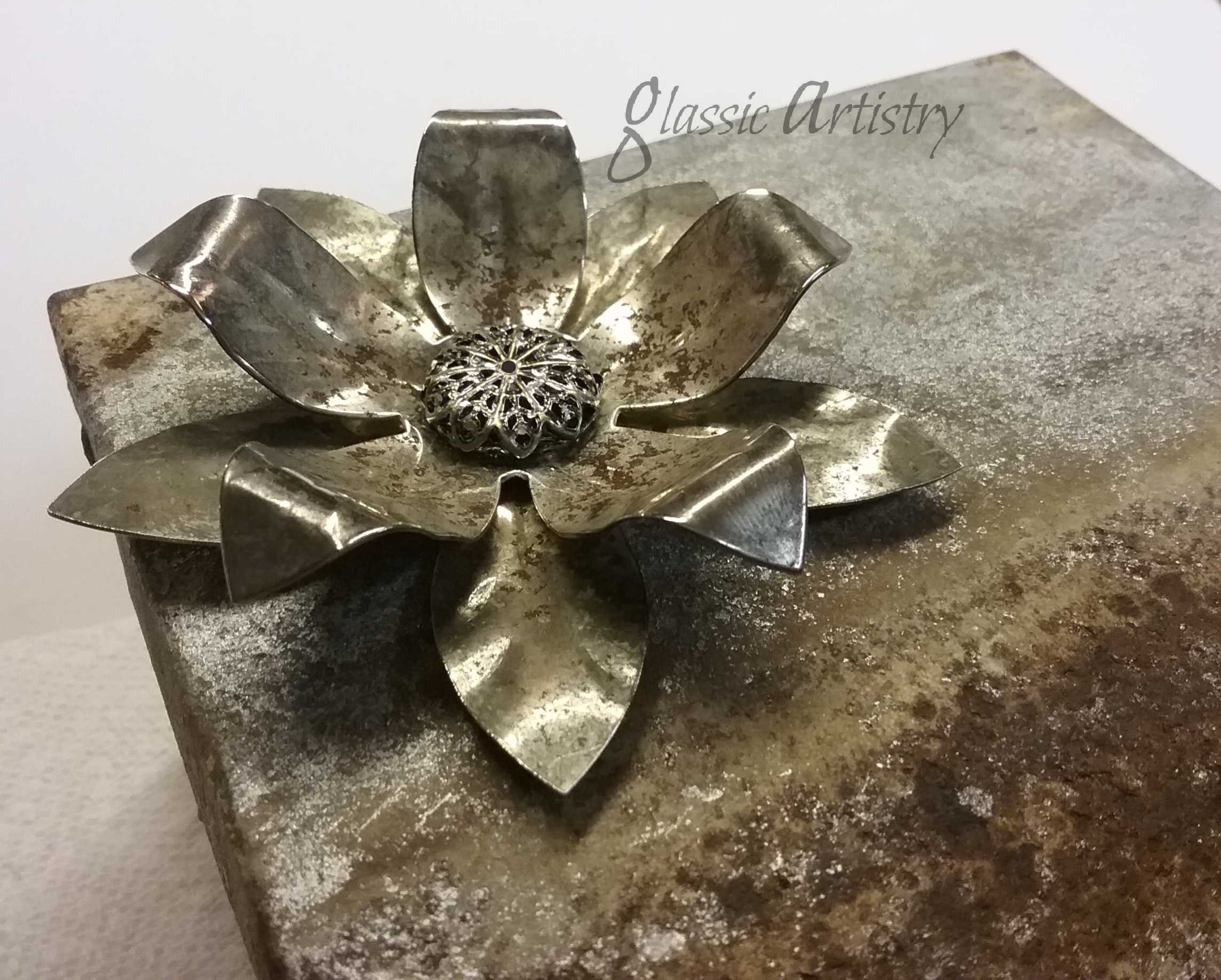
I found a pair of silver plated flower votive holders that had been sitting around for a long time too. Aren’t those petals gorgeous? And, they were simply put together with a small nut and bolt.

After drilling a hole, two of the flatter petals were attached to the feeder with the small nut and bolt. To cover the bolt, the top of a decorative metal bead was painted silver, then indented on the backside with a screwdriver tip and a quick whack of a hammer. Adhered with JB Weld.

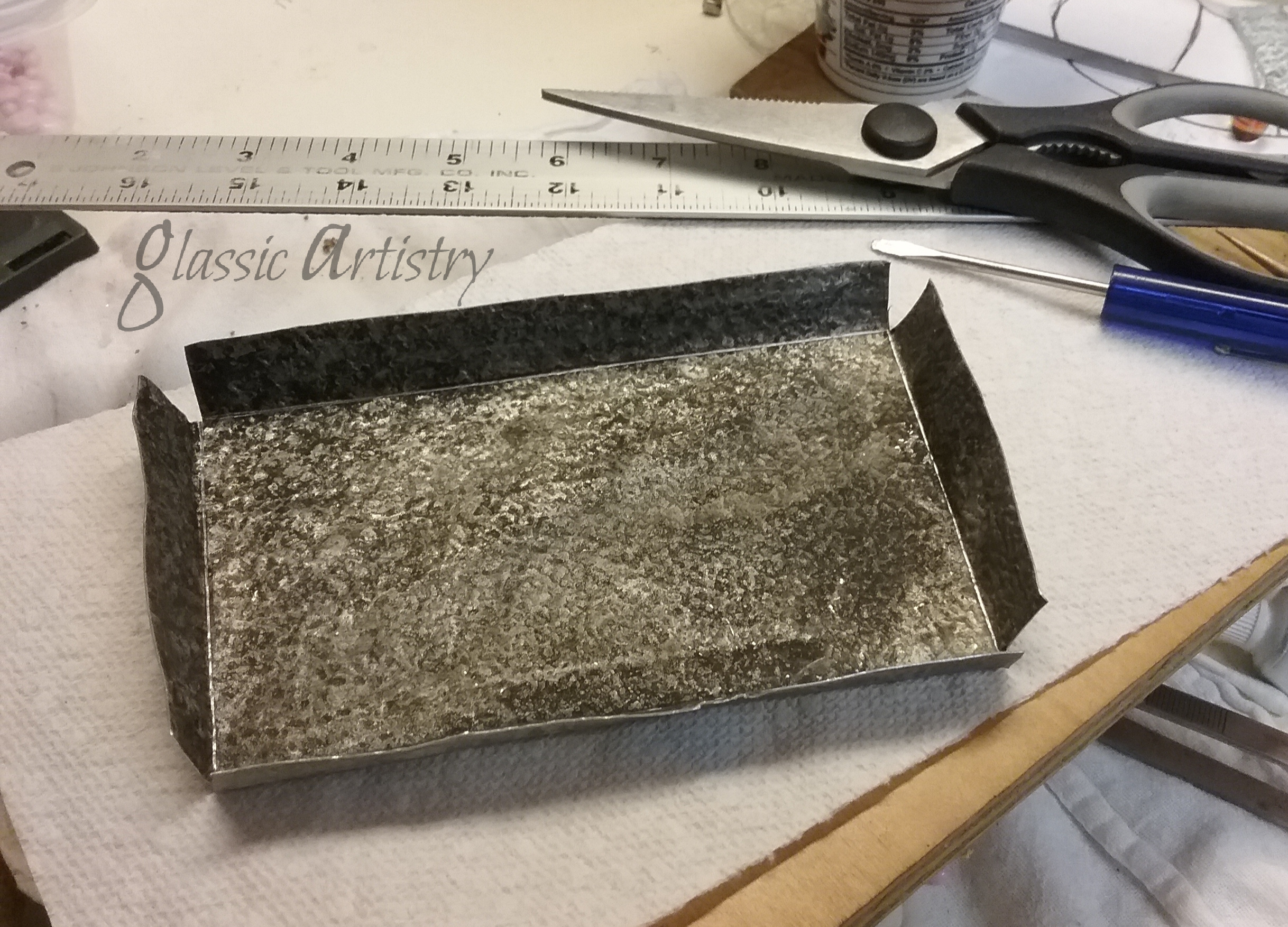
A rectangle of thin scrap aluminum was flattened and cut to make a top. The sharp edges were filed where needed and the corners were notched. The fold lines were scored on the backside with the tip of a screwdriver before bending.

That’s it! One afternoon! This may be one of the quickest and easiest upcycles I’ve ever done. I did let the JB Weld dry overnight before hanging it outside. Isn’t it cute? It’s perfect for my garden.

We’ve got a local vintage market coming up this Saturday, Dysart’s Back Roads Vintage Market https://www.facebook.com/events/422893409128982. Can’t wait to get there. It’s been awhile since I’ve been out #treasurehunting, I’m hoping to bring home lots of good stuff!

Repurposed Strainers Planters Fun DIY

This time of year is the greatest … back out in the garden, doing yard work, and mowing. I get some of my best thinking done while on a mower. 

Best of all, our year of homeschooling was successfully completed last week!  I think the whole family let out a big sigh of relief over that, lol. You definitely have to give teachers and others who homeschool every year a standing ovation; it’s a lot of work, and patience.

Anyway, having a little free time on my hands now, I made something quick and fun to hang on a couple of ugly poles in my yard.

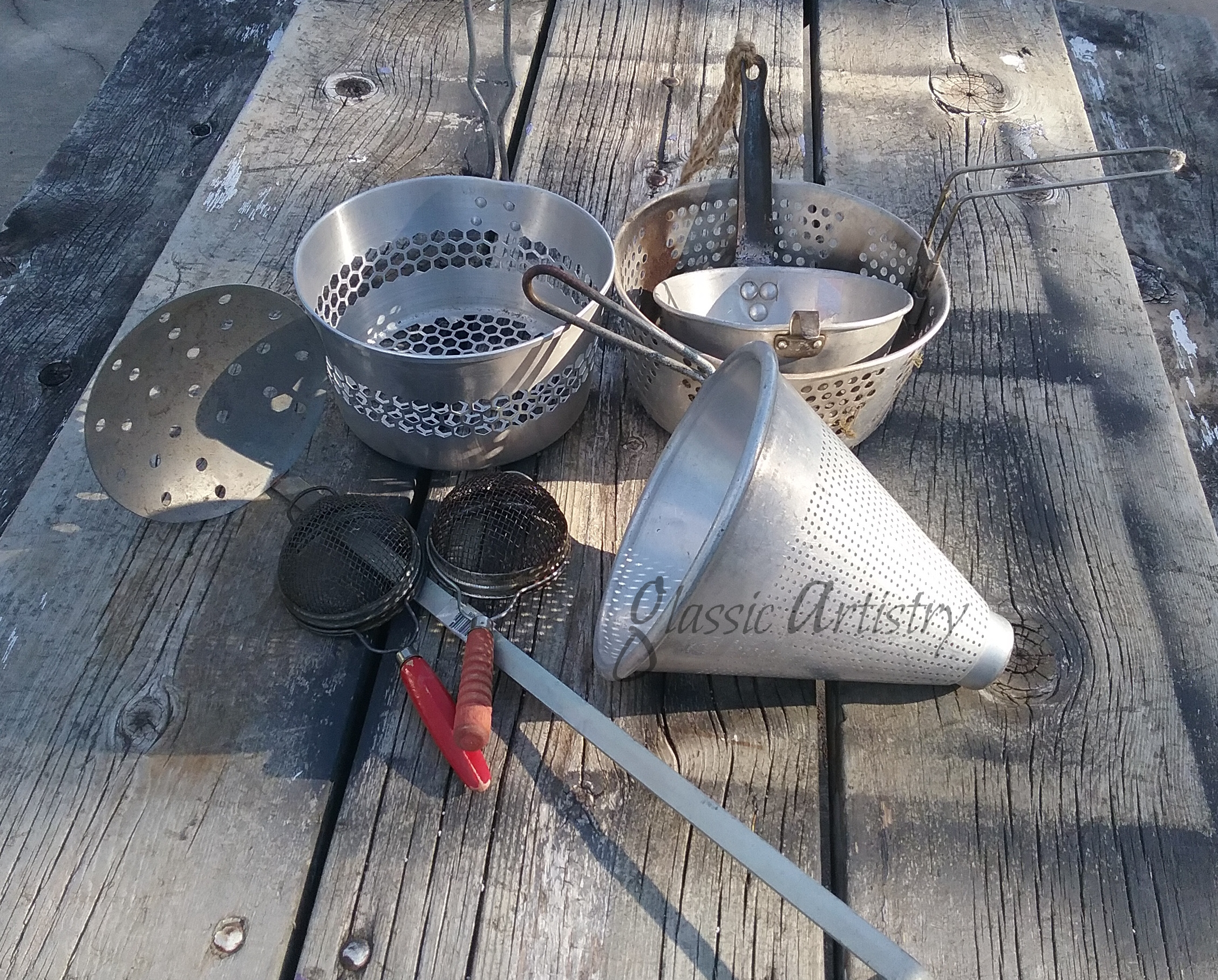
I have a small pile of metal strainers and such that I’ve found in the salvage dropped off for my husband.  Seems no one wants the poor things unless they’re a special vintage piece. 

I used to collect the most interesting ones and we would heat the handles a bit to bend them upright and be used as hangers.  I’d sell them at vintage markets for a couple bucks each. The large mesh ones were the most popular, but not as easy to come by anymore.

Many of you know I have a thing for metal flowers too.  If you’re lucky you can find some that are constructed with a screw and nut which makes them really easy to work with.  I usually find flowers at garage sales, thrift stores, and flea markets. My stash was getting pretty thin until I recently scored some beautiful ones from my sister and her husband who own Mc’Do-its Upcycled, Repurposed and Flea Markets. It’s awesome having them so close, they’ve had just what I was searching for on several occasions.

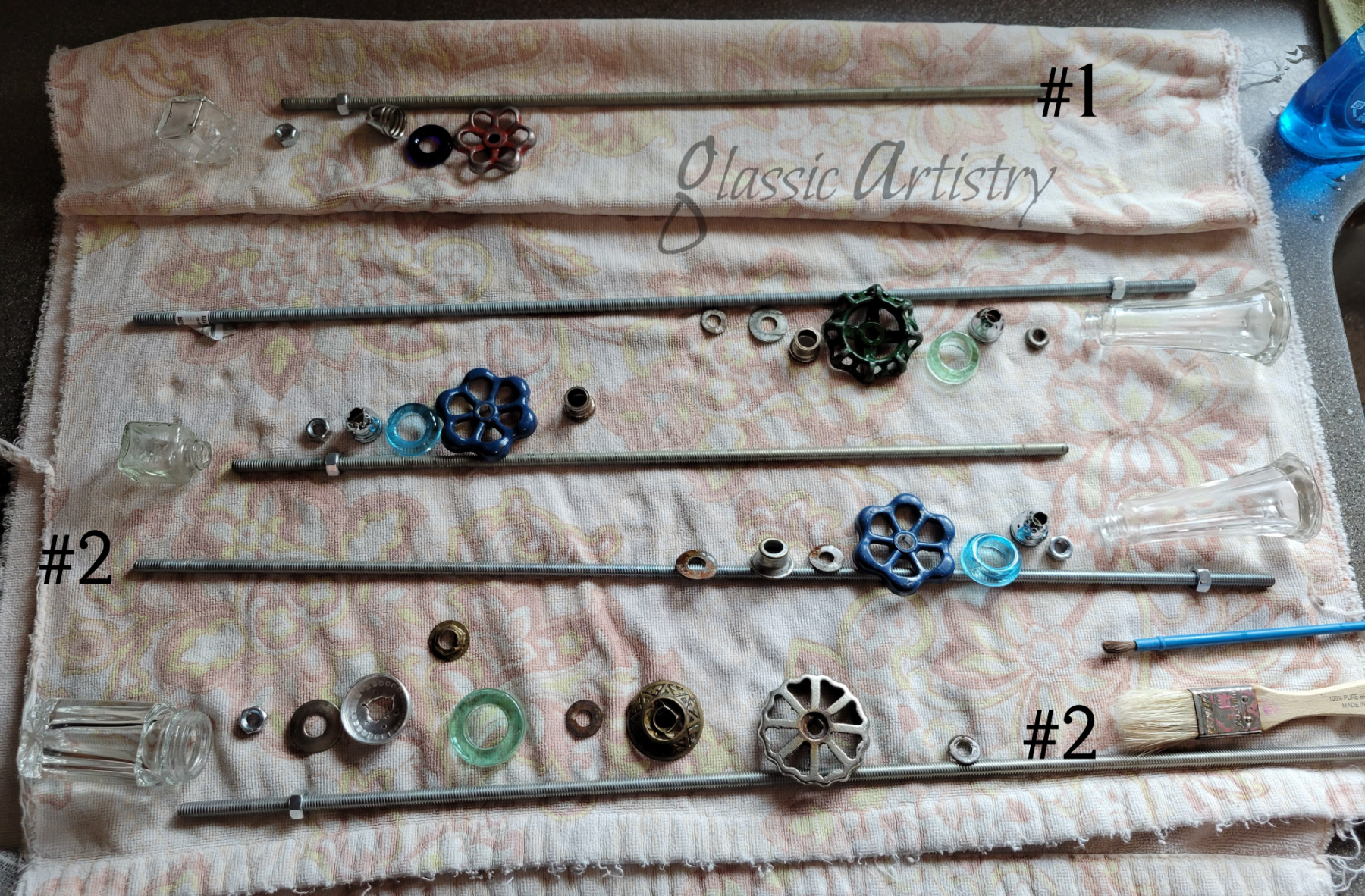
I’m ready to share what I came up with, but please remember there are no limits when it comes to projects like these.  Use whatever you have; paint, washers, glass donuts, wire, buttons, etc.  I played around with several ideas before settling on the ones I wanted.

Had to have a touch of blue –

I was going for a blue enamelware look with this little guy. Exterior blue paint, white speckles, and clear spray sealer.

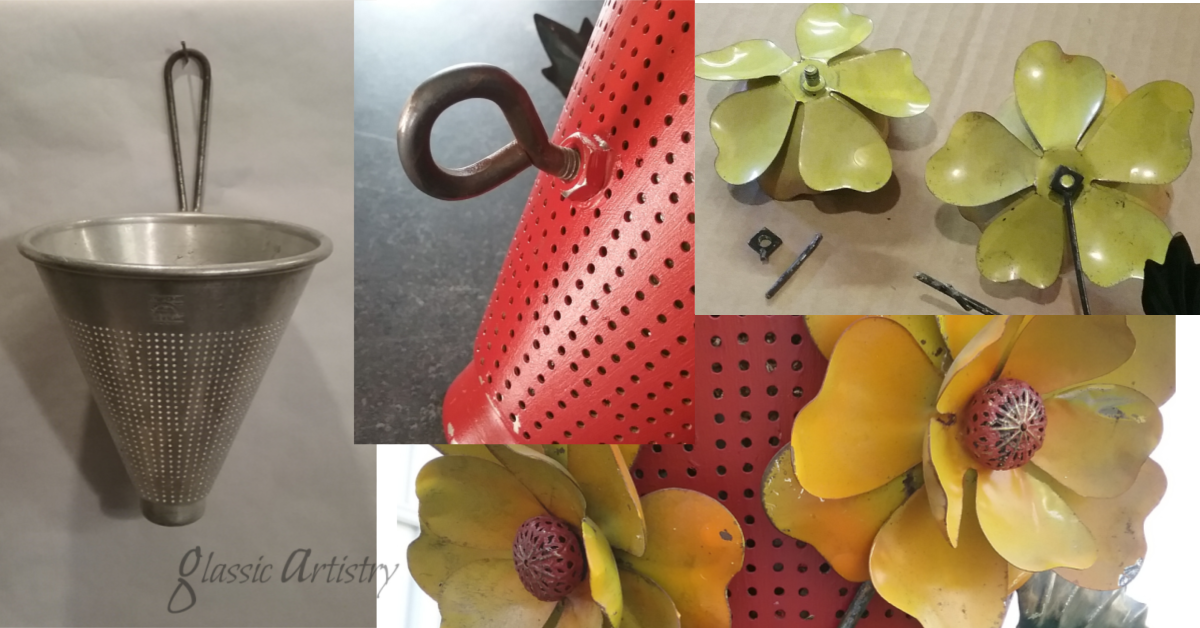
An eye bolt was added to the back to help it hang evenly and provide a loop for a wire to be threaded through and secured to prevent rocking from side to side. Two glass donuts were wired to the handle.

This vintage look might be my favorite –

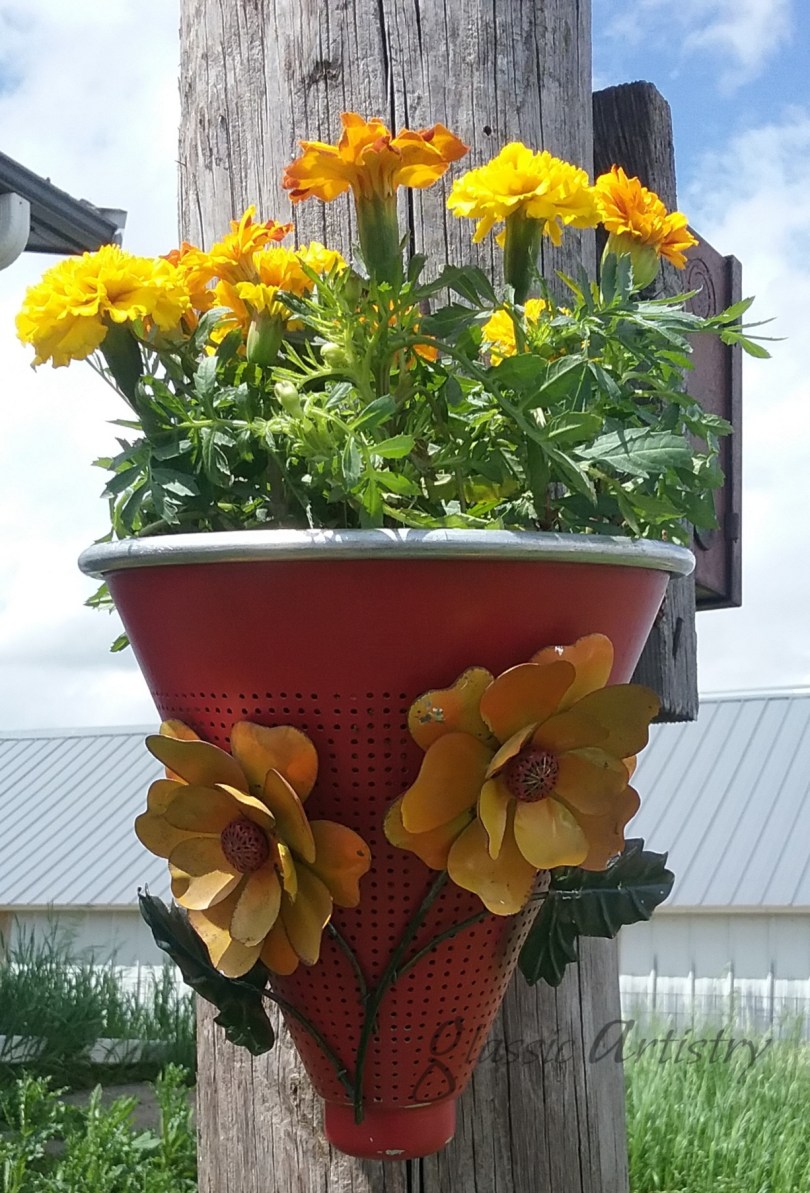
I love this combination. Red exterior paint, clear spray sealer. An eye bolt was added again, this time with an extra nut glued to the exterior before painting. I used JB Weld for gluing. After determining placement, holes were drilled for the screws on the back of the flowers and they were tightened into place. The stem was wired on. Decorative metal beads were painted and sanded lightly for the flower centers and glued on.

Here’s another useful tip – slide pieces of wax paper under the pieces you are wiring on to prevent your base paint from getting scratched.

Boho anyone? Just because it has a hanger doesn’t mean you have to hang it.

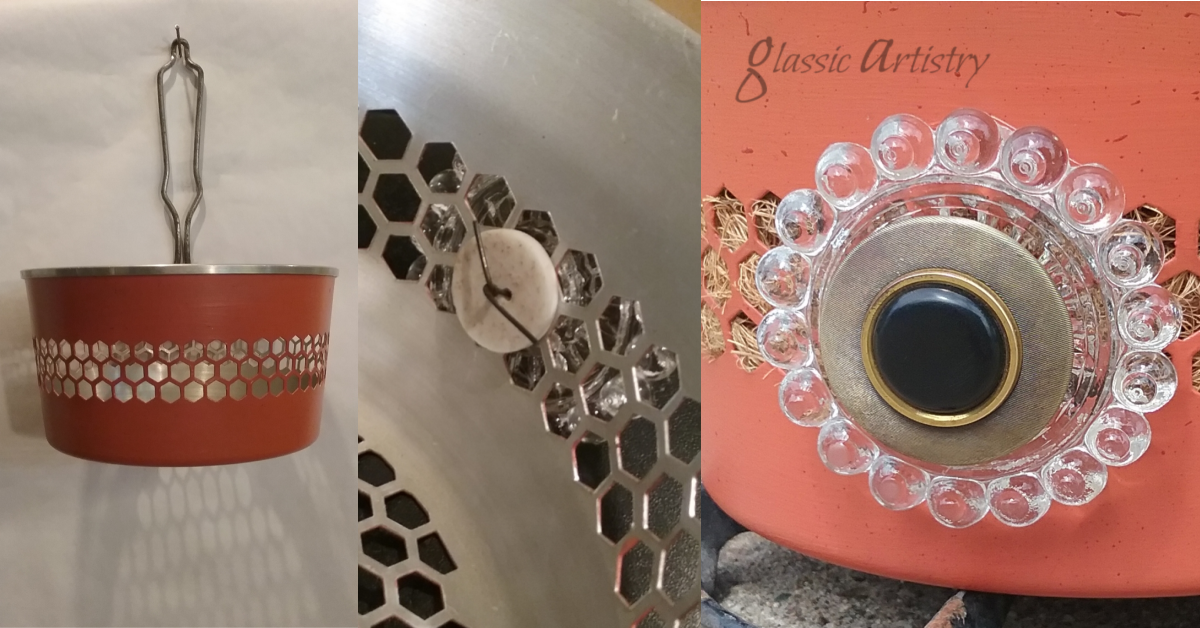
Exterior orange paint, red speckles, clear spray sealer. A medallion was made with a large decorative coat button on top of a glass lamp piece. The wire is threaded through the button and through a hole in the glass piece. The wires went through an old button on the inside of the basket to hold it securely.

And then there’s this one, just because I thought it would be cute in the kitchen.

So, what do you think? Don’t these look like fun? Please, feel free to comment if you like. I love hearing from readers.

Back soon!